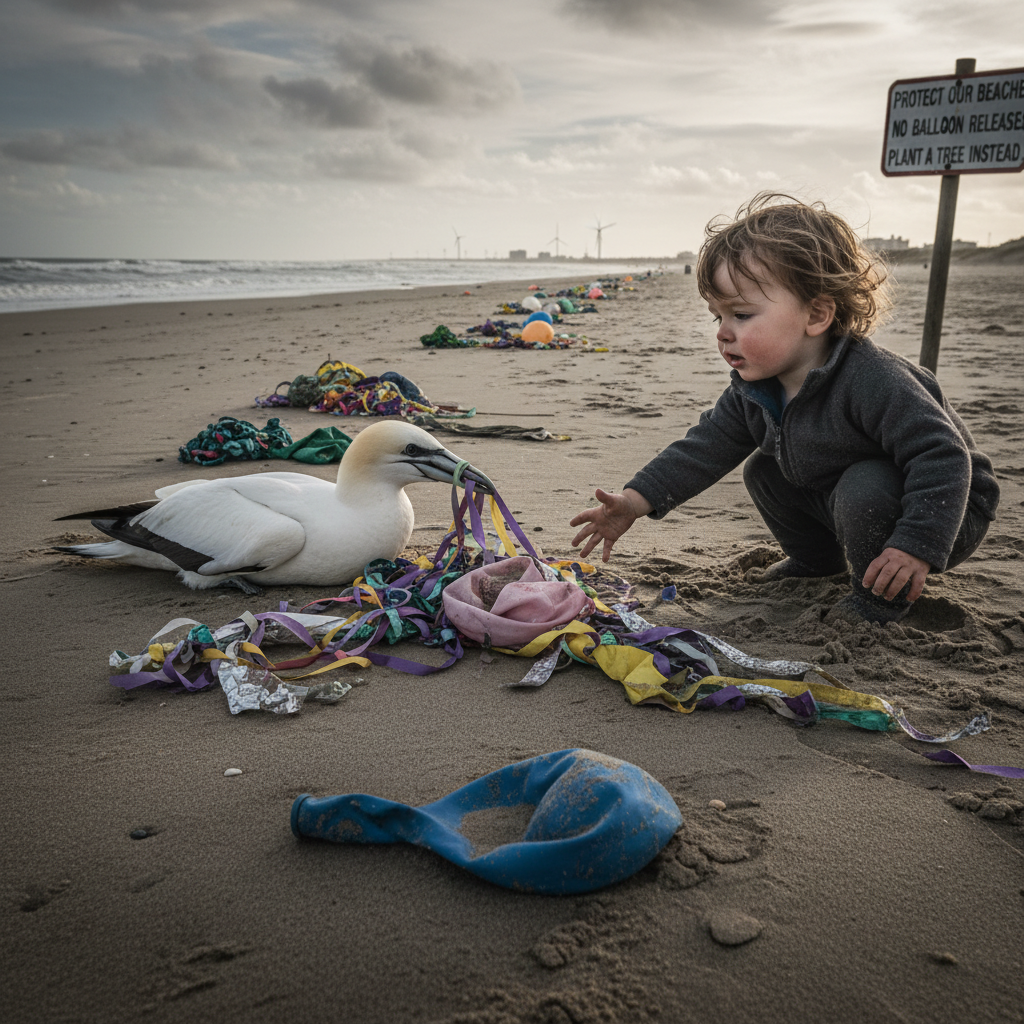
Balloons, a seemingly innocuous party staple, are revealed to be a significant environmental threat. Despite their growing popularity, especially for releases and elaborate decor, balloons (including 'biodegradable' latex and non-biodegradable foil) pose serious risks to wildlife, contribute to plastic pollution, and use finite helium. The article highlights growing calls from within the industry and environmental groups for bans and the adoption of eco-friendly alternatives.
The article begins with a personal anecdote about a child's attachment to a deflating balloon, segueing into the broader issue that balloons are often single-use plastics. Even 'biodegradable' latex balloons do not decompose quickly, posing a grave risk to wildlife, particularly seabirds, which are more likely to die from ingesting balloons than other plastics. Despite this, balloons haven't faced the same scrutiny as plastic straws, and their use in decor, releases, and celebrations has surged, influenced by celebrity trends on social media. However, there's growing pushback. Balloon seller Naomi Spittles, for instance, refuses orders for balloon releases due to environmental concerns, advocating for a UK ban. She highlights how balloons, which can travel thousands of miles, harm livestock and pets, and suggests alternatives like bubble machines or planting trees for memorials. The National Association of Balloon Artists and Suppliers (NABAS) also advises against releases and offers recycling solutions. The non-profit 'Balloons Blow,' founded by sisters Danielle and Chelsea Vosburgh, actively campaigns against releases, debunking 'biodegradable' claims and pointing out that helium, a finite resource, is wasted on party balloons while needed for medical uses like MRI scanners. Studies confirm that '100% biodegradable' balloons do not meaningfully degrade and still pose a threat. Historically, balloons, first invented by Michael Faraday in 1824 for laboratory use, became popular party items due to their low cost and ability to fly. Foil balloons, introduced in the late 1970s, add another layer of environmental concern as they are not biodegradable and can interfere with power lines. Many local authorities in the UK, as well as several states in the US and Australia, have banned or restricted balloon releases, with some countries prohibiting them under littering laws. Environmental groups like the Marine Conservation Society advocate for reusable alternatives such as streamers, flags, and banners, or fun, non-polluting options like bubbles and wildflower seed bombs, urging a shift away from balloons to protect the environment.