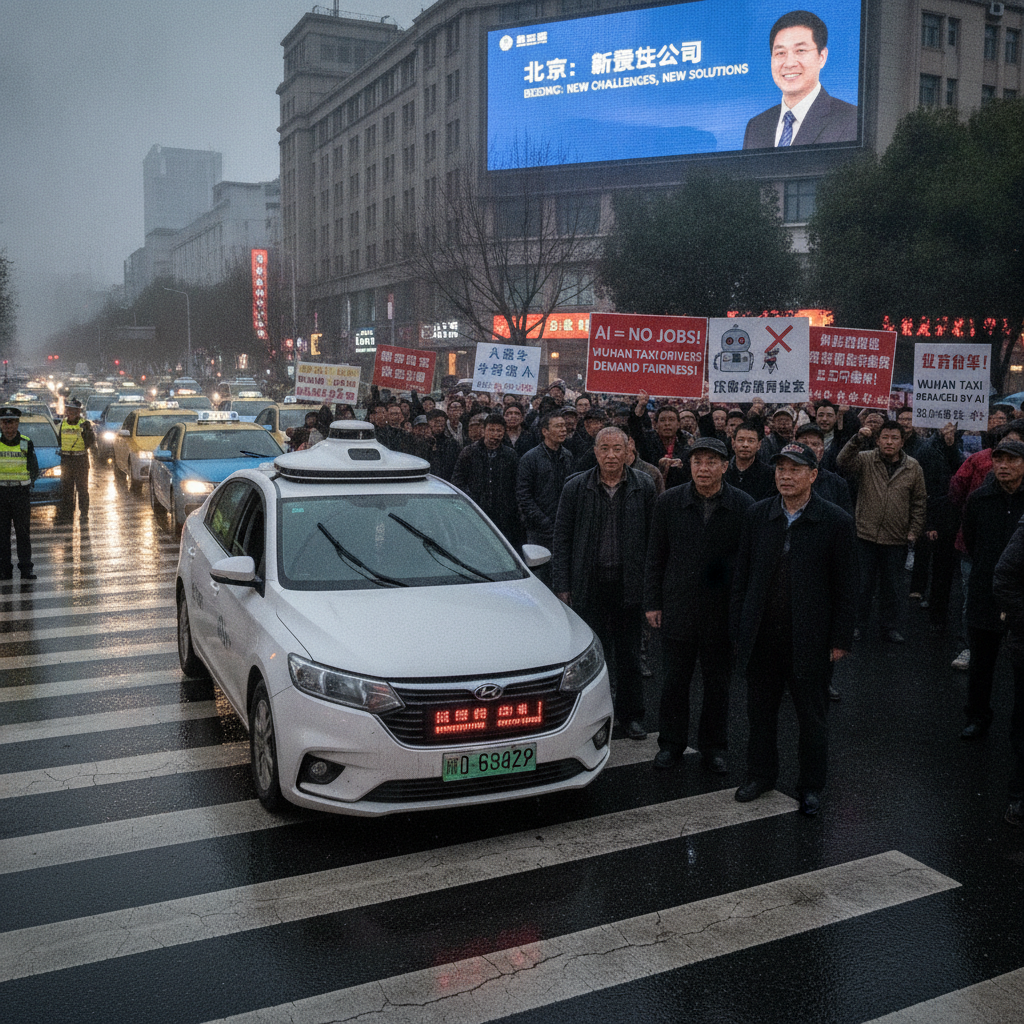
China's aggressive deployment of AI, exemplified by malfunctioning robotaxis in Wuhan, is causing widespread job displacement and social tension for gig workers and white-collar professionals alike. As traditional jobs vanish, protests emerge, forcing Beijing to re-evaluate its 'people-first' approach amidst a rapidly changing labor market.
In Wuhan, the malfunction of Baidu's Apollo Go driverless taxis, which stranded riders and halted operations, inadvertently highlighted a growing crisis in China's labor market. Taxi driver Yao Xinnong, whose wages had plummeted by 40% since the robotaxis launched, saw a temporary reprieve, underscoring the profound impact of AI on livelihoods. China is rapidly deploying AI, creating social tensions in an already precarious labor market. Gig workers, like taxi drivers, fear job displacement, while white-collar professionals, such as cinematographer Tian Zemin, are being replaced by software, facing a 40% drop in freelance rates. This has sparked protests in Wuhan, with a local taxi company publicly criticizing the government's automation policy. Initially pro-AI, Beijing is now shifting its stance, with state media acknowledging 'new challenges' to employment rights. Officials like Cheng Wanhui emphasize adapting to AI as a tool, and recent court rulings have awarded compensation to white-collar workers replaced by AI. However, many fear AI will prevent them from securing jobs in the first place. Analysts suggest China's government control might help mitigate job losses through measures like hiring quotas, but workers like Tian Zemin feel time is running out, as the 'corner that AI still cannot replace' rapidly shrinks.