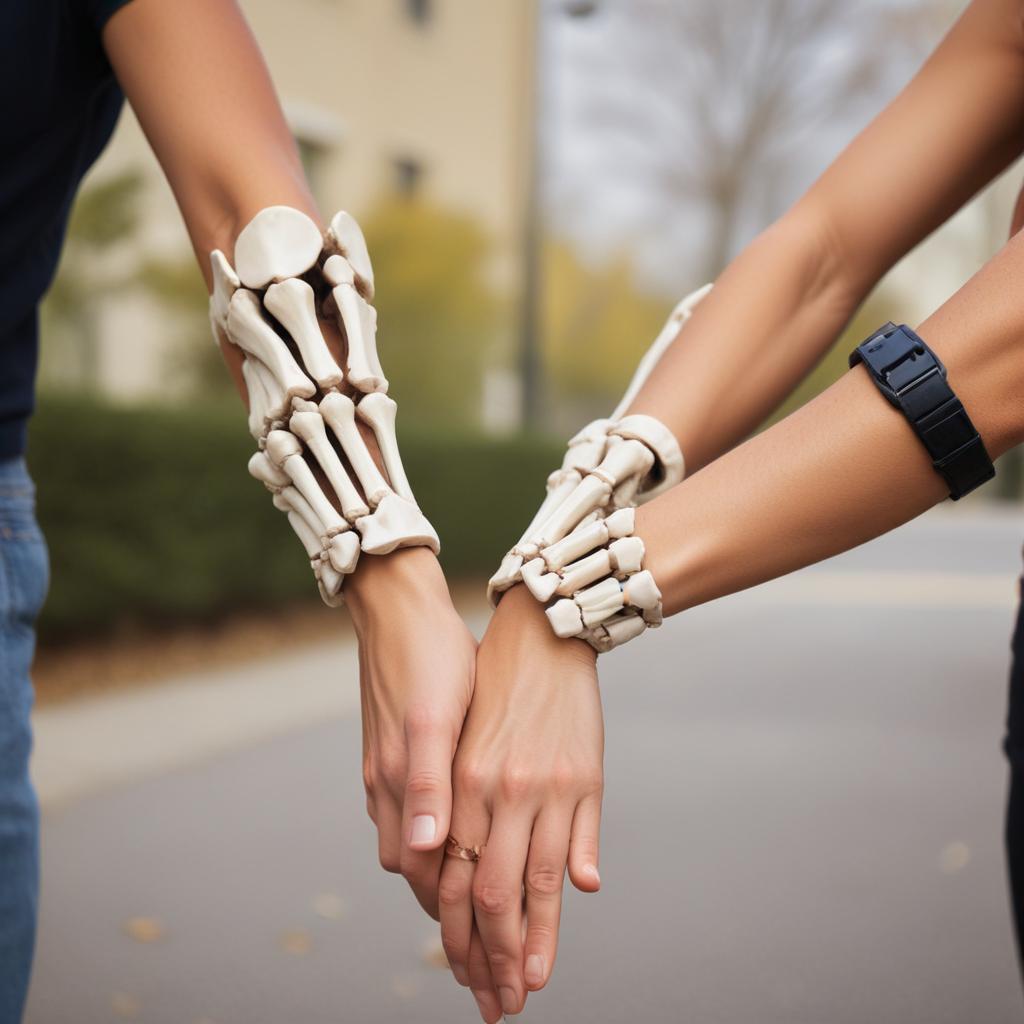
Discover why your wrists are prone to injury, from holiday falls and repetitive strain to poor posture. Learn essential tips to protect this complex joint, including proper lifting, stretching, and avoiding common issues like 'mother's thumb' and carpal tunnel syndrome.
This article explains the common causes and prevention of wrist injuries, noting that the holiday season often sees an increase in 'fall on an outstretched hand' injuries, particularly among adults trying out children's new scooters or bikes. Occupational therapist Brigette Evans highlights the wrist's intricate design, composed of eight carpal bones, radius, ulna, metacarpals, ligaments, and tendons, all vital for extensive movement and fine motor control. Physiotherapist Nicola Wheeler discusses De Quervain tenosynovitis, or 'mother's thumb,' a common condition in new parents due to repetitive lifting and feeding postures, also exacerbated by excessive scrolling or computer use. This involves inflammation of tendons connecting arm muscles to the thumb, and solutions include modifying movements, using different lifting techniques (now taught by midwives), and propping babies during feeding. The article emphasizes that wrist health is less about strength and more about careful use, advising to minimize wrist movement under load and use larger muscles like the arm and shoulder for lifting, similar to safe back lifting practices. Carpal tunnel syndrome, another frequent complaint, is described as tingling, numbness, or weakness in the thumb and first two fingers, caused by median nerve compression in the carpal tunnel. This can result from prolonged wrist flexion during sleep, computer use, or resting wrists on hard surfaces. To prevent such issues, regular stretches and rotations are recommended to keep wrists limber, breaking up periods of computer work, and applying gentle heat for morning stiffness. The article humorously concludes with a warning to 'stay off the kid’s scooter' to avoid unnecessary falls.