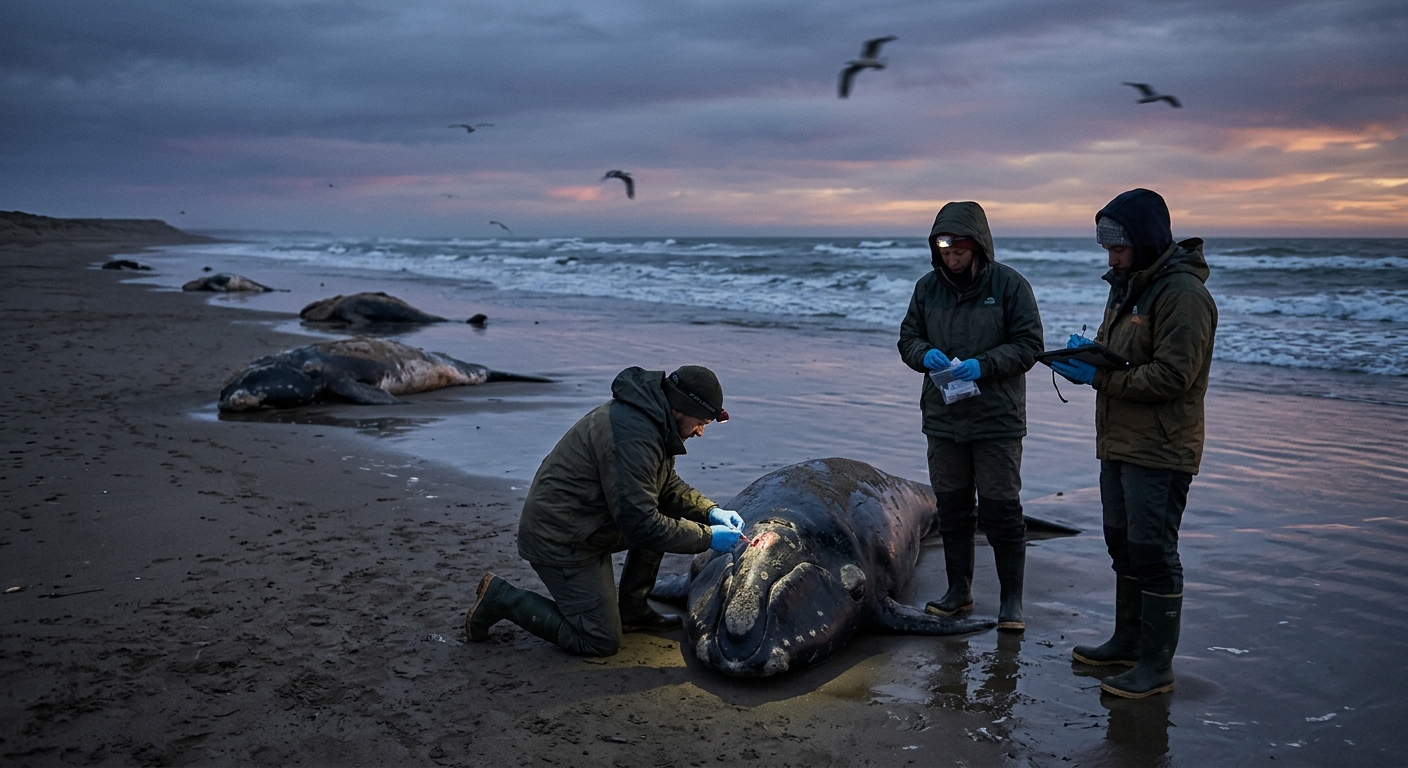
An urgent investigation is underway in Argentina as an unprecedented number of southern right whale calves are washing up dead on the Patagonian coast, a vital breeding ground. Researchers suspect bacterial infections, potentially exacerbated by environmental changes, are entering through injuries inflicted by kelp gulls.
An investigation has been launched into the alarming mystery of why scores of baby southern right whales are washing up dead on Argentina's Patagonian coast, particularly around Peninsula Valdes, a crucial breeding ground for the species. Marcela Uhart, leading the Southern Right Whale Health Monitoring Program, describes the event as unusual based on 23 years of data. The primary hypothesis suggests that the whale calves are succumbing to bacterial infections. These infections are believed to enter their bodies through injuries sustained from kelp gulls, which peck at whales surfacing to breathe. While adult whales have learned to avoid these attacks, calves lack this ability, leaving them vulnerable. Researchers are collecting samples from the carcasses to identify the specific microbes and confirm if infection is the cause of death. Even if confirmed, the team must determine why these bacteria have become so lethal this year, with potential factors including warming sea temperatures linked to climate change or El Niño, possibly creating conditions where bacteria overcome the calves' immunity. Southern right whales, once hunted to near extinction, have been gradually recovering since international protection in 1935, but their recovery is threatened by various pressures. If these significant calf losses continue, they could severely impede the population's rebound. The investigation aims to pinpoint the cause to implement protective measures, especially if human activities are found to be a contributing factor.