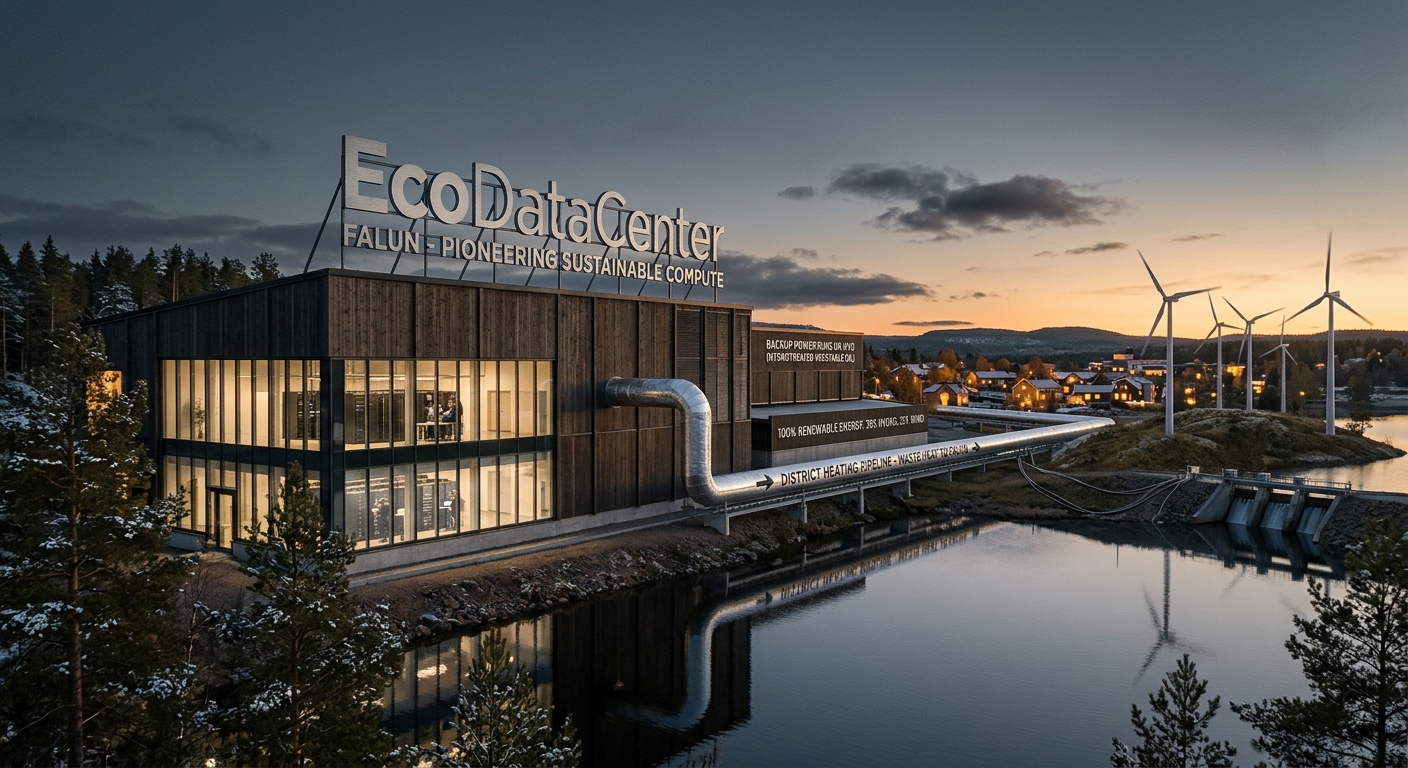
Sweden is revolutionizing the datacenter industry by constructing facilities that are not only environmentally sustainable, built with wood and powered by 100% renewables, but also deeply integrated into local communities, reusing waste heat for district heating and creating local jobs.
Datacenters are widely unpopular globally due to their significant environmental impact and often contentious community relations. However, Sweden is pioneering a radically different approach, exemplified by EcoDataCenter in Falun. This facility, constructed from wood, dramatically reduces embodied carbon and operates on 100% renewable energy (75% hydro, 25% wind), achieving exceptionally low carbon and power usage effectiveness (CUE and PUE). Its backup generators run on fossil fuel-free hydrotreated vegetable oil. The cold Swedish climate aids efficient cooling, supplemented by lake water and advanced liquid cooling systems. Crucially, EcoDataCenter reuses its vast excess heat, channeling it into Falun's district heating system and for drying wood pellets. Beyond environmental benefits, these datacenters are deeply integrated into local communities, often initiated by local governments, sourcing 90% of suppliers locally, investing in education, and creating jobs, as seen at their Borlänge site built on a former paper mill. This model extends across Sweden, with initiatives like Stockholm Data Parks promoting sustainable datacenters that contribute waste heat to the city's extensive district heating network. Other Nordic companies like atNorth are also innovating, exploring heat reuse for greenhouses and fish farms. This 'Nordic model' stands in stark contrast to practices in countries like the US, where datacenters are often built with minimal public consent, rely on fossil fuels, and cause significant environmental damage. While replicating Sweden's decades-long investment in renewable energy and strict regulations is challenging for other nations, even major hyperscalers like Meta and Google are establishing facilities in the Nordics, though not always perfectly adhering to the local sustainability ethos. Despite growing global demand for AI and computing power, Sweden's linear, resource-constrained approach to datacenter development offers a more sustainable and community-friendly blueprint for our digital future.