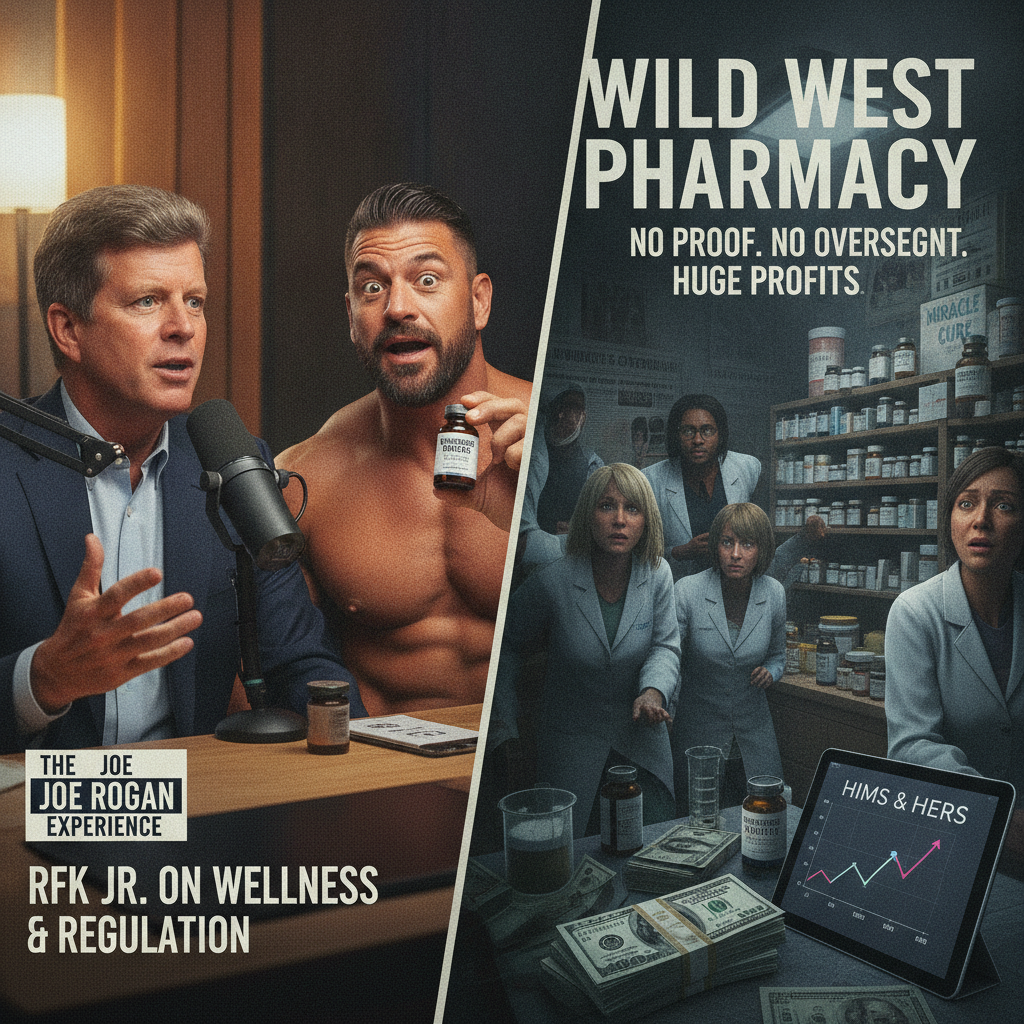
Robert F. Kennedy Jr. is spearheading a controversial effort to make unproven peptides, including those popularized by Joe Rogan, legally available through less-regulated compounding pharmacies. This move, facilitated by an FDA advisory committee with industry ties, could unleash a multi-billion dollar market for unverified treatments, raising significant safety concerns.
The article details how Robert F. Kennedy Jr. is working to deregulate access to various peptides, often promoted by influencers like Joe Rogan, through a reclassification process involving compounding pharmacies. During a February podcast with Rogan, Kennedy expressed his support for peptides, which Rogan enthusiastically promotes (including the 'Wolverine stack'), and criticized the Biden-era FDA for restricting their availability due to lack of proven safety and efficacy. Recently, a panel within Kennedy's FDA, comprised of members with financial ties to the peptide industry, recommended reclassifying six out of seven popular peptides into 'category one,' allowing them to be legally sold by compounding pharmacies without prior FDA approval for safety or effectiveness. This method leverages a regulatory loophole for compounding pharmacies, which historically created bespoke medications but have become a haven for minimally tested treatments, especially since the COVID-19 pandemic. The article traces the history of compounding pharmacies, noting their exclusion from strict FDA oversight and instances of deadly errors, such as the 2012 fungal meningitis outbreak. While some FDA oversight was introduced for bulk compounders after this incident, many new facilities remain uninspected, and errors are still more common than with large manufacturers. Critics, including former FDA officials, warn that this reclassification undermines the long-standing principle that drugs must be proven safe and effective before marketing. The move is expected to create a multi-billion dollar market, with companies like Hims & Hers already seeing stock surges and preparing to capitalize. Financial ties between Kennedy's administration and the peptide industry, including a compounding pharmacy CEO on a pro-Kennedy PAC, are highlighted. Despite potential risks and the lack of scientific backing, consumers, often influenced by wellness rhetoric and a struggling healthcare system, are eager for these 'miracle cures.' The article concludes by warning that this 'wild west' approach could lead to a boom-and-bust cycle for compounders and expose patients to unproven and potentially dangerous products, without the assurance of FDA-backed safety and efficacy.