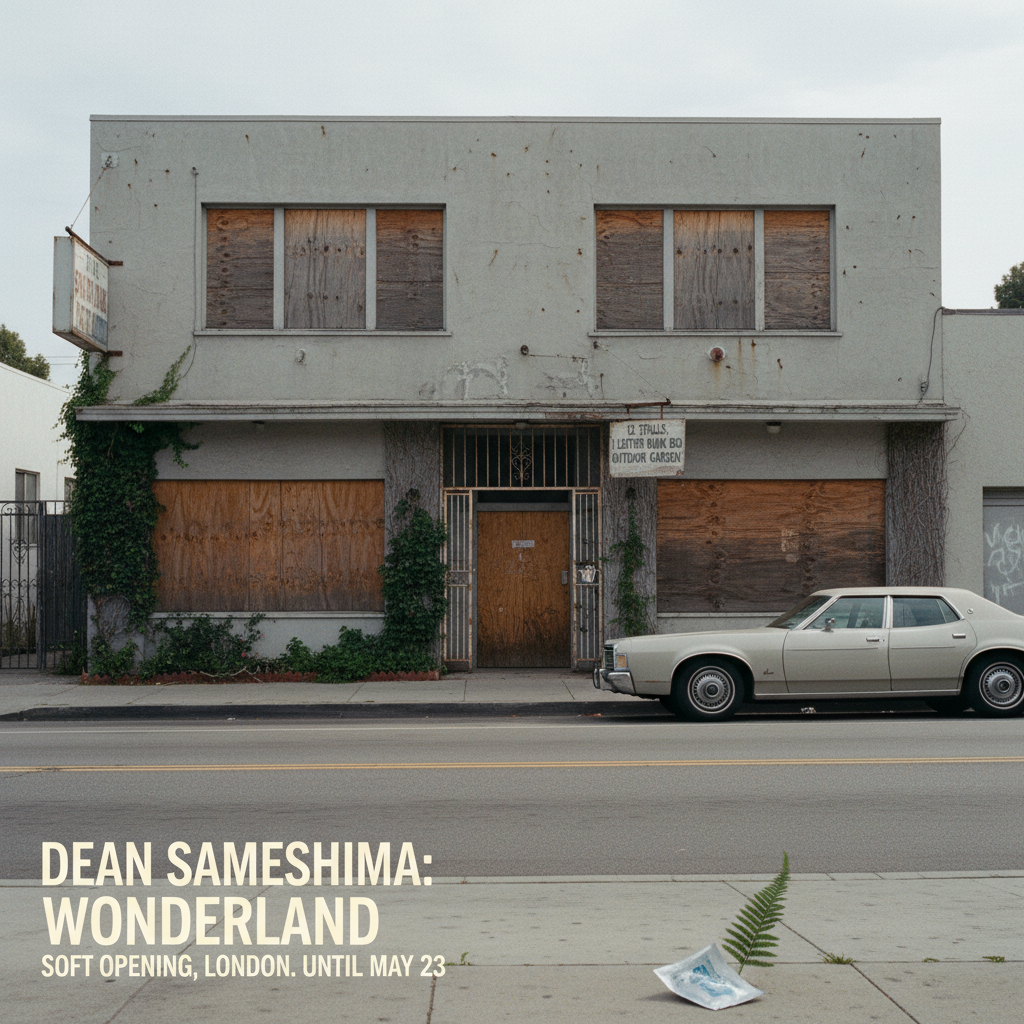
Dean Sameshima's 'Wonderland' series (1995-1997) subtly documents hidden queer sex clubs, bathhouses, and cruising spots in Silver Lake, LA, during the AIDS pandemic. These photographs capture ordinary exteriors that concealed vital, yet illegal, safe spaces, exploring themes of grief, loss, and the nuanced reality of queer life.
American artist Dean Sameshima's 'Wonderland' series, created between 1995 and 1997, captures the clandestine world of Silver Lake's queer sex clubs, bathhouses, and public park cruising spots during the height of the AIDS pandemic. His photographs initially present ordinary buildings, formally shot with no people, clean streets, and boarded-up or windowless facades, creating a strangely silent and voyeuristic atmosphere. Explicit titles, however, unveil the hidden activities within these 'illegal safe spaces,' such as '12 stalls, 1 leather bunk bed, outdoor garden.' Sameshima, in his early 20s at the time, photographed these sites to process the grief and loss experienced by the devastated queer community, particularly as many clubs closed in 1995. These images serve as 'devotional documents,' resisting the 'shaming gaze of heteronormative society' and acknowledging the constant threat of surveillance and police raids. The exhibition also features photographs of public parks, depicted in unsensational daylight, where cruising took place. These images emphasize the quiet, natural solace of these spaces, yet subtly hint at the tension between visibility and safety, with a discarded condom wrapper serving as a poignant detail. Sameshima's slow, unshowy approach contrasts with contemporaries like Catherine Opie, finding power in the unseen and offering a nuanced, open-ended portrayal of queerness, presence, and belonging, celebrating the fleeting, radical nature of pleasure even in hidden places. The 'Dean Sameshima: Wonderland' exhibition is currently on display at Soft Opening, London, until May 23.