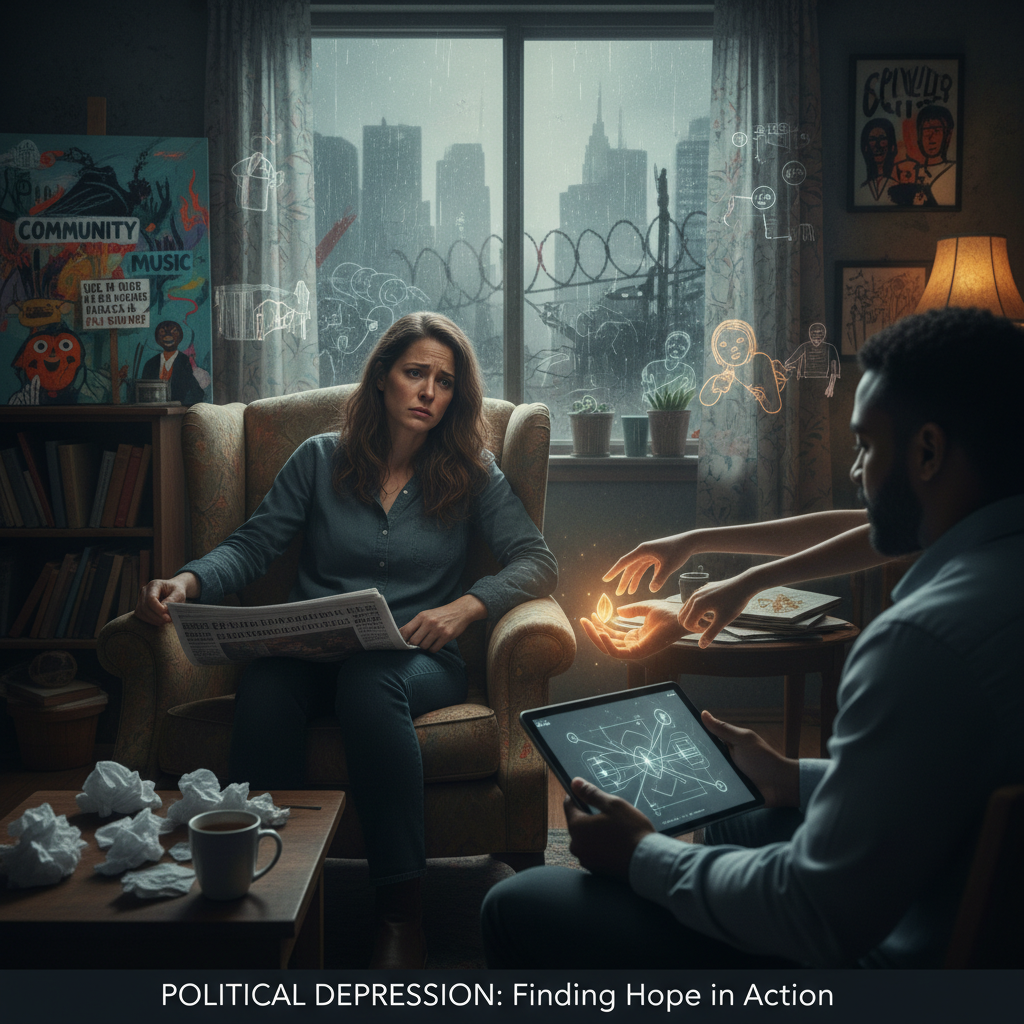
Discover "political depression," a growing form of despair rooted in global injustices, not just personal issues. This article explores its impact, symptoms, and how a new approach to therapy and community action offers ways to cope and inspire engagement without disengagement.
The article details "political depression," a concept developed by Ann Cvetkovitch, which describes profound terror, horror, and hopelessness arising from external political and social events, exemplified by Rebecca McFaul's despair over current affairs. Unlike traditional depression, its source is the world's violence and injustice. This phenomenon is increasingly common, manifesting as political stress discussed in therapy and leading to significant mental and physical health issues like fatigue, anger, and even suicidal thoughts, particularly among politically engaged individuals. Psychology professor Brett Ford notes politics as a chronic stressor, suggesting that while disengagement can offer relief, it risks reducing motivation for action. She advocates for coping strategies that protect mental health while fostering engagement, viewing negative emotions as potential motivators for political action. Therapists, like Shahem Mclaurin, are adapting by integrating systemic and political factors into their practice, challenging conventional therapy's focus on adaptation. Mclaurin encourages clients to understand injustices and embrace "the choice of hope" through community involvement. Both Cvetkovitch and McFaul highlight community, art, and truth-telling as vital coping mechanisms, promoting collective action and shared humanity in response to global challenges.