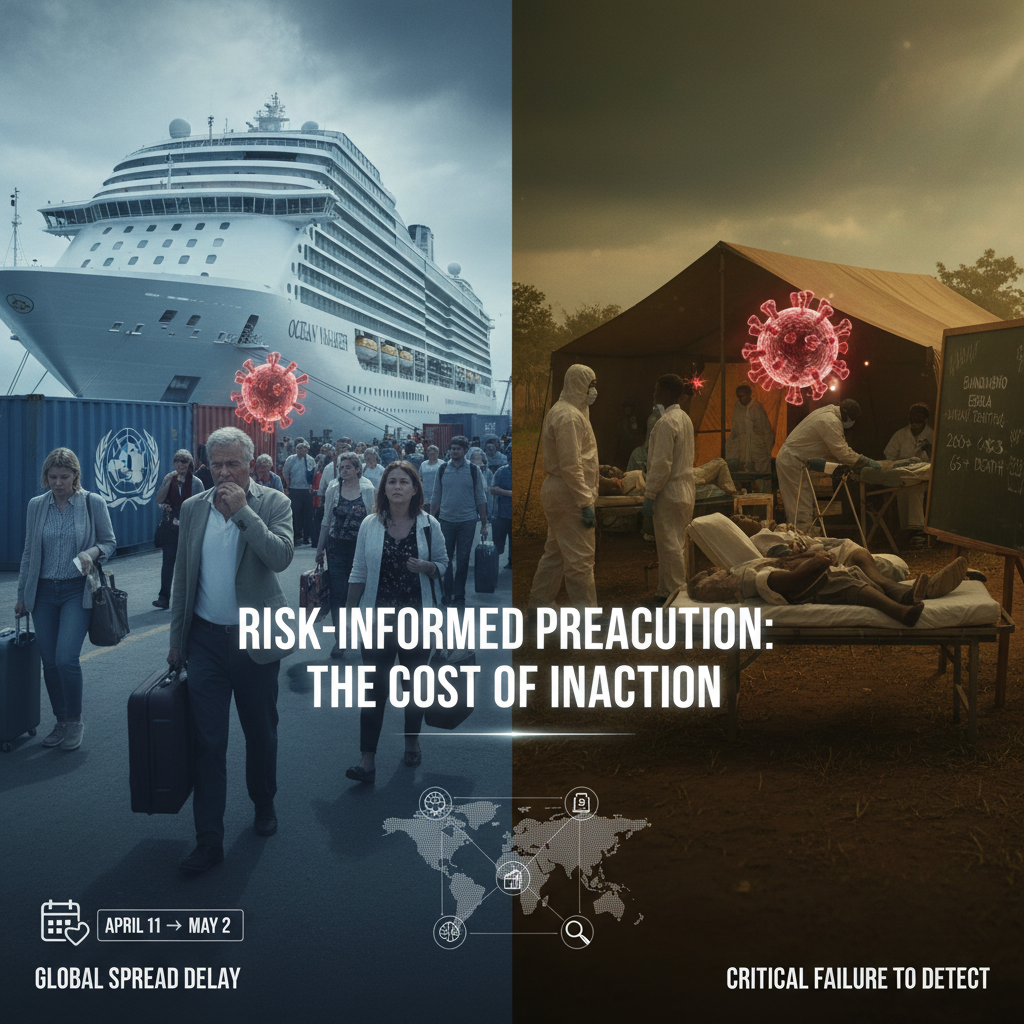
Two rare disease outbreaks, Andes hantavirus on a cruise and Bundibugyo Ebola in the DRC, caused deaths and triggered costly international responses. The incidents expose a critical gap in global health: not in our ability to respond, but in our willingness to anticipate, prevent, and use precaution based on known risks and endemic disease patterns.
Recent outbreaks of Andes hantavirus on a South Atlantic cruise and Bundibugyo Ebola in the Democratic Republic of Congo (DRC) have highlighted a severe global health vulnerability. The hantavirus outbreak played out slowly, with a passenger's death on April 11 not linked to the virus until May 2. During this delay, passengers continued their itinerary, disembarked, and potentially spread the virus, leading to a costly international health event requiring WHO coordination and government interventions. This occurred despite Andes hantavirus being endemic to Argentina, a departure point for many cruises, and its known human-to-human transmission. Similarly, the Bundibugyo Ebola outbreak in DRC's vulnerable Ituri province caused over 260 cases and 65 deaths, spreading for weeks before confirmation. This was a critical failure, given Ebola's endemic nature in the DRC and the usual early detection of even single cases. Initial negative tests for the common Zaire strain reportedly led to cases being set aside, ignoring the potential for other strains or hemorrhagic fevers in a region with a painful history of Ebola. Both outbreaks underscore the critical need for 'risk-informed precaution.' This involves actively using geographical data, endemic disease patterns, and local outbreak history to shape clinical protocols and surveillance systems. The article advocates for a standing multidisciplinary body of experts to systematically map these known risks and translate them into tailored, anticipatory protocols. The failure to address these gaps not only leads to preventable deaths and costly responses but also leaves the world vulnerable to novel pathogens or known viruses with enhanced spread capabilities, potentially triggering the next pandemic with little to no warning. Both outbreaks carried a 32% case fatality rate and were predictable given their contexts, emphasizing that the question is not affordability of smarter surveillance, but whether we can afford to ignore clear warning signs.