Discover how a couple transformed their suburban lawn into a thriving native ecosystem, attracting wildlife and inspiring their community, as part of a growing national movement to replace traditional turf with biodiverse, environmentally friendly plants.
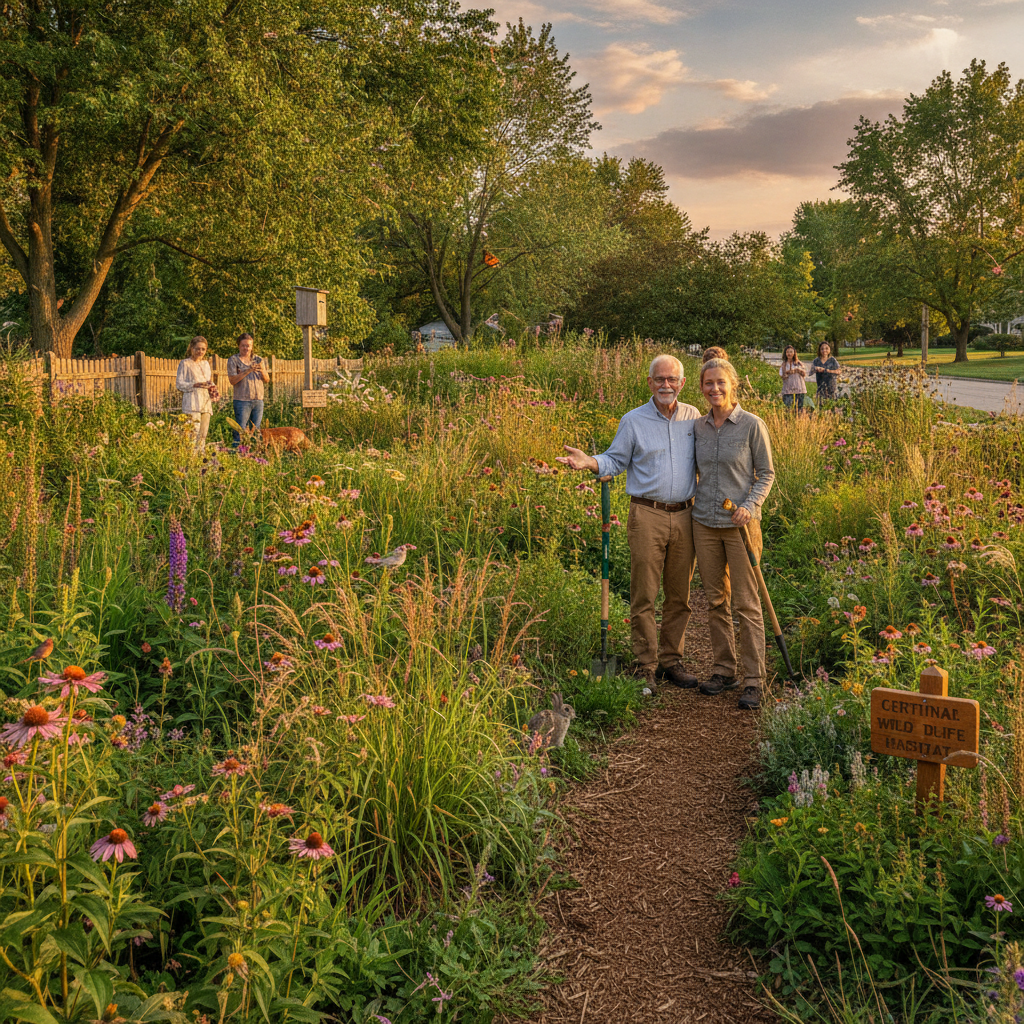
James Reed McGuire and Crystal Fritz, initially novice gardeners in Highland Park, Illinois, embarked on a mission to replace their traditional lawn with native plants. Despite early challenges and missteps, including aimlessly scattering seeds and arduous manual turf removal, they persevered, learning to identify local native species and grow them economically. Their efforts transformed their yard into a vibrant native ecosystem, teeming with birds, butterflies, bees, rabbits, bats, and foxes, providing them with peace and earning widespread positive feedback from neighbors. Their garden has been featured in local walks, received city permission to extend to the roadside verge, and was certified as a Wildlife Habitat by the National Wildlife Federation. This personal success story mirrors a broader national movement to replace environmentally problematic lawns with biodiverse native plantings. Entomologist Doug Tallamy highlights that traditional lawns, a European import, are ecological deserts: non-native grasses offer poor carbon sequestration, contribute to chemical runoff, and fail to support local food webs. Tallamy advocates for 'conservation landscaping' and the 'Homegrown National Parks' initiative, suggesting that even partially converting lawns to native plants can create vital connected habitats. Other examples abound, like poet Camille Dungy in Fort Collins, Colorado, whose 70% native garden influenced local policy changes regarding 'water-wise' landscaping. States like California, Minnesota, and Pennsylvania now offer incentives for native planting, and some areas ban invasive species. Beyond ecological benefits, native gardens are proving to be attractive selling points in real estate. This movement empowers individuals by offering a visible and rewarding way to contribute directly to environmental conservation, transforming their 'piece of the planet' into a functional habitat.