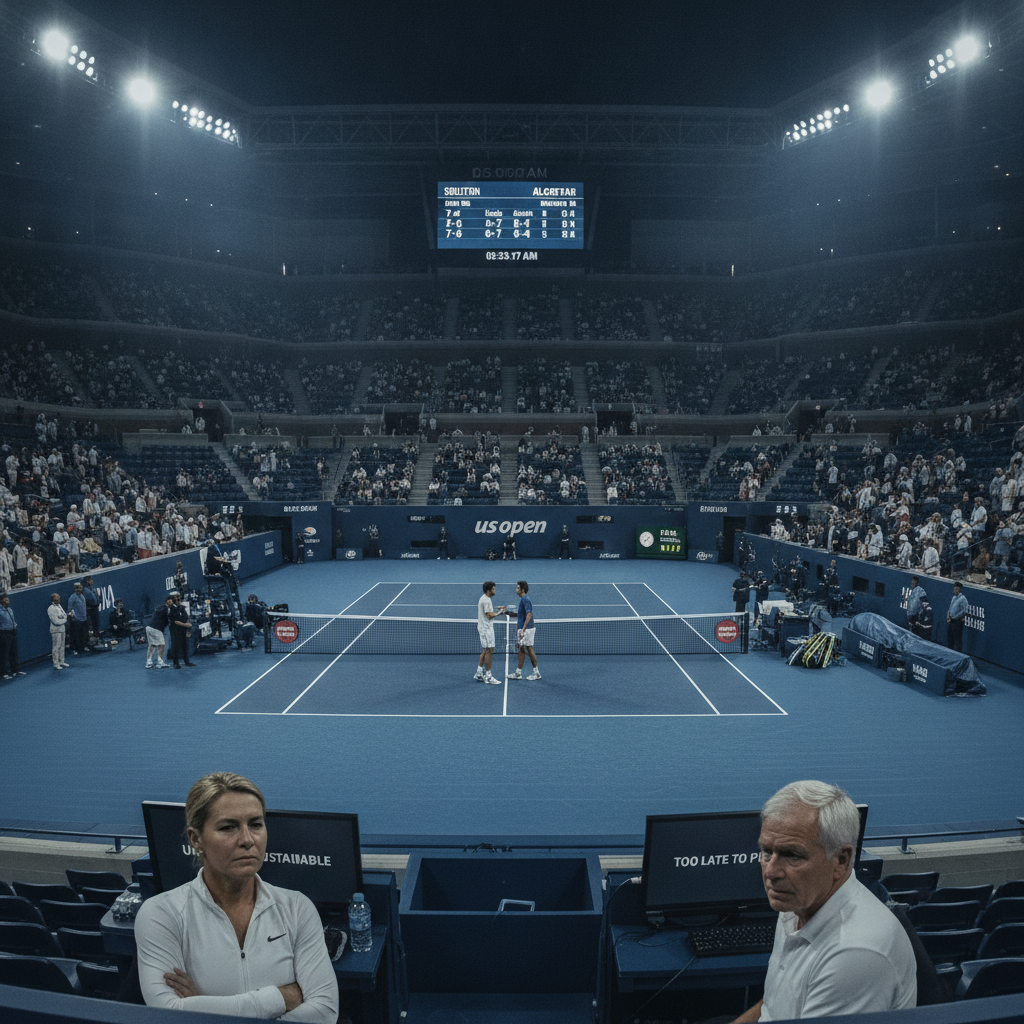
The US Open's late-night matches, exemplified by Ben Shelton's 3:33 a.m. quarterfinal finish, are sparking debate over player welfare, fan experience, and revenue-driven scheduling, raising concerns about its impact on athletes like Shelton ahead of critical matches.
The US Open is facing renewed criticism over its match scheduling after Ben Shelton's quarterfinal against Carlos Alcaraz concluded at a record-late 3:33 a.m. The article highlights that while late finishes are synonymous with the tournament, this year has been exceptionally bad, with many high-profile matches extending past midnight, leading to empty stands and exhausted players. The primary reason cited is the US Open's two-session (day and night) ticket sales model, which doubles revenue, combined with lucrative primetime TV deals and a lack of a curfew (unlike Wimbledon). Shelton's late finish was a 'perfect storm' of two earlier marathon matches pushing back the night session start. Tennis legends like Martina Navratilova and Boris Becker have voiced concerns, calling the schedule 'unsustainable' and 'too late to play.' Players, including Aryna Sabalenka and Venus Williams, describe the severe impact on their sleep, recovery, and overall schedules, questioning how it affects performance in subsequent matches, such as Shelton's upcoming semifinal. While tournament officials acknowledge the need to evaluate options, they note challenges in shifting schedules earlier due to potential revenue loss from TV deals and fan travel difficulties during rush hour. Despite considering earlier starts, the 7 p.m. night session start is currently deemed 'the right time' by the tournament director, suggesting immediate changes are unlikely.