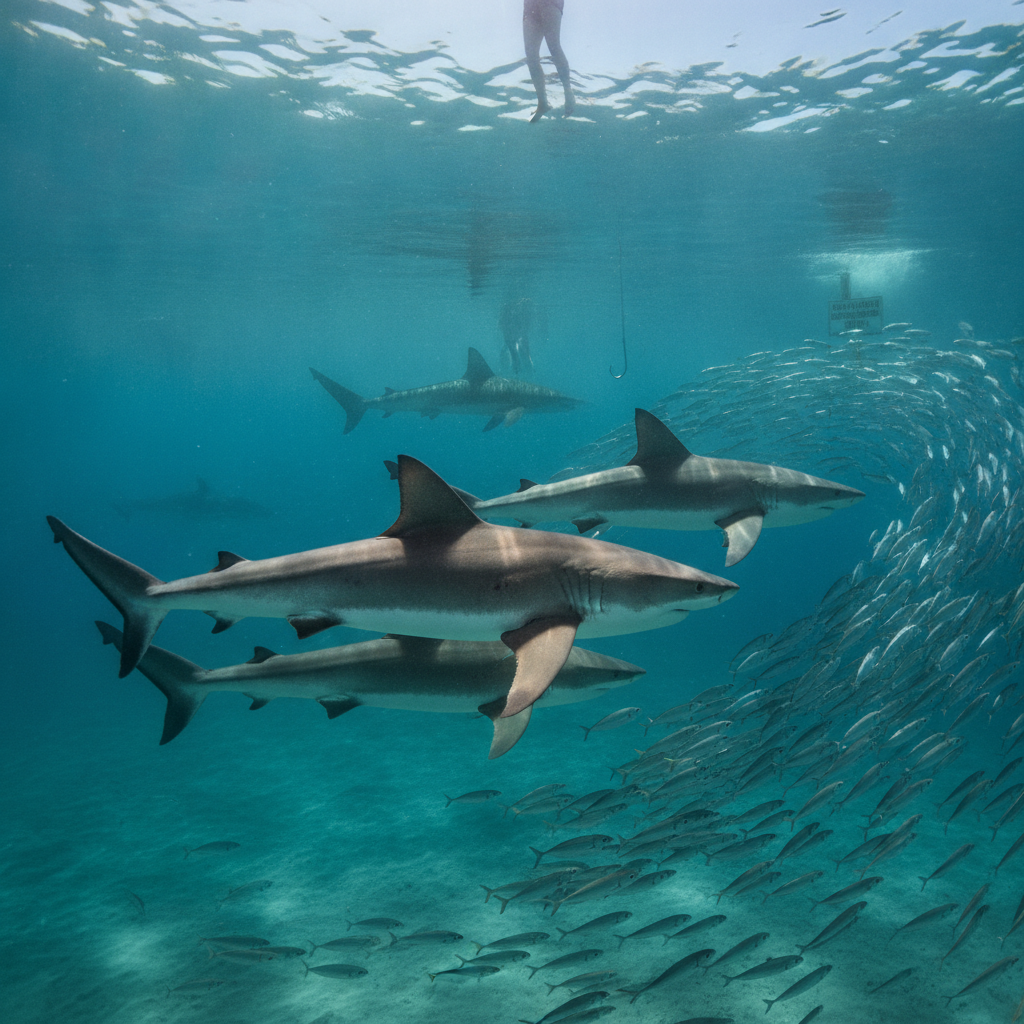
California is set for its 'sharkiest summer in a decade' due to El Niño, driving an unprecedented number of juvenile great white sharks north from Mexico. Despite increased sightings, experts emphasize that shark bites remain extremely rare as sharks have learned humans are not prey.
California is anticipating its 'sharkiest summer in a decade,' with an unusually high number of juvenile great white sharks migrating earlier than ever from Mexico to cooler waters along the western United States. Dr. Chris Lowe, director of the CSULB Shark Lab, notes baby white sharks appeared in February this year, two months earlier than usual. This phenomenon is largely attributed to the strong El Niño climate pattern, confirmed by NOAA, which causes warmer ocean temperatures. Great white sharks, particularly juveniles, are pushed out of their warm nursery grounds in Baja California, seeking cooler environments in California. A similar migration was observed in 2015 during another El Niño year. Beyond great whites, California waters are also expected to host other subtropical species like hammerheads, bull sharks, and tiger sharks, along with their food sources, creating an 'El Niño buffet' off the coast. In response to the anticipated increase in shark presence and human interactions, wildlife officials have implemented emergency regulations. These measures aim to prohibit certain fishing gear at beaches and piers to prevent the accidental hooking of protected white sharks, an activity that poses significant danger to swimmers. Despite the rise in shark populations due to successful conservation efforts and the expected increase in their presence, experts like Lowe and John Ugoretz from the California Department of Fish and Wildlife stress that shark bites remain exceedingly rare, and fatal incidents even more so. They highlight that white sharks have largely learned that humans are not prey, a conclusion supported by years of research and drone data. Beachgoers are encouraged to exercise caution but understand that encountering a shark, while rare, is part of being in a wild marine environment, and the risk of an incident is remarkably low given the number of sharks and people sharing the ocean.