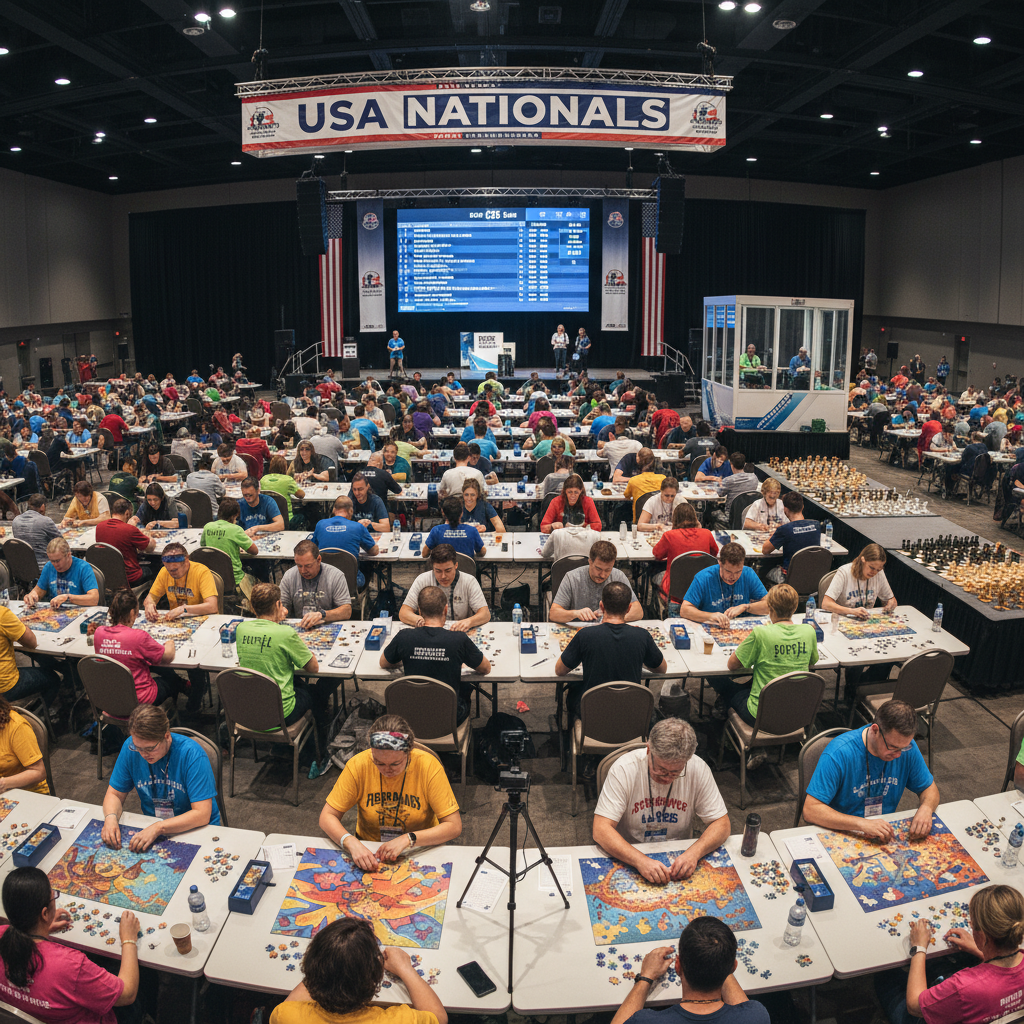
From a PhD student to a 12-year-old, a diverse group became national champions at the USA Jigsaw Nationals, showcasing the rapid transformation of jigsaw puzzling into a competitive sport with a thriving, friendly community.
The article explores the booming world of speed jigsaw puzzling, a hobby that has rapidly evolved into a competitive sport. The 2026 USA Jigsaw Nationals in Atlanta, Georgia, drew over 1,600 attendees, including a diverse array of competitors like a PhD student, a 12-year-old, and a former math teacher, all competing for national titles. The competitive scene, initially established by Hallmark in the 1980s and revived in 2022 by the USA Jigsaw Puzzle Association (USAJPA) and Ravensburger, has experienced significant growth, particularly following the Covid-19 lockdowns which boosted interest and led to the rise of online speed puzzling platforms and viral social media content. The community is consistently described as "friendly" and "kind," with participants often wearing coordinated outfits and engaging in related activities such as puzzle chess, educational panels, and autograph sessions with puzzle artists. Competitors dedicate hours daily to training, honing techniques and building physical stamina. The competition features individual, pairs, and team categories, where participants race to complete unreleased Ravensburger puzzles of varying piece counts under strict time limits, all while being broadcast on a live stream with expert commentary. The author shares their personal experience participating in a qualifying round, finding it both challenging and exhilarating. Despite finishing 122nd out of 200, they felt a sense of accomplishment and experienced the supportive nature of the community firsthand. The finals crowned a 12-year-old, Conner, and his partner Josh Trauger as pairs champions, while Alice Rowe secured the individual title, and her team, the Jiggernauts, won the team final. The sport is witnessing a trend of increasingly younger and faster competitors, with top puzzlers now routinely finishing 500-piece puzzles in under 40 minutes, a significant improvement from previous times. The article concludes by highlighting the immense growth potential of speed puzzling, with some even envisioning its future as an Olympic sport.