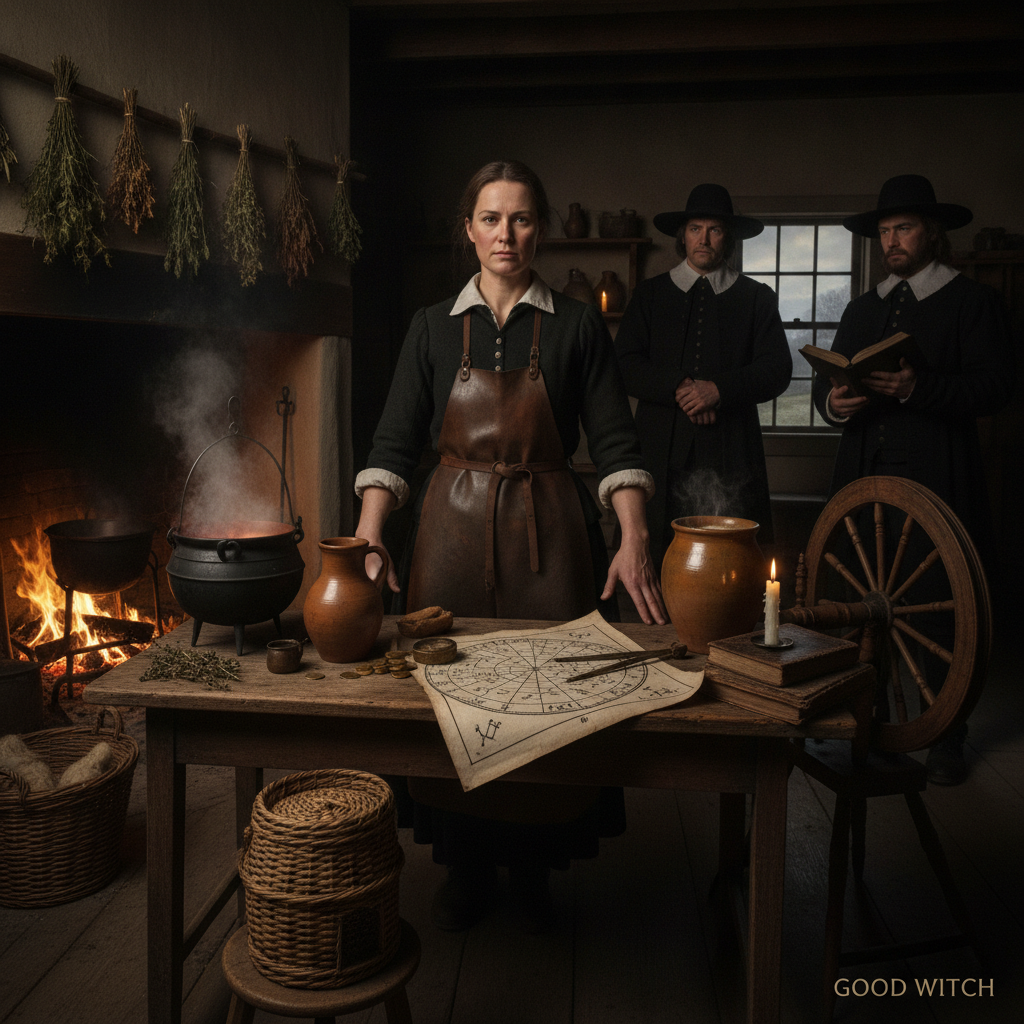
Explore the historical persecution of financially independent and powerful women, like 17th-century widow Katherine Harrison, who were accused of witchcraft for defying patriarchal norms and succeeding in traditionally male-dominated areas. This article connects historical witch trials to modern-day challenges faced by women in power.
Katherine Harrison, a wealthy 17th-century widow in Wethersfield, Connecticut, defied societal norms by independently managing her farm, brewing ale, spinning, beekeeping, and practicing astrology. Her independence, wealth, and non-conformity made her vulnerable to accusations of witchcraft in 1668, two decades before the Salem witch trials. The author, researching for her book 'Good Witch,' highlights how Harrison's case is emblematic of a broader pattern in European and colonial New England witch-hunts. Women who inherited property, lacked male heirs, or turned traditional skills (like healing, dairying, or textile production) into profitable businesses often faced accusations. Historian Carol F Karlsen's research shows that women without male heirs were disproportionately prosecuted, found guilty, and executed. Similarly, in Europe, women's work in healthcare and food preparation, often prone to natural spoilage or disease, was maligned as witchcraft. The article details how institutions like the church and academia systematically marginalized female healers, culminating in trials like that of Agnes Sampson in Scotland. Ultimately, the piece argues that accusations of witchcraft were historically wielded to control and punish women who sought financial independence and defied social structures. It concludes by drawing a parallel to modern times, suggesting that while the methods have changed, the tendency to label powerful women as 'witches' persists as a means to diminish their influence.