A major study reveals that specially bred mosquitoes carrying Wolbachia bacteria significantly reduce dengue and chikungunya infections, offering a promising new strategy against mosquito-borne illnesses as Florida battles a severe outbreak.
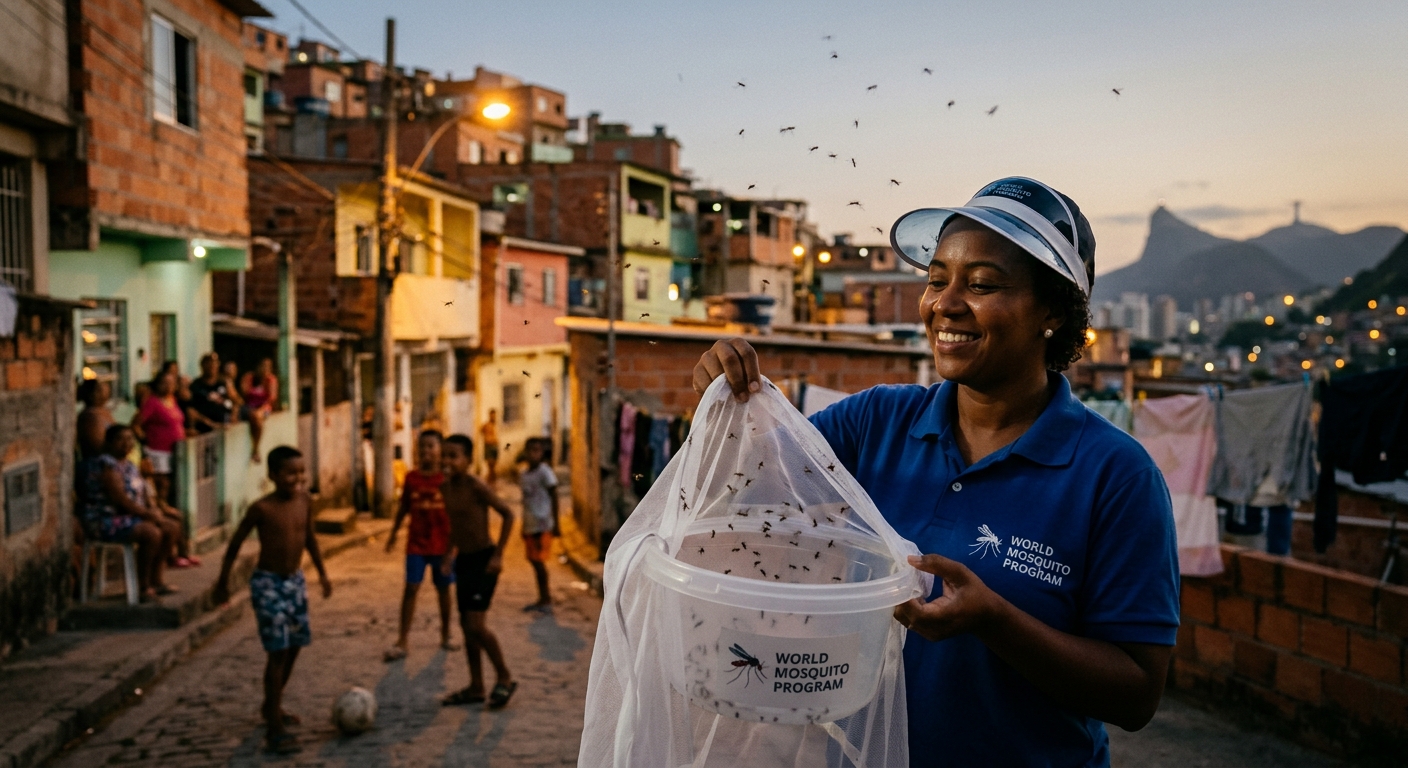
A groundbreaking study in Brazil, involving over 5,700 children, has shown that specially bred mosquitoes carrying Wolbachia bacteria provide strong protection against dengue and chikungunya. Children in neighborhoods populated by these Wolbachia-carrying insects experienced approximately a 69% reduction in dengue and chikungunya infections, a sustained effect even during Brazil's severe 2024 dengue outbreak. This innovative strategy, pioneered by the nonprofit World Mosquito Program, involves breeding mosquitoes with Wolbachia, a bacteria harmless to people but which dramatically reduces the mosquitoes' ability to transmit certain viruses. Female mosquitoes then spread the bacteria to their offspring, allowing Wolbachia to gradually become established in the local mosquito population. This research comes as Florida faces an unusually large dengue outbreak, its biggest since at least the 1940s, with over 650 locally acquired cases. Experts believe that pairing Wolbachia mosquitoes with existing disease control measures could significantly lower dengue levels in many regions, offering a viable new strategy beyond traditional pesticides and avoidance.