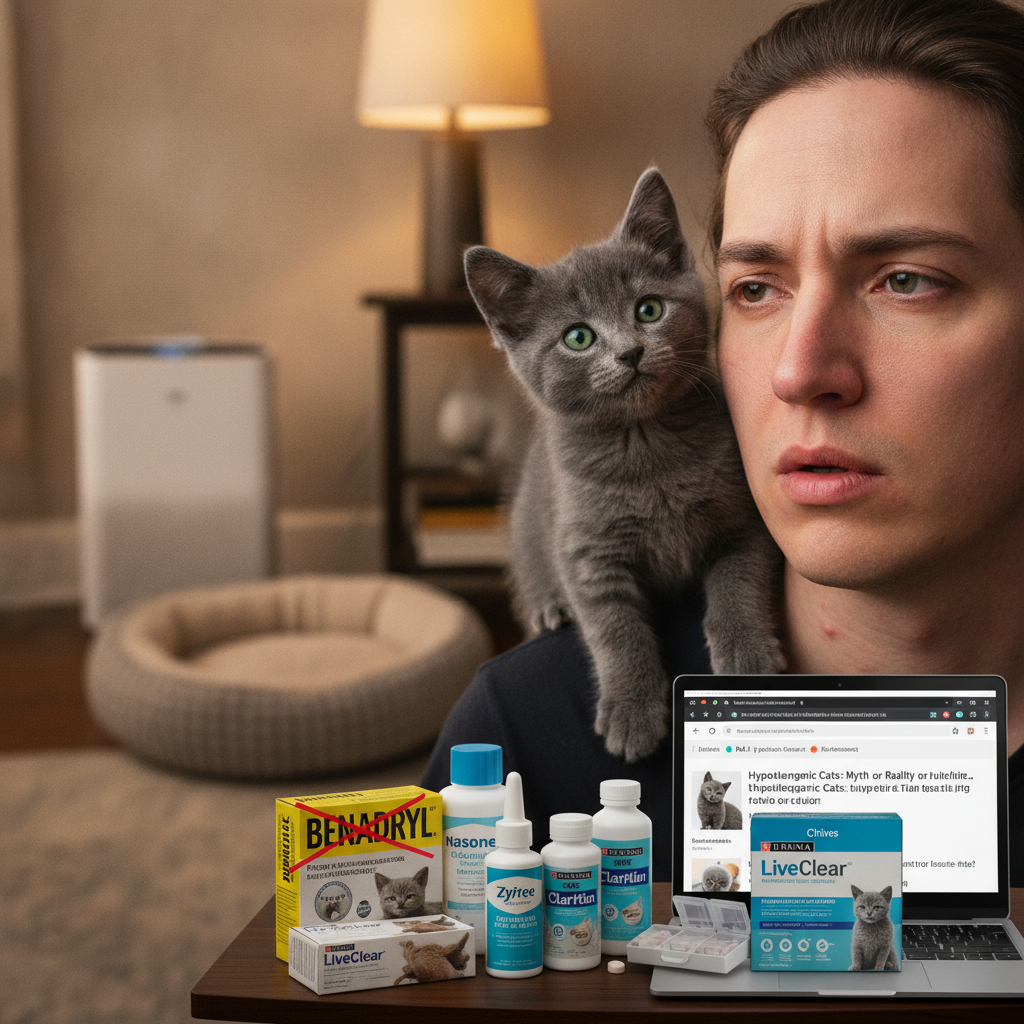
After adopting a 'hypoallergenic' kitten, the author faced severe allergic reactions. This article details their journey to understand cat allergies, debunks the myth of truly hypoallergenic breeds, and explores effective medical treatments and home management strategies that ultimately allowed them to live comfortably with their pet.
The author, despite a history of cat allergies, adopted a Russian blue kitten named Chives, believing an initial symptom-free visit and the breed's 'hypoallergenic' reputation would make it manageable. However, upon bringing Chives home, the author experienced severe allergic reactions including sneezing, wheezing, and rashes. The article explains that cat allergies are primarily caused by the Fel d 1 protein in dander and saliva, and that 'hypoallergenic' is a marketing term, not a clinical one, as all cats produce this allergen. It details various treatment options, starting with the ineffectiveness of first-generation antihistamines like Benadryl, and advocating for second-generation antihistamines (e.g., Zyrtec, Claritin) for better, longer-lasting relief without sedation. The author also warns against the long-term use of oxymetazoline nasal decongestants due to rebound congestion, recommending corticosteroid nasal sprays (e.g., Nasonex, Flonase) as a sustainable alternative. The author found significant relief with a combination of prescription rupatadine and Nasonex, and also initiated allergy shots. The article debunks the myth that consistent exposure will make one less allergic over time, except for the 'farm effect' in early life. It touches on new allergen-reducing cat foods (like Purina Liveclear and Pacagen) and sprays, advising caution and vet consultation. Key home management strategies include keeping the cat out of the bedroom, using HEPA air filters, frequent cleaning, and showering before bed. Five months in, the author's symptoms have vastly improved, allowing them to happily coexist with Chives, managing occasional minor reactions.