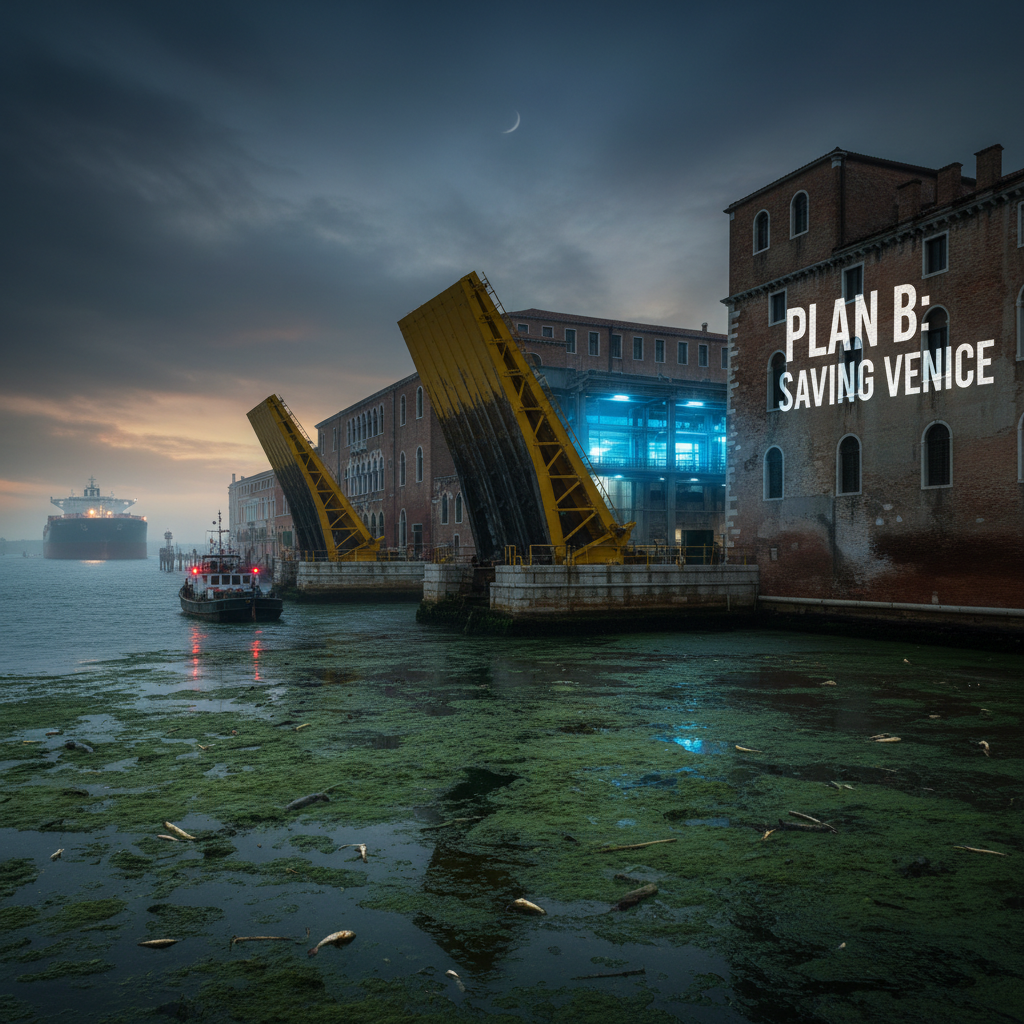
Venice's Mose flood defense system has successfully protected the city from 154 floods since 2020. However, accelerating sea level rise due to climate change is forcing its frequent activation, which severely damages the lagoon's ecosystem. Authorities are now urgently seeking a 'Plan B' to prevent Venice from becoming a 'filthy pond' and to save its future.
The Arsenale, Venice's historic shipyard, now houses the operations center for Mose, the city's colossal flood defense system. Inaugurated in 2020, Mose (Modulo Sperimentale Elettromeccanico) has been highly effective, saving Venice from potential flooding 154 times. However, this success is overshadowed by an urgent new challenge: rising sea levels. Engineers are increasingly forced to raise the barriers, which, despite protecting the city, devastates the lagoon's delicate ecosystem. Frequent closures block the natural exchange of water and sediment with the Adriatic, leading to excessive algae growth, oxygen depletion, and the death of marine life. This threatens to transform the lagoon into a 'filthy pond,' according to Andrea Rinaldo of the newly appointed Lagoon Authority. The Mose, though well-designed, was conceived for a future that has arrived much sooner than anticipated. Each activation costs upwards of €200,000 and halts crucial maritime traffic. The project itself took five decades to complete, overcoming bureaucracy, environmental concerns, and a major corruption scandal that inflated its budget. While Venetians now take the Mose for granted, the city is facing a 'death knell' with an estimated one-meter sea level rise by the century's end, which would necessitate closing the barriers almost daily. The Lagoon Authority is now launching a global call for innovative, multidisciplinary ideas to devise a 'Plan B,' aiming to reimagine Venice's future and its economy, moving beyond its reliance on tourism, to ensure the preservation of this 'jewel of artistic heritage.'