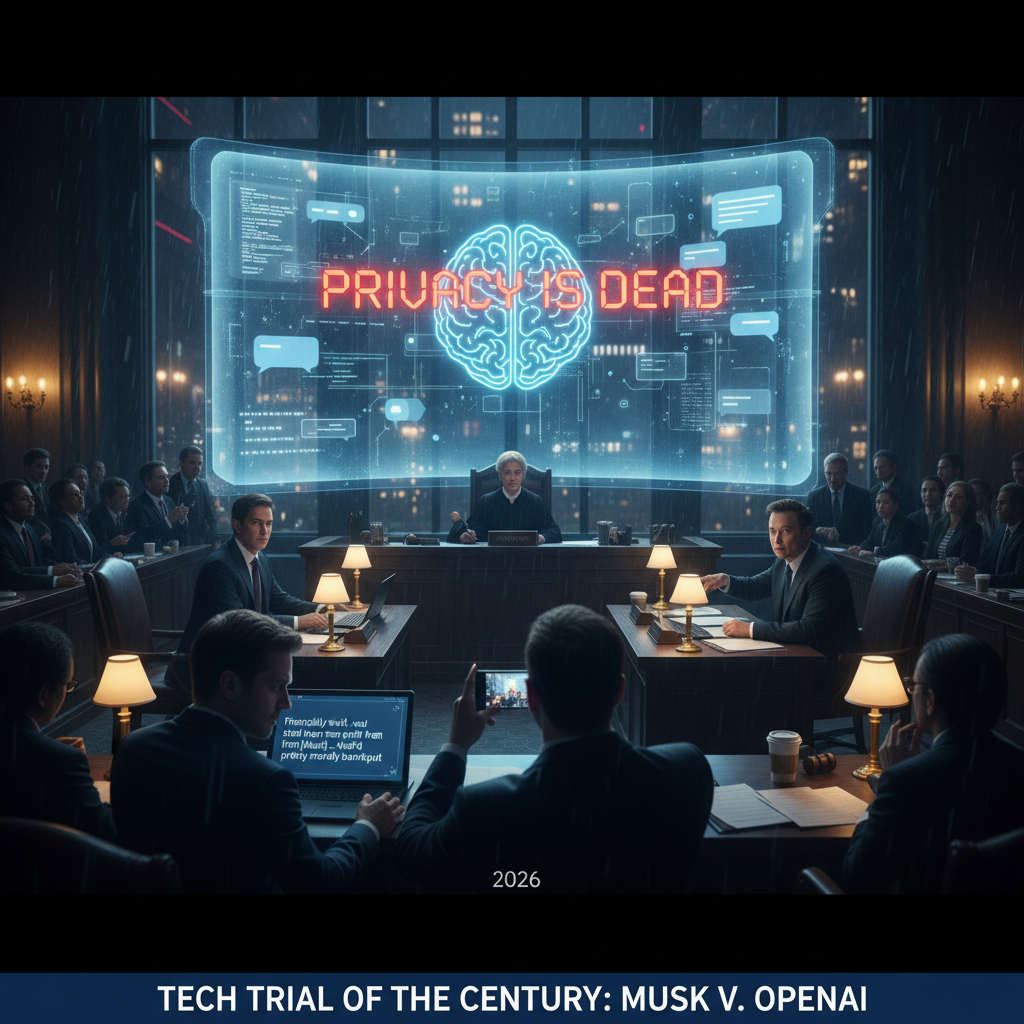
Elon Musk is suing OpenAI co-founders Sam Altman and Greg Brockman over alleged breach of the company's non-profit mission. Central to the case are Brockman's revealing diary entries, prompting a crucial warning: conversations with AI chatbots like ChatGPT are not private, can be used as evidence in court, and should not be trusted with sensitive information.
The hottest legal drama of 2026 involves Elon Musk's lawsuit against OpenAI co-founders Sam Altman and Greg Brockman. Musk, a former OpenAI board member, accuses them of violating the AI firm’s founding non-profit agreement by transforming it into a for-profit entity. Altman and Brockman, in turn, argue Musk is simply upset about his lack of control and aims to undermine his competition. A pivotal piece of evidence is Greg Brockman's personal diary from the company's early years. Extracts reveal Brockman pondering personal wealth, writing, “Financially what will take me to $1B?”, and expressing moral reservations about converting the non-profit without Musk, stating, “It’d be wrong to steal the non-profit from [Musk]… that’d be pretty morally bankrupt.” Even Brockman's tech peers are astonished by his candid journaling of potentially problematic corporate thoughts. This case serves as a stark reminder that private thoughts shared in digital spaces, particularly conversations with AI chatbots like ChatGPT, are not truly private. The article warns that, similar to Brockman's diary, AI chatbot conversations are increasingly admissible as evidence in court. Users are cautioned against sharing sensitive or personal information with these tools, as they may be retained indefinitely, shared with others, and ultimately act as a 'snitch' rather than a confidential 'shrink'.