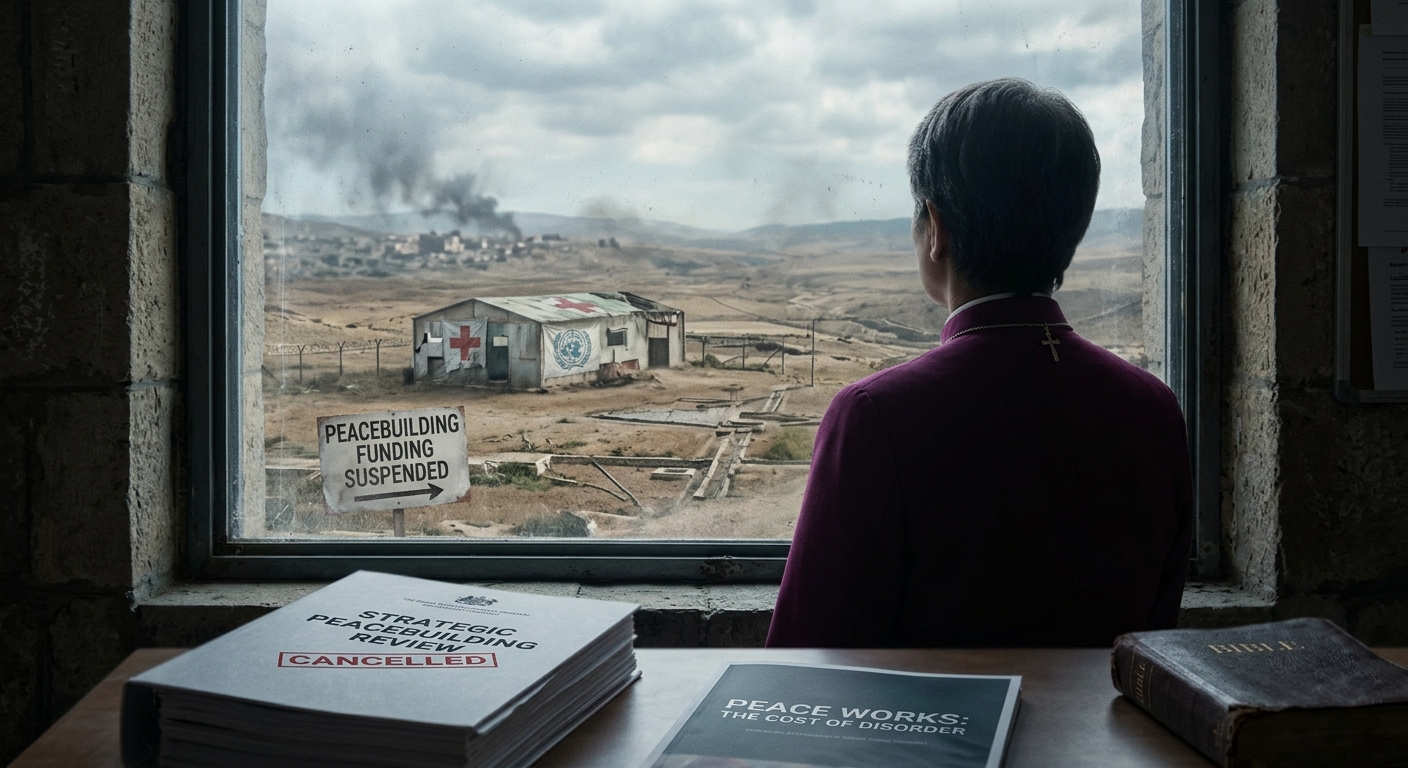
The UK's dramatic cuts to international development budgets are dismantling crucial conflict prevention initiatives, a move critics warn is making global wars more likely and costing the world trillions, despite overwhelming evidence that peacebuilding is a far more effective and economical solution.
The article, authored by The Right Revd Dr Guli Francis-Dehqani, Lord Bishop of Chelmsford, argues that the UK is dangerously retreating from tackling the root causes of conflicts by dramatically cutting international development budgets, thereby making wars more likely. While acknowledging the necessity of military deterrence, the author questions the absence of a 'Strategic Peacebuilding Review' equivalent to the Strategic Defence Review. The piece highlights initiatives like the Global Centre for Peacebuilding and Business, which works to prevent resource conflicts, as examples of vital work being undermined. The Integrated Security Fund, crucial for bringing together defence, diplomacy, and development experts, has lost nearly half its aid funding, leading to the cancellation of programs aimed at confronting extremist threats in fragile regions such as Sudan and Somalia. This retreat comes at a critical time, with more violent conflicts globally than at any point since WWII, displacing 120 million people and creating 200 million in humanitarian need. A report by international charities, 'Peace Works,' estimates the global economic cost of this disorder at £16 trillion annually. The article emphasizes that preventing or resolving conflicts is significantly cheaper than dealing with their aftermath, citing IMF research that every £1 invested in peacebuilding can avert up to £103 in conflict costs. Senior former military leaders support this view, warning that Britain's security depends on confronting threats at their source. The author cautions against repeating the mistake of US aid withdrawal, which led to increased violence, and warns that a new mantra of 'wage war for peace' could lead to a global arms race and collapse of cooperation. The article concludes by asserting that peacebuilding is not only a humanitarian cause but an essential step for national security and economic resilience.