New archaeological technologies like Lidar are dramatically rewriting the history of the ancient Maya, revealing a far larger and more complex civilization than previously imagined, with populations up to 16 million. This scientific revolution intertwines with the ongoing political struggles of modern Maya descendants in Guatemala for recognition, justice, and self-determination, against a backdrop of civil war atrocities and a corrupt political system.
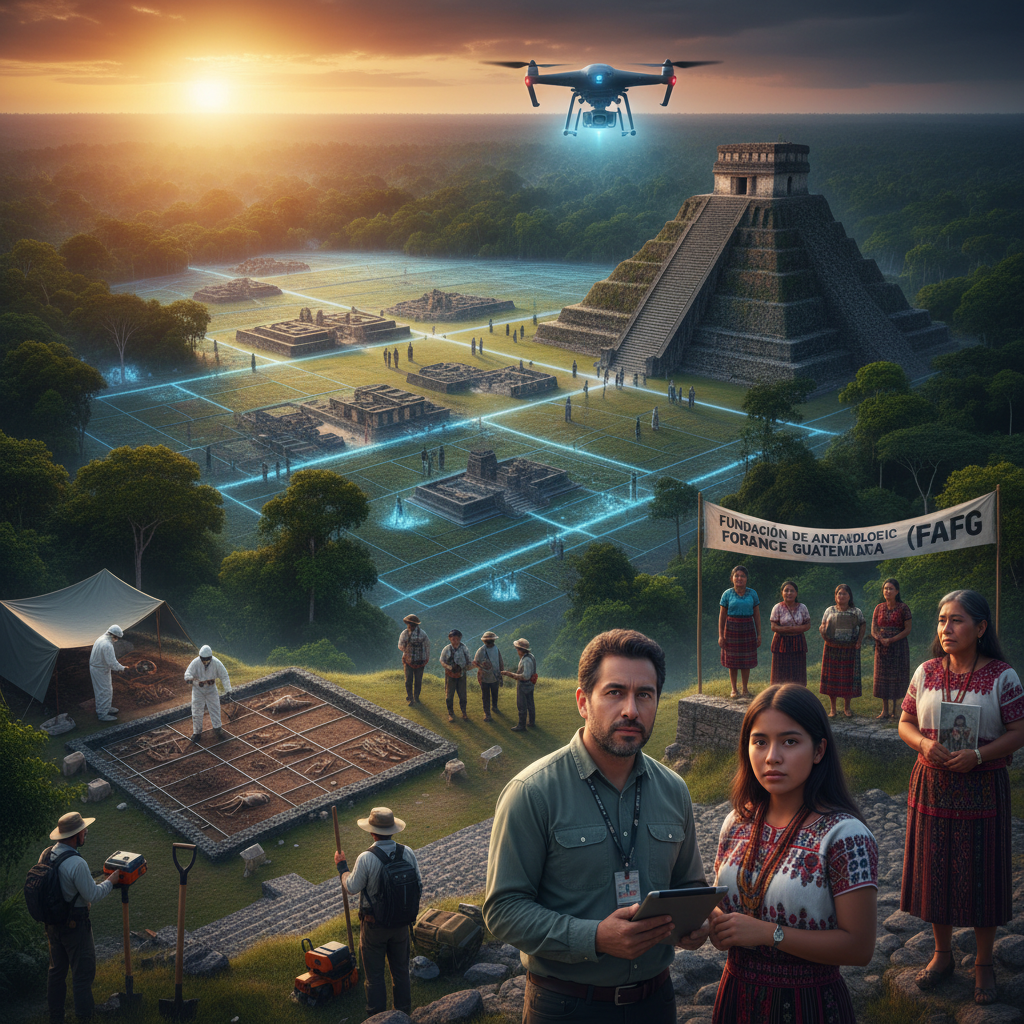
The article details a transformative period in Maya archaeology, spearheaded by figures like Francisco Estrada-Belli, whose childhood fascination with Tikal led him to a career now revolutionizing our understanding of this ancient civilization. Thanks to advanced technologies such as Lidar laser mapping, improved DNA analysis, and climate science, long-held beliefs about the Maya are being overturned. Most notably, classic-era Maya lowland populations (AD 600-900) are now estimated to have been between 9.5 and 16 million, a drastic increase from the previous 2 million, suggesting a density greater than ancient Rome in a smaller area. This new evidence refutes the "law of environmental limitation," which posited that rainforests couldn't sustain large, complex societies. Instead, Lidar scans have unveiled a "continuously interconnected rural-urban sprawl" of sophisticated cities, extensive agricultural systems, and managed wetlands, showcasing the Maya's immense resilience and sustainable farming practices over millennia. The narrative around the "collapse" of the Maya is also shifting, with scholars now focusing on periods of "decline, transformation, and reorganisation," akin to shifts seen in other great civilizations like Rome. The article powerfully connects this ancient history to the present-day struggles of the Maya people in Guatemala. With over 11 million Maya descendants today, they are a significant political force, demanding a reckoning for the 1960-1996 civil war and genocide (which claimed 200,000 lives, mostly Maya), and recognition as the legitimate owners of their ancestral lands. Their pivotal role in the recent election of President Bernardo Arévalo and the appointment of archaeologist Liwy Grazioso as Minister of Culture signifies a potential shift towards acknowledging and integrating Maya heritage into the national identity. However, the path is fraught with challenges. The legacy of Spanish colonization, which systematically suppressed Maya elites and knowledge, continues to impact their standing. Pseudoscientific theories denying Maya agency in building their own magnificent structures still circulate, serving a political purpose to disempower them. Modern forensic archaeology, exemplified by the Guatemalan Forensic Anthropology Foundation (FAFG), uses similar advanced techniques to identify victims of the civil war, providing crucial evidence for justice, though the fight against a corrupt judiciary and entrenched power structures remains perilous. Figures like Sonia Gutiérrez, the only Indigenous woman in parliament, advocate for a "plurinational" state grounded in "tzilaj k’aslemal" (the good life), a vision that challenges capitalist exploitation and integrates ancestral knowledge. Grassroots leaders like Blanca Subuyui continue to work for self-determination and community empowerment, believing that despite immense risks and resistance, the profound changes underway are unstoppable, even if they take generations. The article concludes by emphasizing the urgency of these efforts, warning of potential severe backlash if this window of opportunity is missed.