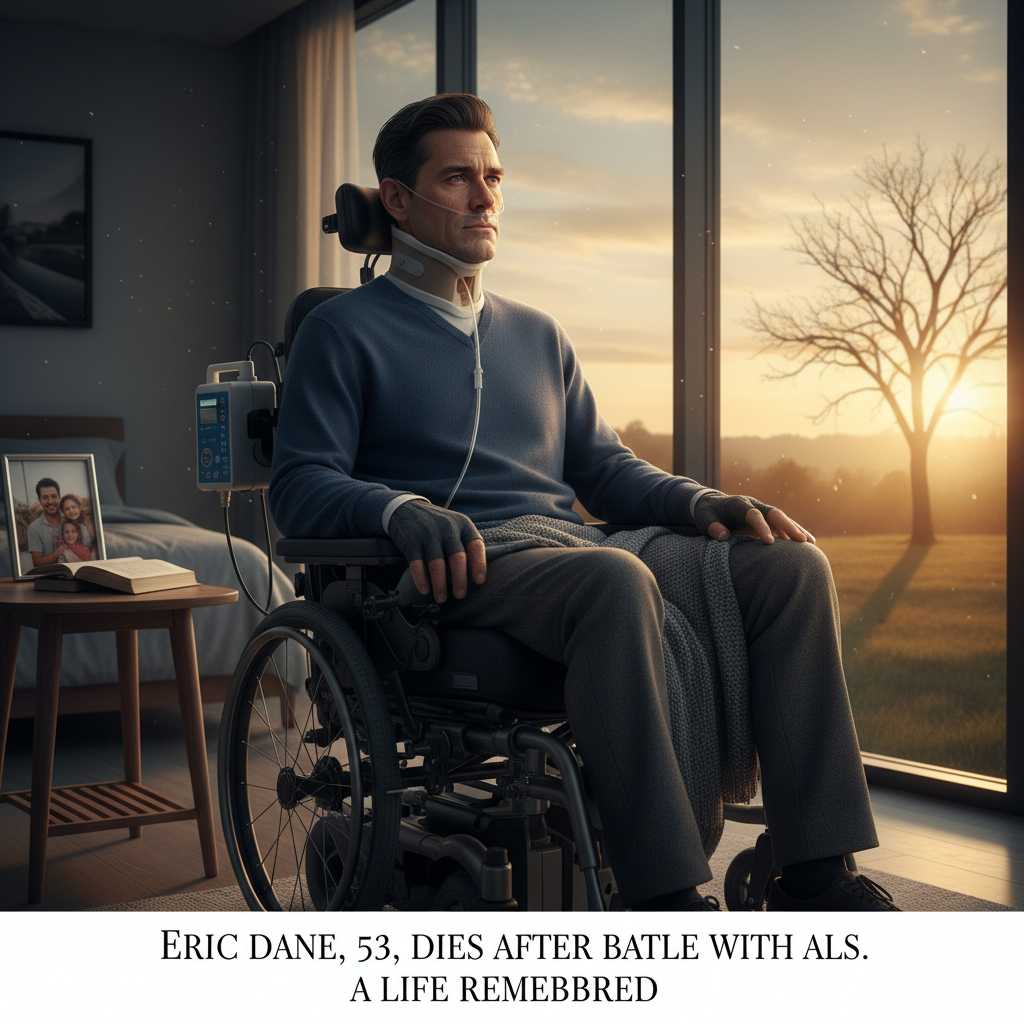
Actor Eric Dane, known for 'Grey’s Anatomy' and 'Euphoria,' died at 53 from amyotrophic lateral sclerosis (ALS). This article provides a comprehensive overview of ALS, detailing its nature, symptoms, diagnosis challenges, treatment options, and prognosis.
The article announces the death of actor Eric Dane, 53, from amyotrophic lateral sclerosis (ALS), also known as Lou Gehrig's disease. ALS is a rare neurodegenerative condition that affects nerve cells in the brain and spinal cord, leading to progressive loss of muscle control, paralysis, and difficulties with mobility, speaking, swallowing, and breathing. It is slightly more common in men, typically striking between 40 and 60, with an estimated 33,000 cases in 2022 projected to rise to over 36,000 by 2030. The exact cause is unknown, though some cases are inherited. Initial symptoms are often subtle, such as muscle twitching and weakness in limbs, progressing to severe loss of strength and coordination. While cognitive functions and senses like sight and hearing are usually unaffected, patients typically succumb to respiratory failure. Diagnosing ALS is challenging as there's no single definitive test; it relies on physical exams, lab tests, imaging, and observing specific neurological signs. Currently, there is no cure, but the drug riluzole may extend survival in early stages. Another drug, Relyvrio, was recently withdrawn from the U.S. market. Treatment focuses on managing symptoms with medications and supportive devices like feeding tubes, braces, and communication systems. Most patients live two to five years after symptom onset, though some survive up to a decade.