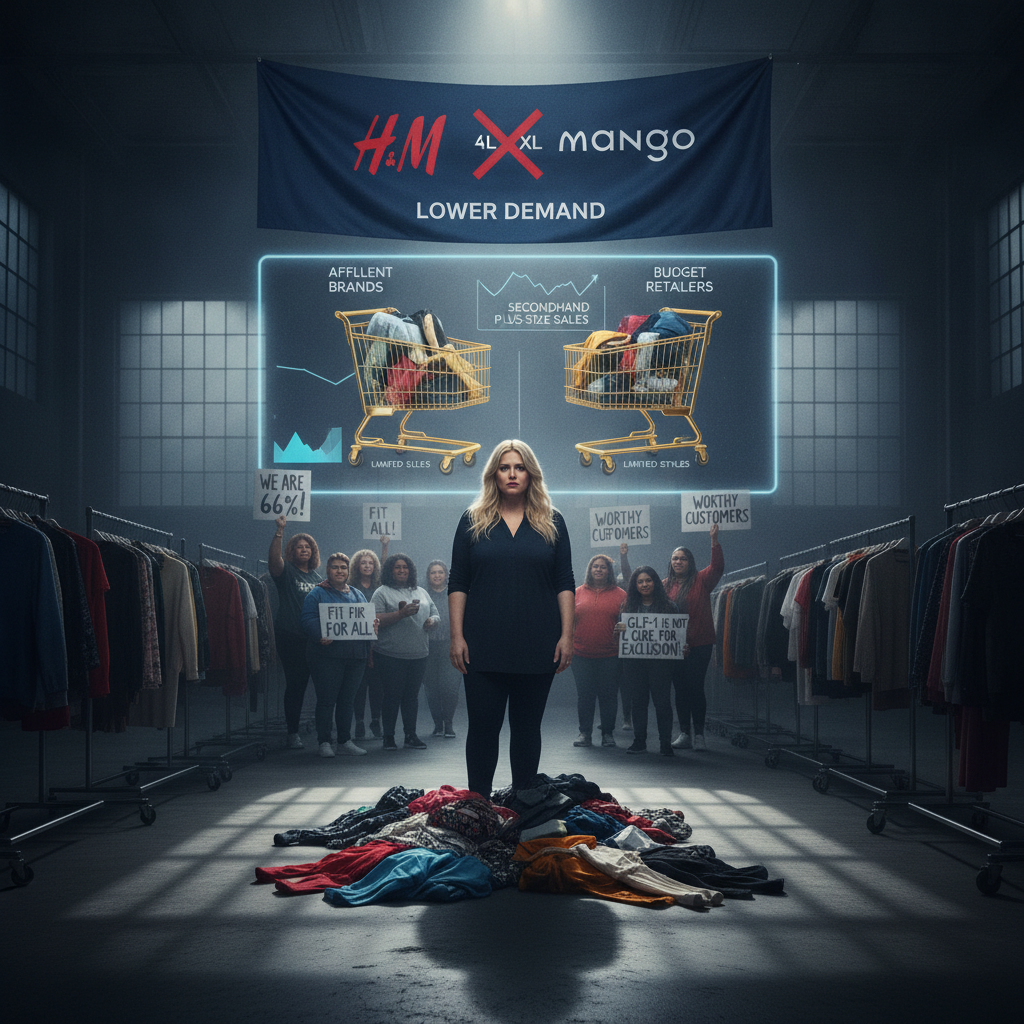
Major fashion retailers like H&M are drastically cutting plus-size offerings, reversing previous inclusivity efforts. This shift, partly attributed to the rise of GLP-1 weight loss drugs, leaves millions of plus-sized shoppers with fewer options, despite continued demand in the secondhand market and ongoing calls for true size inclusivity.
In 2023, H&M partnered with model and activist Tess Holliday to expand sizes up to 4XL and increase body diversity, a move celebrated as one of the most meaningful in Holliday's career. However, by 2026, H&M had discontinued 3XL and 4XL, and reduced other large sizes, citing 'lower demand.' This rollback is part of a wider industry trend, with brands like Mango and Anthropology also scaling back plus-size inventory. This shift coincides with a 'gloomy time for plus-sized fashion,' fueled by the rise of GLP-1 weight loss drugs like Ozempic, which have led to a decrease in the US adult obesity rate and a slight increase in sales of smaller garment sizes. Despite this, experts note that the majority of Americans remain plus-sized (66% of US women wear size 14+), and demand for larger garments is surging in the secondhand market, suggesting that the need for size inclusivity persists. Critics, including Tess Holliday, argue that brands are using GLP-1s as an excuse to avoid genuine investment in plus-size fashion, often offering outdated styles and perpetuating the stereotype that plus-sized individuals are not 'worthy customers.' The article highlights a growing demographic divide, with affluent brands pruning larger sizes while budget retailers like Walmart expand them, further marginalizing plus-sized shoppers from trend-led markets. The challenge for brands, according to analysts, is not shrinking bodies but addressing the ongoing issue of fit and offering greater size flexibility and adjustability.