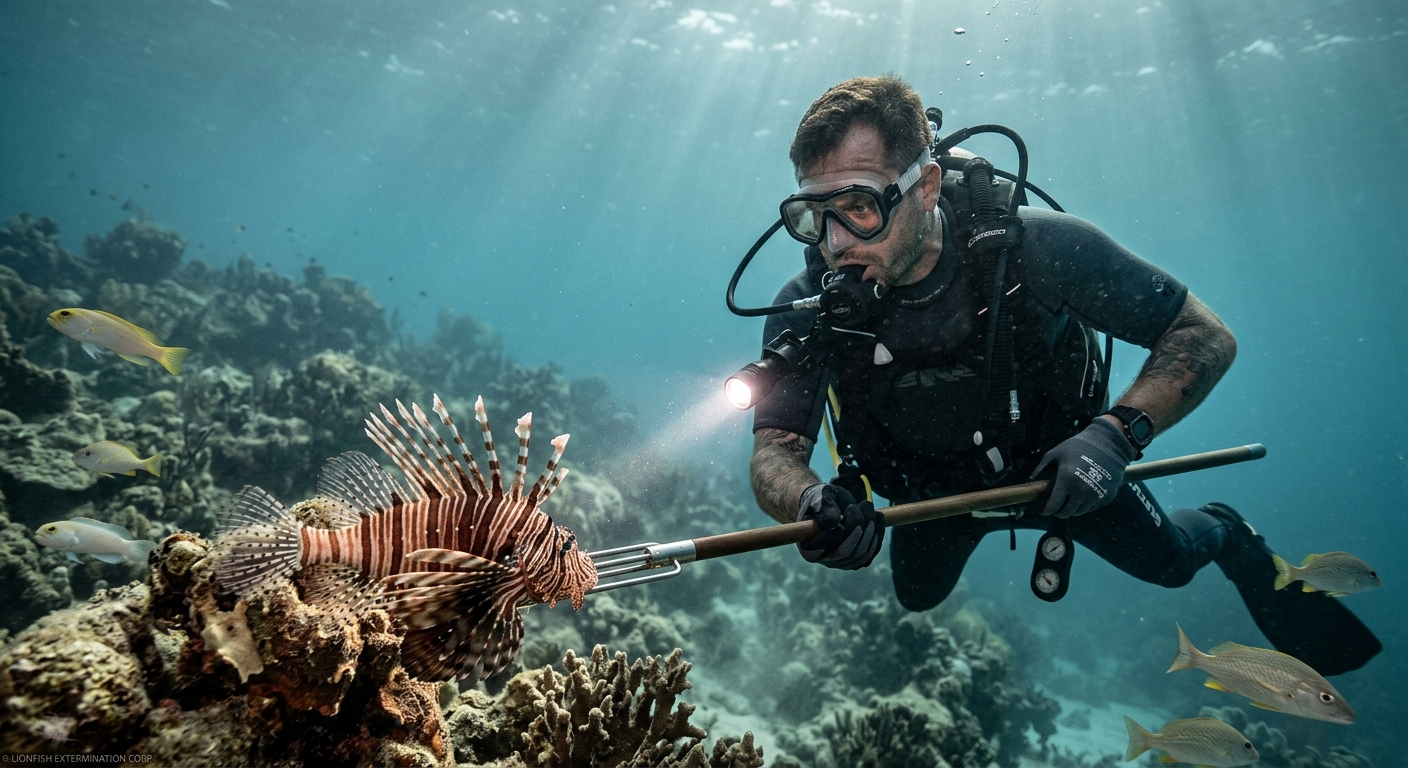
Nate Sorensen, founder of the Lionfish Extermination Corp., has become a viral sensation by gamifying the deadly serious task of culling invasive lionfish from Florida's reefs. His action-packed social media videos, garnering millions of views, highlight the devastating impact of this voracious predator on marine ecosystems and rally support for its eradication, one spear at a time.
Florida's coral reefs are under siege by a severe lionfish epidemic, an invasive species first detected in the 1980s whose population has exploded due to rapid reproduction and lack of natural predators. These venomous fish, native to the South Pacific and Indian Ocean, consume over 70 species of small fish and invertebrates, devastating food webs, reducing prey populations by up to 90%, and ultimately leading to reef collapse. Enter Nate Sorensen, a tattoo artist and vegan who has made an exception for lionfish, dedicating his life to their removal. Through his nonprofit, the Lionfish Extermination Corp., Sorensen, along with his wife Rachel Taub and dive partner Alex Borsutzky, hunts lionfish one by one with pole spears, often spending 16 arduous and dangerous hours a day underwater. He funds his operations by selling his catch to restaurants and through donations and merchandise. Sorensen gained widespread attention by turning his culling missions into viral social media content. His "gamified" videos, featuring comic-style graphics and video game sound effects, show him spearing dozens of lionfish, earning tens of millions of views and over 2.5 million followers across platforms like Instagram, TikTok, Facebook, and YouTube. Beyond the thrilling hunts, he educates his audience on marine conservation, local laws, and the wonders of Florida's reefs, often featuring beloved local marine life like Wilbur, a goliath grouper. Despite the painful stings from lionfish spines he's endured, Sorensen remains committed, driven by the knowledge that these invaders are needlessly killing native fish. While complete eradication is impossible due to the lionfish's resilience (living at extreme depths, in brackish water, and rapidly dispersing eggs), local culling efforts significantly reduce their density. Florida actively encourages lionfish hunting with year-round seasons and no recreational license required, and the state's Fish and Wildlife Conservation Commission (FWC) estimates over 1 million lionfish have been harvested since 2010. Sorensen hopes to expand his efforts, encourage more divers to join the cause, and continue raising global awareness about this critical environmental threat.