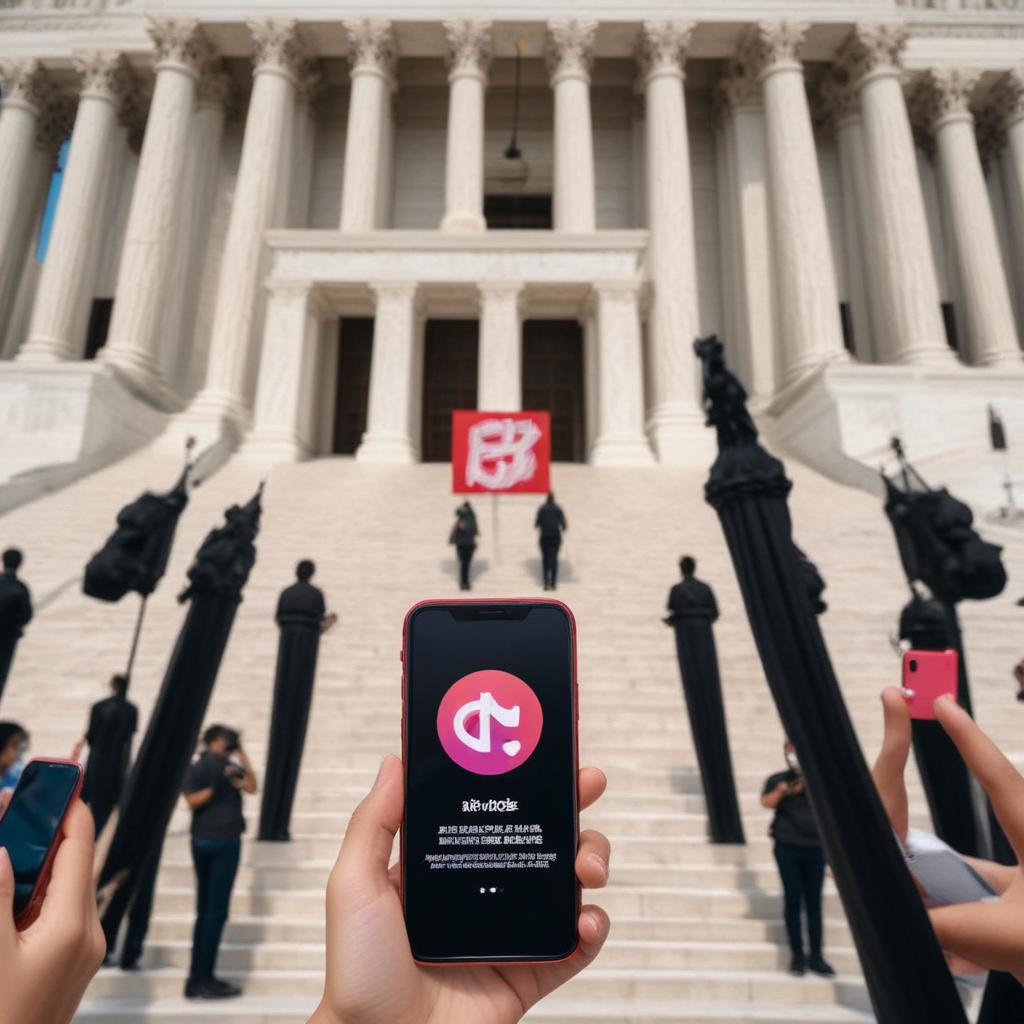
The article argues that the Supreme Court's unanimous decision upholding the TikTok ban was a grave error, demonstrating undue deference to government national security claims and setting a dangerous precedent for free speech in the US.
The authors contend that the Supreme Court's decision to uphold the TikTok ban, issued less than a year ago, has already proven to be a 'spectacularly misplaced' deference to the government's national security arguments. They highlight that the ban, ostensibly aimed at preventing Chinese access to user data and content manipulation, was pushed by legislators with censorial motivations, specifically targeting content sympathetic to Palestinians. Despite warnings from First Amendment advocates and privacy experts about the ban's ineffectiveness and its dramatic curtailment of free speech, the Court accepted the government's claims without serious scrutiny, stating it was not its role to second-guess the executive branch on national security. This approach, the authors argue, contradicts a century of First Amendment doctrine, which evolved from past mistakes like the Red Scare, where courts failed to protect speech from government overreach. Subsequent events, such as President Trump's repeated suspensions of the ban's enforcement, have further exposed the government's 'urgent threat' claims as baseless, making a mockery of the court's rushed judgment. The decision leaves TikTok operating under a constant threat of being shut down, giving the government unprecedented power to influence content moderation and posing a national security risk by enabling broad control over online discourse. The authors urge the Supreme Court to learn from this 'embarrassing, scandalous coda' and exercise its constitutional role of skepticism in future national security cases involving speech suppression.