Mexico City's 2026 World Cup preparations are overshadowed by widespread protests, including striking teachers, leading to clashes and concerns about the nation's image amidst a global event.
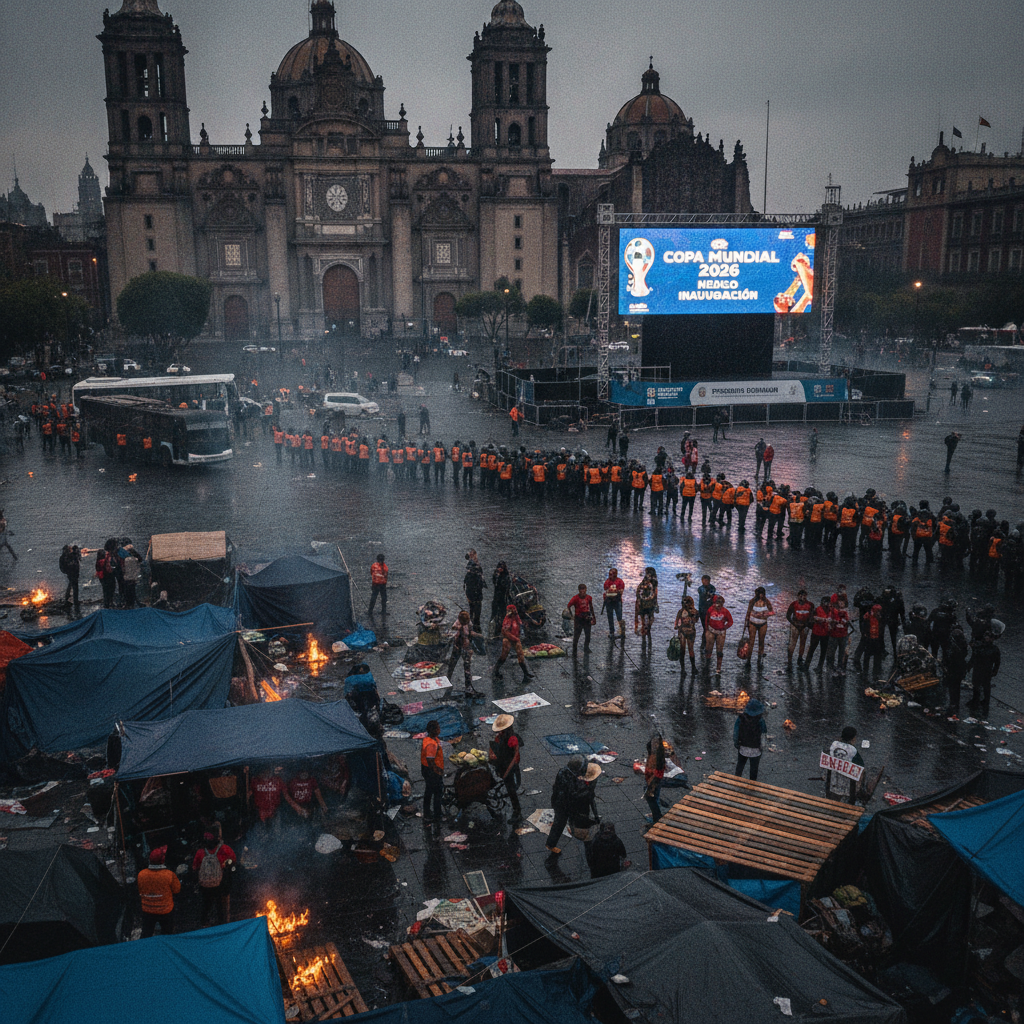
Mexico City is gearing up to host the opening match of the 2026 World Cup, transforming its historic Zócalo into a fan festival and investing heavily in infrastructure. However, these preparations are severely overshadowed by escalating social unrest. Striking teachers, affiliated with the CNTE, have established a tent city near the Zócalo, protesting for better wages and pension reforms, leading to violent clashes with riot police. Other groups, including transport workers, farmers, and sex workers, are also using the World Cup's spotlight to voice their grievances. While President Claudia Sheinbaum dismisses the threats as 'provocation,' protesters vow to disrupt the tournament opener, arguing government investments only benefit the wealthy. This volatile situation has divided public opinion, with some supporting the protests as a necessary platform and others condemning them for harming Mexico's international image and local businesses, creating a stark contrast to the intended global celebration of sport.