The Trump administration, led by President Trump and Secretary of State Marco Rubio, has escalated threats of U.S. military intervention in Cuba following the indictment of former leader Raúl Castro. While preferring a peaceful resolution, officials express doubt about diplomatic success and emphasize Cuba's role as a national security threat due to its ties with U.S. adversaries.
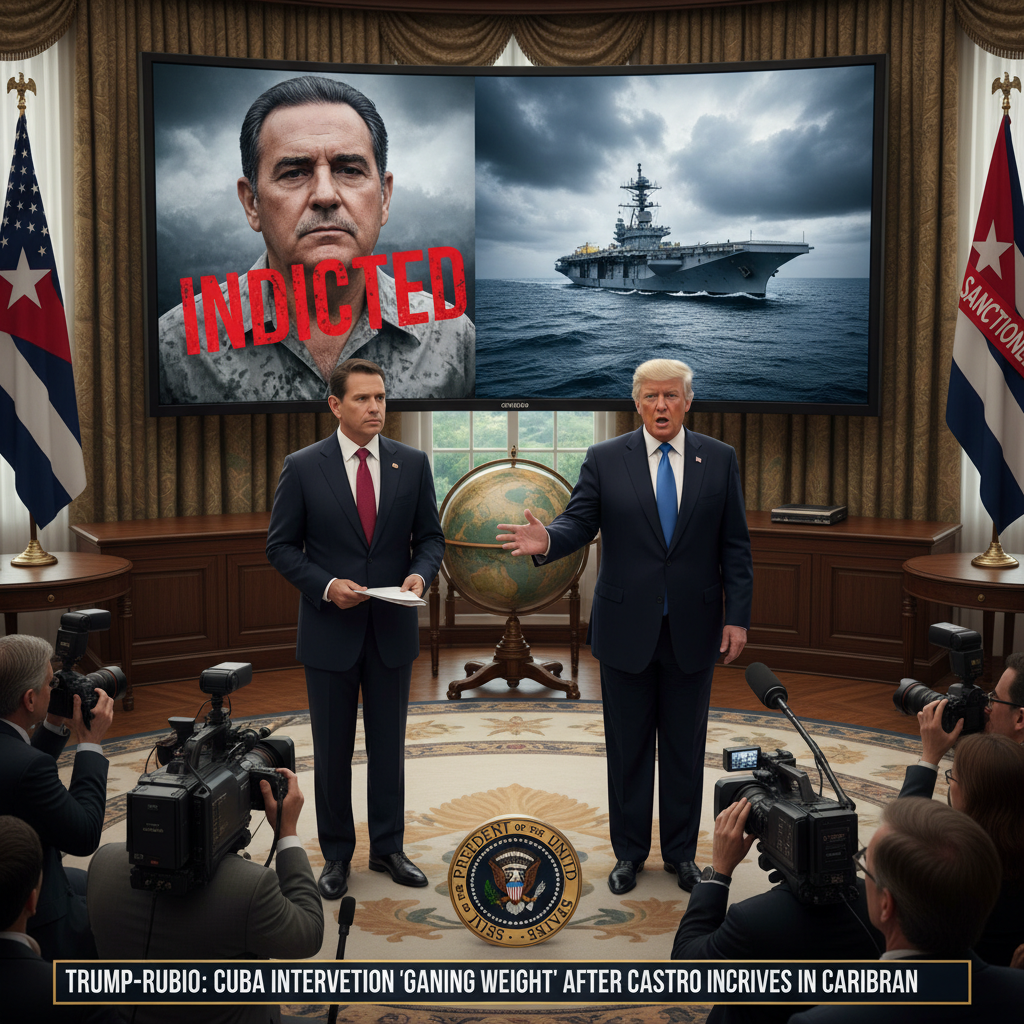
President Donald Trump and Secretary of State Marco Rubio have intensified warnings of potential U.S. military intervention in Cuba, a move that gains significant weight after the administration announced criminal charges against former Cuban leader Raúl Castro. Rubio stated that Cuba has long been a national security threat due to its connections with U.S. adversaries and that Trump is committed to addressing this. While the U.S. prefers a negotiated, peaceful agreement, Rubio expressed skepticism about achieving a diplomatic resolution with Cuba's current government, noting that past talks have been unproductive. The U.S. has recently imposed more sanctions, including against a Cuban military-operated business conglomerate (GAESA), and revoked the green card of a GAESA executive's sister. The new threats follow the indictment of Castro for ordering the 1996 shootdown of civilian planes, with charges including murder. Cuban President Miguel Díaz-Canel has condemned the indictment as a political stunt aimed at justifying military aggression. Critics suggest the Trump administration is using a similar strategy to the one employed against Venezuelan President Nicolás Maduro. The U.S. military's USS Nimitz aircraft carrier also arrived in the Caribbean shortly after the charges were announced. Rubio reiterated that while diplomacy is preferred, the president always retains the option to act in the national interest, pushing back on 'nation-building' accusations by framing it as addressing a national security risk posed by Cuba's intelligence ties with China and Russia, and its relations with other U.S. foes. China, through its Foreign Ministry, has voiced opposition to U.S. sanctions and interference in Cuba.