Explore the complex legacy of British comedy icon Kenneth Williams, whose unique wit and subversive queer identity paved the way for LGBTQ+ freedoms, yet whose public hilarity masked profound personal torment and a celibate life, as revealed in his posthumously published diaries.
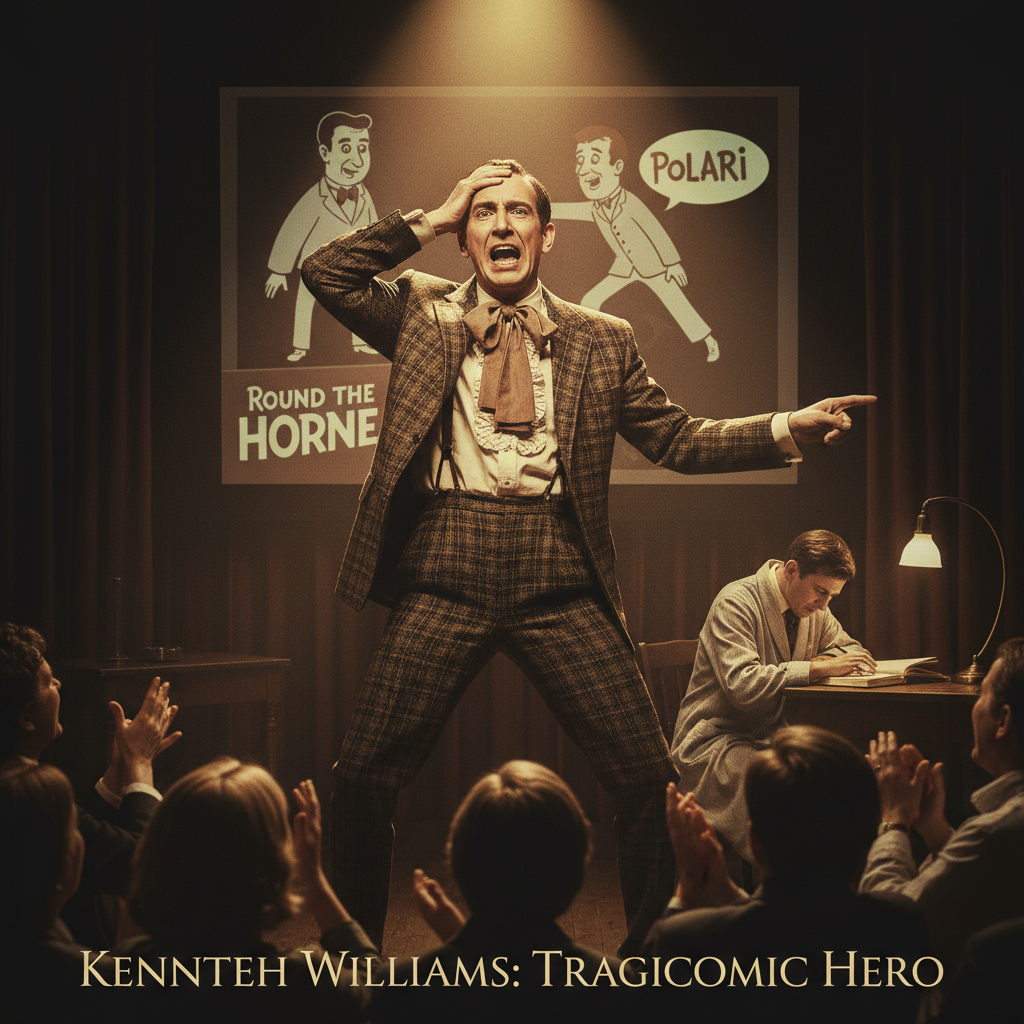
Kenneth Williams, born 100 years ago, was a ubiquitous figure in 20th-century British culture, celebrated for his distinctive adenoidal voice, unique physicality, and a comedic style that blended erudition with vulgarity. Comedian Tom Allen highlights Williams as a 'profound' and 'queer in every sense' hero who, through his outsiderness and unashamed difference, paved the way for LGBTQ+ freedoms. Williams starred in 26 'Carry On' films, iconic radio shows like 'Hancock's Half Hour' and 'Round the Horne' (where he and Hugh Paddick subversively used gay slang Polari as Julian and Sandy), and was admired by luminaries from Orson Welles to Maggie Smith. Michael Sheen, who played him in a BBC film, compares his boundary-pushing humor to 'what David Lynch did for America, Kenneth Williams did for Britain, but in the form of light entertainment.' Despite his public success and influence, Williams's posthumously published diaries revealed a deeply tormented individual, riddled with self-loathing, a celibate homosexual identity, and profound despair, culminating in an ambiguous death at 62. His ability to turn misery into comedy, as noted by David Benson, made his personal pain a source of public laughter, a tragic irony for a man who 'regretted not being taken seriously' but whose comedy achieved something 'enormously serious' for society.