This article argues that the rise of trillionaires and extreme wealth, exemplified by Elon Musk, poses a fundamental threat to democracy by concentrating immense power. It highlights historical warnings against wealth inequality, demonstrates its resurgence since post-WWII progressive taxation, and reveals its real-world impact through examples like Musk's influence. The author proposes an unavoidable minimum wealth tax on the super-rich as a vital solution to restore fairness, fund public services, and safeguard democratic ideals.
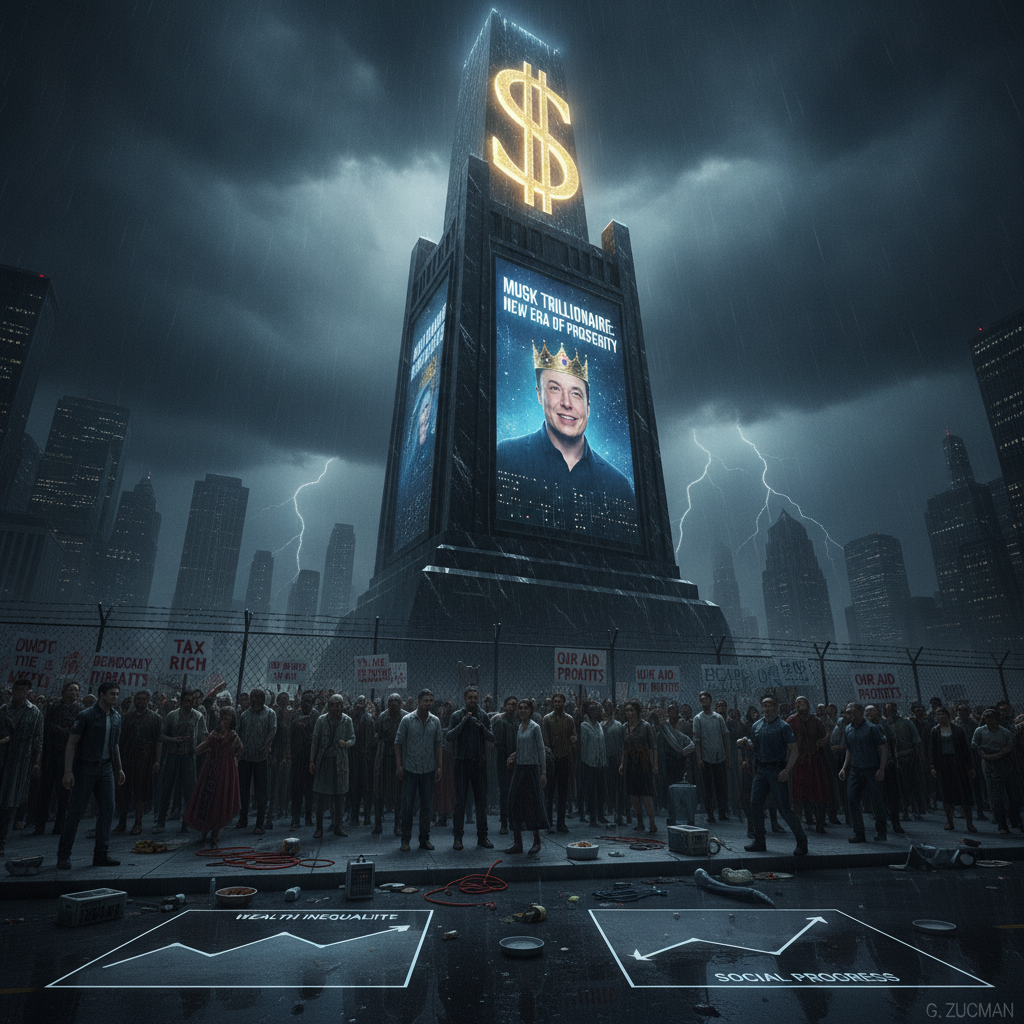
The article critically examines the celebration surrounding Elon Musk's wealth surpassing $1 trillion, asserting that the existence of trillionaires is a defining political and economic problem. It posits a fundamental tension between extreme wealth and democracy, as such wealth translates into extreme power to stifle competition, shape public discourse, influence policy, buy elections, and stall social progress. Drawing on thinkers from Aristotle to James Madison, the author underscores the historical recognition of wealth inequality's corrosive effect on society. While post-World War II progressive taxation briefly curbed extreme wealth, it has resurged dramatically; for instance, the wealthiest 0.001% of UK families now own 20% of UK GDP, up from 5% in 1989, and the top 0.00001% in the US can buy 14% of annual production. The article refutes the notion of 'virtual' wealth, demonstrating its tangible impact through examples like Musk's acquisition of Twitter and his alleged influence in government, leading to cuts in vital aid programs and potentially millions of deaths. It concludes that such extreme wealth inherently skews power and distort markets, regardless of individual virtues. The proposed solution is an unavoidable minimum tax on the super-rich, specifically a 2% wealth tax for individuals with over $100 million net worth, as outlined in a G20 report. This measure would ensure the wealthy pay their fair share, generate significant public revenue (e.g., £15 billion annually in the UK from 1,000 families), and counter the perverse logic of balancing budgets on the backs of retirees and the poor while the rich live tax-free. The author, Gabriel Zucman, emphasizes that now is the time to act to protect democratic ideals and ensure equality before the law.