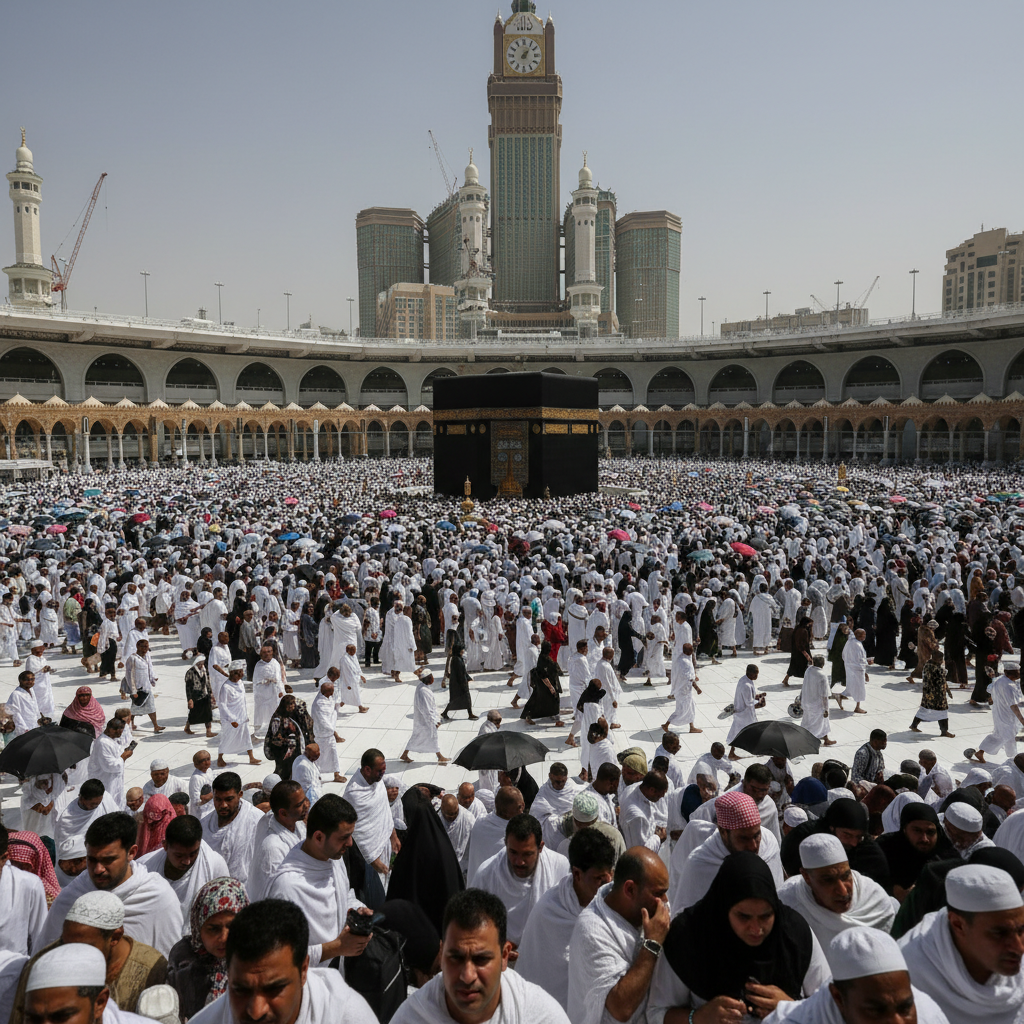
The Hajj is the annual Islamic pilgrimage to Mecca, Saudi Arabia, a mandatory spiritual journey for able-bodied Muslims who can afford it. It's one of the Five Pillars of Islam, offering pilgrims a profound experience to seek God's forgiveness, erase past sins, and connect with millions of diverse believers through sacred rituals.
The Hajj is a foundational pillar of Islam, requiring every physically and financially able Muslim to perform the pilgrimage to Mecca, Saudi Arabia, at least once. Occurring annually during the lunar month of Dhul-Hijja, the Hajj is a deeply spiritual experience where pilgrims seek God's forgiveness, closeness to the divine, and to follow in the footsteps of prophets. It fosters immense unity among Muslims worldwide, transcending racial, ethnic, linguistic, and economic barriers. Preparations often span years, involving saving, obtaining permits, and spiritual and physical readiness. Key rituals include entering a state of "ihram" with specific attire and prohibitions, standing on the plain of Arafat for praise and supplication, performing "tawaf" by circling the Kaaba seven times, and retracing Hagar's path. The Hajj culminates with Eid al-Adha, the "Feast of Sacrifice," commemorating Prophet Ibrahim's devotion and involving the distribution of meat to the poor. The pilgrimage can be physically demanding, especially when it falls in summer months, as tragically highlighted by over 1,300 deaths in 2024 due to extreme heat, mostly among unauthorized pilgrims.