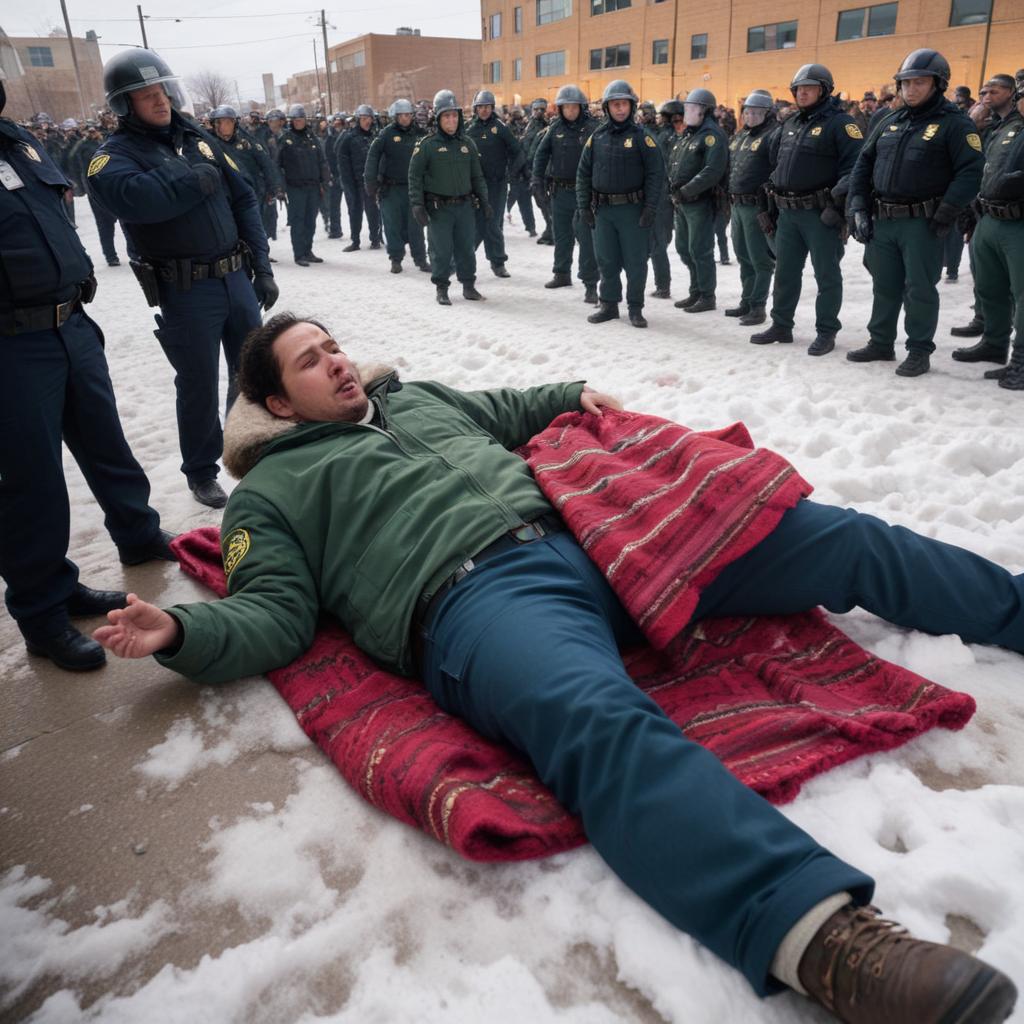
A U.S. Border Patrol agent fatally shot Alex Pretti, a 37-year-old ICU nurse and immigration protestor, in Minneapolis, sparking massive protests, clashes with federal officers, and a major political crisis. Democrats are demanding federal immigration officers leave Minnesota and threatening a government shutdown by refusing to fund the Department of Homeland Security, while former President Trump blames Democratic leaders. Conflicting narratives surround the shooting, with federal officials claiming Pretti resisted with a handgun, contradicting family and bystander video accounts.
The article details the fatal shooting of Alex Pretti, a 37-year-old intensive care unit nurse and immigration protestor, by a U.S. Border Patrol agent in Minneapolis. This incident, occurring weeks after another ICE-related death in the city, ignited widespread protests, drawing hundreds onto the streets despite frigid temperatures, and escalating tensions. Federal officials, via DHS spokesperson Tricia McLaughlin and Secretary Kristi Noem, stated officers were conducting an operation when Pretti, allegedly armed with a handgun, approached and "violently resisted" attempts to disarm him, leading to "defensive shots." However, Pretti's family vehemently denies these claims, asserting bystander videos show him with a phone, not a weapon, attempting to protect a woman while being pepper-sprayed. Minneapolis Police Chief Brian O’Hara noted Pretti was believed to be a "lawful gun owner" and appealed for calm and discipline from federal agencies. Politically, the shooting has caused a major rift. Democrats, including Rep. Alexandria Ocasio-Cortez and Senate Leader Chuck Schumer, are demanding federal immigration authorities leave Minnesota and threatening to block funding for the Department of Homeland Security (DHS), which oversees ICE, raising the possibility of a government shutdown. Former President Donald Trump, conversely, lashed out at Minnesota's Democratic Governor Tim Walz and the Minneapolis mayor, accusing them of "inciting Insurrection" and failing to protect federal officers. Protests have continued in Minneapolis and spread to other cities, with demonstrators clashing with federal officers. The Minnesota National Guard was deployed, and Governor Walz expressed no confidence in federal officials, stating the state would lead the investigation. However, the Minnesota Bureau of Criminal Apprehension reported federal officers blocked their access to the scene despite a judicial warrant. The article highlights the deep divisions and high stakes surrounding the incident, from the immediate street-level confrontations to the potential for a federal government shutdown.