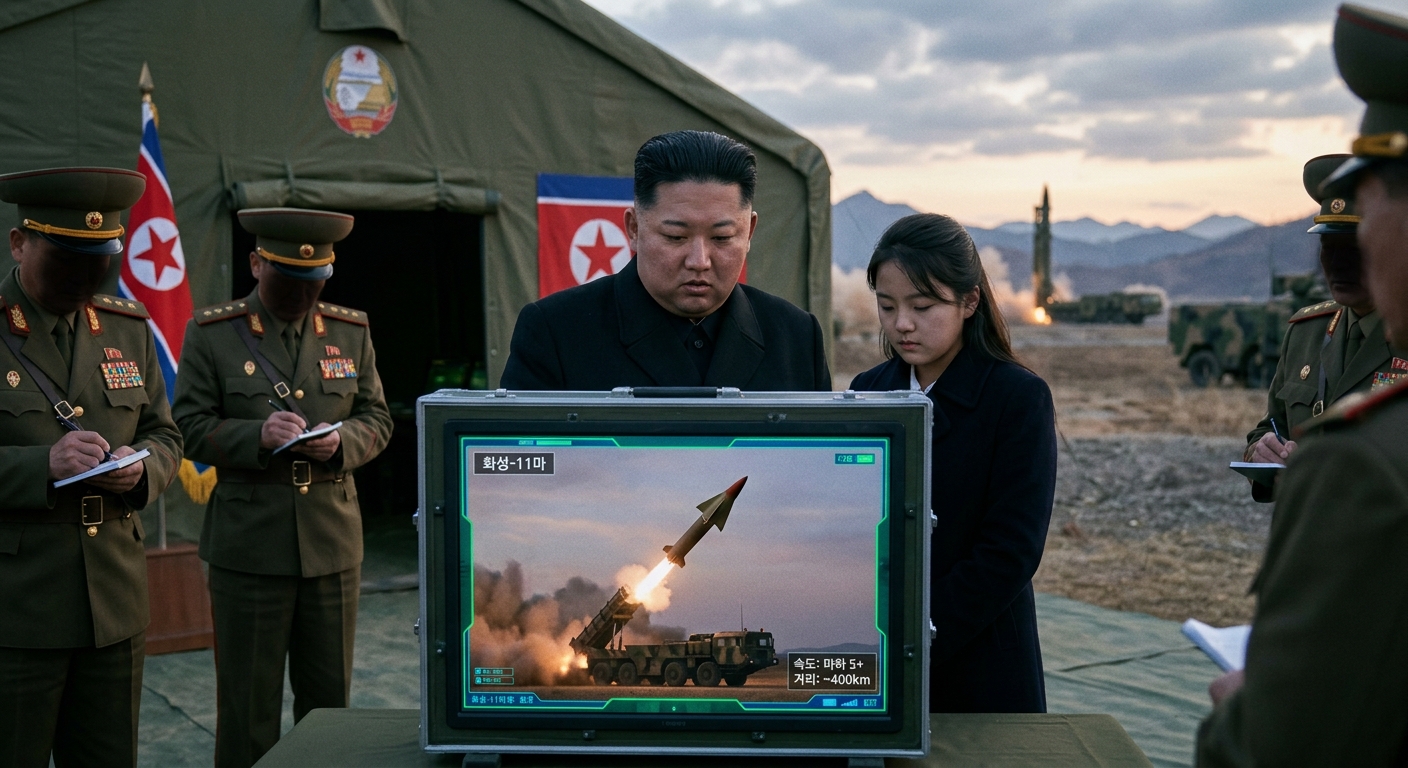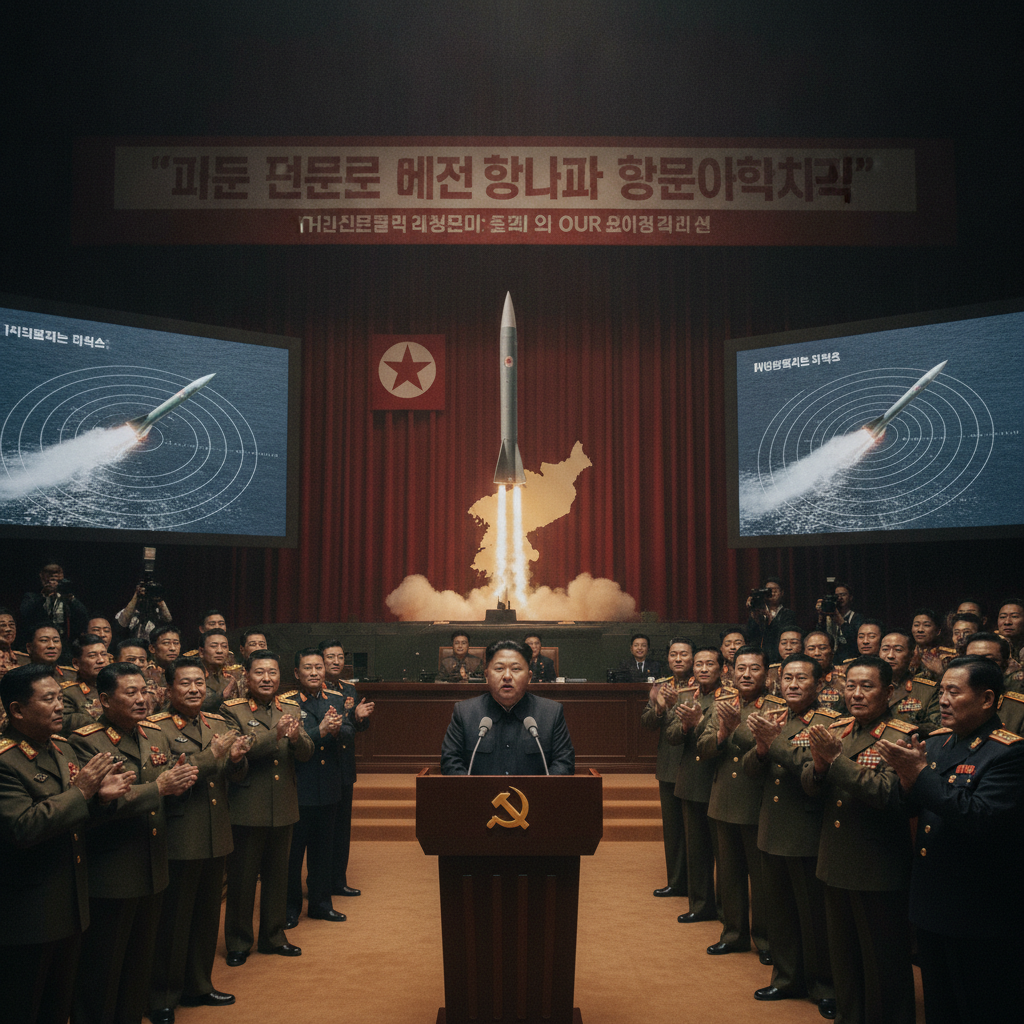
North Korea's Kim Jong-un is rapidly expanding the country's nuclear arsenal, declaring it the 'most correct way' to ensure security against growing threats from the US and its allies, with analysts suggesting denuclearization is no longer a viable option.
At a recent Workers’ party meeting, Kim Jong-un asserted that the steady expansion of North Korea’s nuclear forces is the 'most correct and unique way' to navigate an increasingly unstable world, citing perceived threats from the US and its allies. This statement is part of a series of declarations, including pledges to equip warships with nuclear missiles, double weapons-grade production, and exponentially expand the nuclear arsenal. While North Korea often exaggerates its capabilities, analysts now focus on why Pyongyang needs such a large arsenal. Experts like Peter Ward from the Sejong Institute suggest the extensive and dispersed force is designed to be invulnerable to a single strike and increasingly difficult to dismantle through diplomacy, serving as protection against foreign intervention, a lesson reinforced by US-led strikes on Iran. North Korea believes that states at the 'threshold level' of nuclear capability invite attack rather than deterrence. The arsenal, built to survive a first strike, includes rail and road-mobile launchers, hardened underground facilities, and an expanding submarine fleet. Pyongyang has begun test-firing nuclear-capable cruise missiles from destroyers and plans to build two new warships annually for the next five years. Analysts believe North Korea needs a larger arsenal to counter the US nuclear umbrella, combined US-South Korean forces, and trilateral cooperation with Japan, going 'beyond minimum deterrence.' Nuclear weapons are now enshrined in North Korea's constitution, granting Kim command over these forces and the power to delegate launch authority, a move interpreted as a safeguard against a decapitation strike. Lee Ho Ryung of KIDA notes that Pyongyang aims to cement the idea that denuclearization is off the table and to build a capability level that forces Washington to take it seriously, suggesting that reduction through negotiation is currently not an option. Officially, denuclearization remains the goal for Seoul, Washington, and Tokyo. However, North Korea's deepening military ties with Russia and strengthened relationship with China, who share an interest in checking American power, have insulated Pyongyang from external pressure. Analysts predict that while denuclearization will remain the formal objective, the practical focus will likely shift towards arms control – limiting and gradually reducing the arsenal rather than eliminating it entirely, as there 'may be no other path.'