Uncover the surprising truth about sleep deprivation, individual sleep needs, and whether a few missed hours are truly sending you to an early grave.
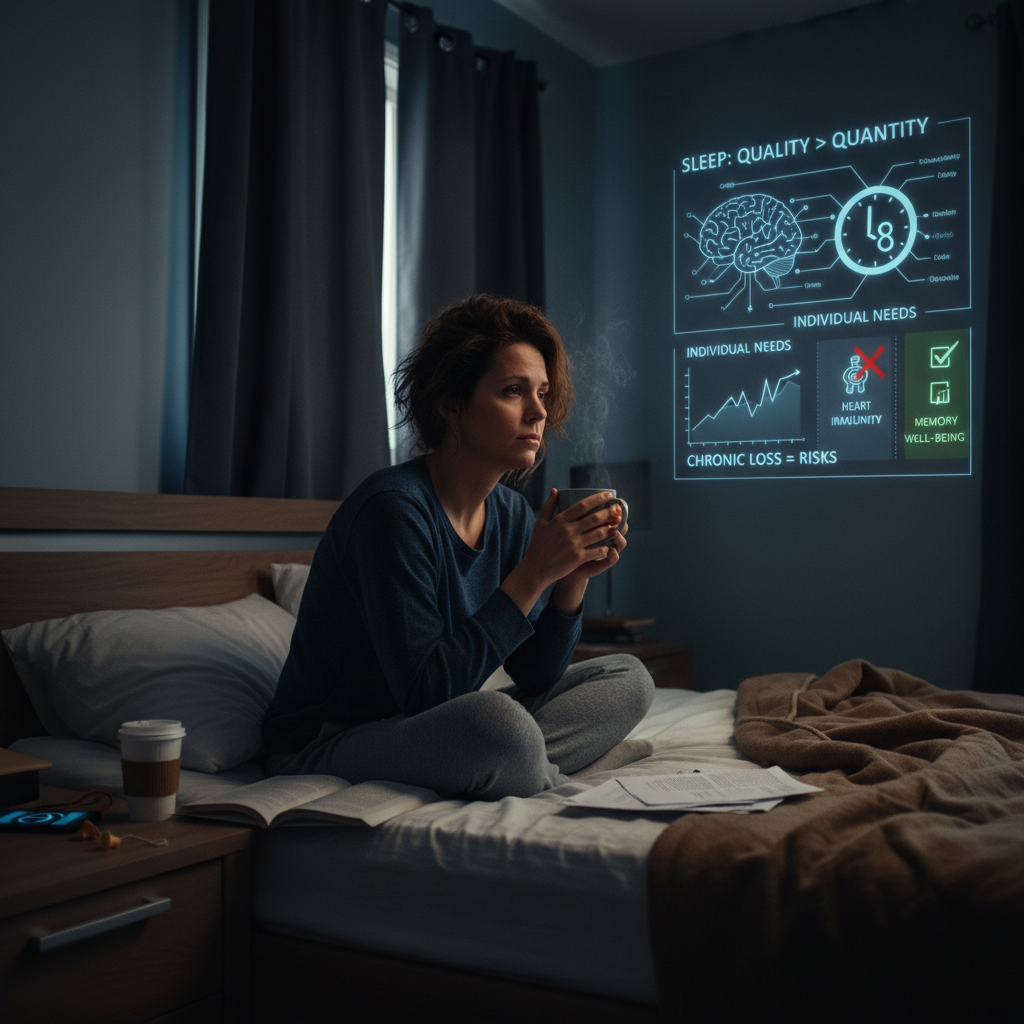
This article delves into the widespread anxiety surrounding sleep, debunking the rigid 'eight-hour rule' and clarifying the true impact of sleep deprivation. While chronic sleep loss is linked to serious health risks like dementia (due to impaired glymphatic system function), cardiovascular disease, stroke, and weakened immunity, experts emphasize that individual sleep needs vary greatly. The best indicator of sufficient sleep is how you *feel*, not a fixed number of hours. Signs of inadequate sleep include irritability, reliance on caffeine, and a negative cognitive bias. The article differentiates between chronic sleep deprivation and insomnia, noting that insomniacs often perceive less sleep than they actually get, potentially mitigating some long-term risks. Short-term sleep loss is generally manageable, and a good night's sleep is crucial for memory consolidation and problem-solving. While 'catch-up' sleep can help, it can also disrupt circadian rhythms. Surprisingly, the sleep deprivation of parenthood doesn't seem to negate its long-term benefits for cognitive health. Ultimately, prioritizing sleep through environmental adjustments like blackout curtains and earplugs, and listening to your body, is key. An occasional all-nighter can be useful for specific, focused tasks, but should be approached with caution.