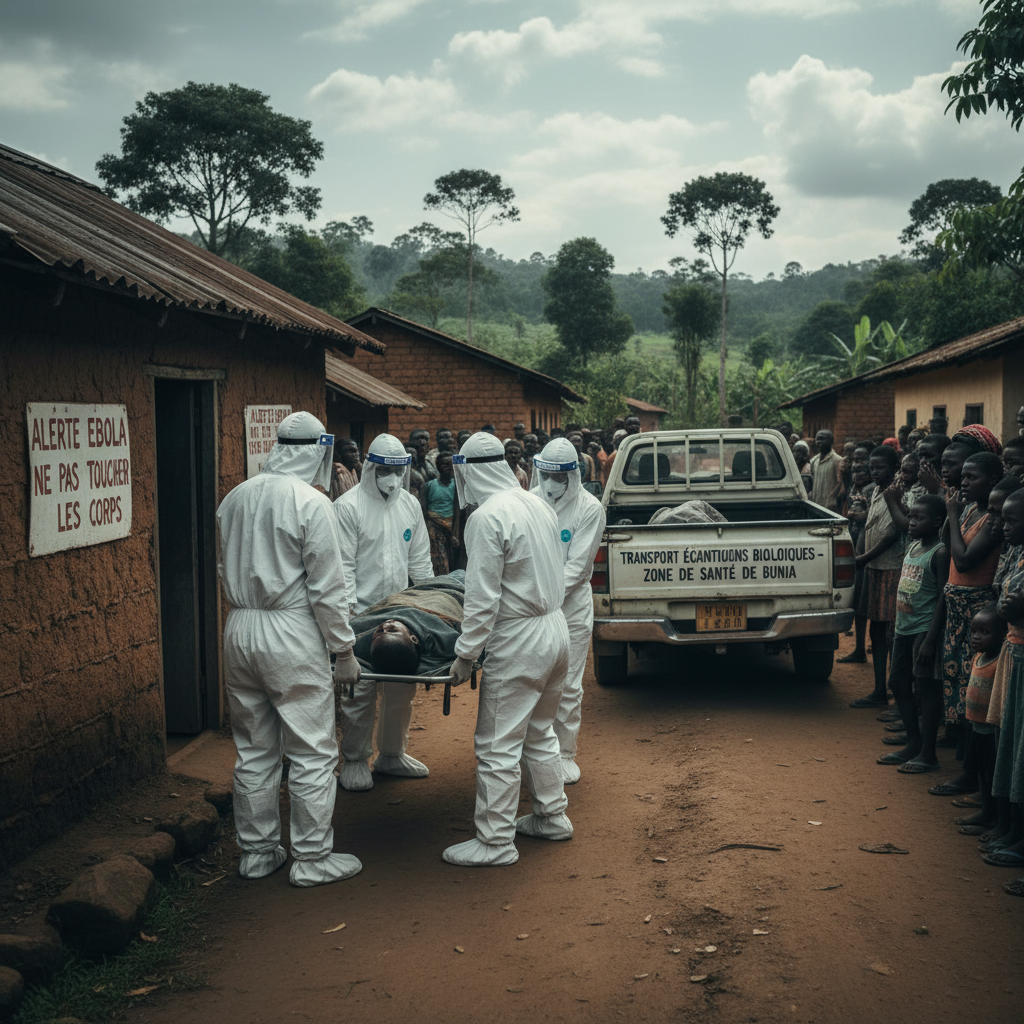
A deadly Ebola outbreak, caused by the rare Bundibugyo virus, silently spread in Congo for weeks before being identified. The timeline details the first suspected cases, the initial misdiagnosis, the subsequent spread to Uganda, and the eventual declaration of a public health emergency by the WHO, highlighting the challenges in containing this virulent disease.
Health officials believe the Ebola outbreak in Congo began weeks before its official identification. The first suspected case, a health worker, fell ill and died in Bunia between April 24-27, with their body later transported to Mongbwalu. A close contact died on April 28. Initial field tests on April 30 were negative for the common Zaire Ebola virus, delaying proper identification. By May 5, the World Health Organization was alerted to a 'high-mortality' outbreak in Mongbwalu, with about 50 reported deaths, linked to the highly contagious body of the initial victim. On May 11, a Congolese man from Ituri was hospitalized in Kampala, Uganda, where he later died on May 14. A WHO rapid response team visited affected zones in Ituri on May 13. On May 15, laboratory analysis confirmed the Bundibugyo virus in samples from Congo and from the man who died in Uganda. Congo's Health Ministry declared an Ebola outbreak with 246 suspected cases and 65 deaths, which quickly escalated. Uganda reported two cases, both imported from Congo. This marked Congo's 17th significant Ebola outbreak. On May 17, the WHO officially declared the outbreak a public health emergency of international concern, advising border surveillance. An American doctor in Bunia was confirmed among the cases on May 18.