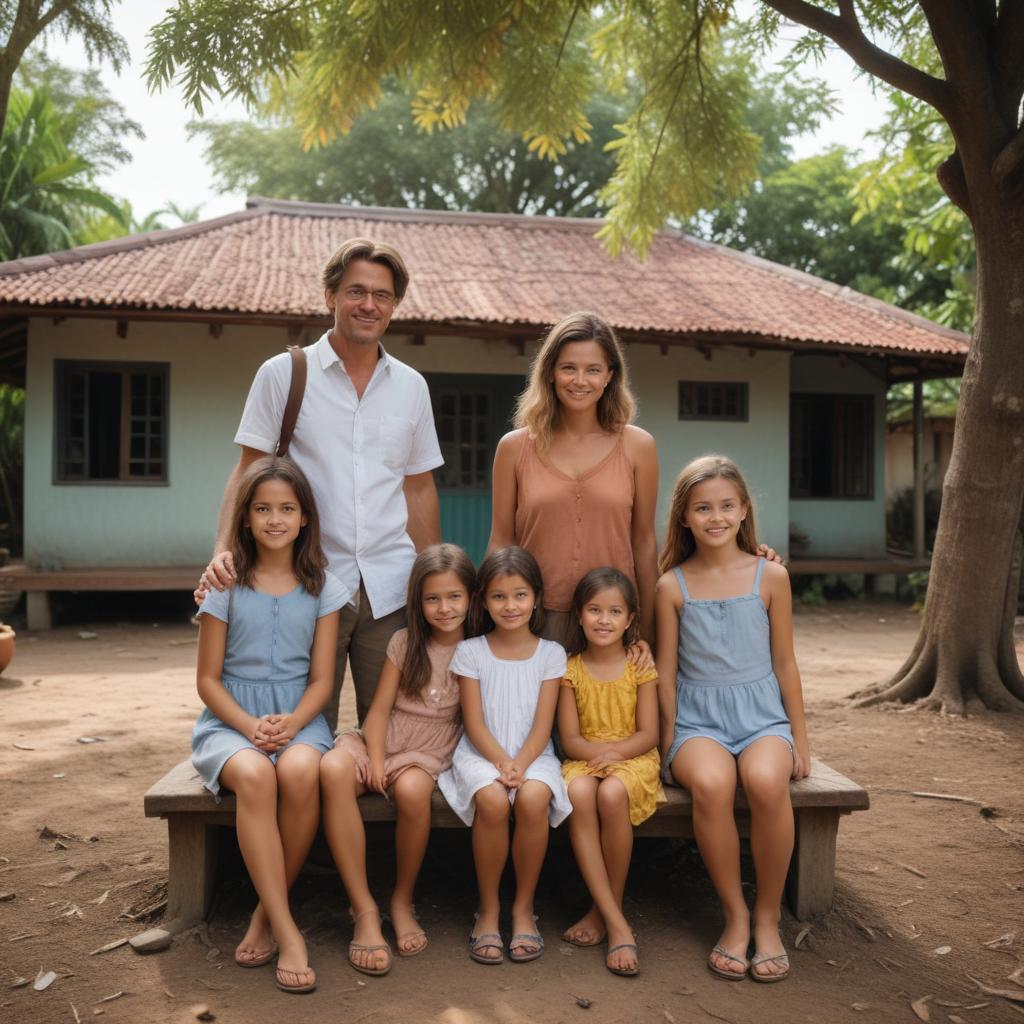
Three families share their inspiring journeys and the unexpected challenges of worldschooling, from family tragedy to illness in the Sahara, testing their dreams of full-time travel and revealing the truth behind Instagram's perfect facade.
The article explores the growing trend of 'worldschooling' and digital nomadism among families, contrasting the idealized image often seen on social media with the demanding realities. It highlights the experiences of three families who sought to escape conventional life and provide their children with a unique global education. The Davis family (Josy, Joe, and daughters Lola, 6, and Zara, 4) sold their home and quit their jobs in England, inspired by Instagram, to travel the world. Their adventure began in Oman, Sri Lanka, Malaysia, and Thailand. However, after just three months, their dream was cut short by Joe's father's sudden death. Following the funeral, their attempt to resume travel in Sri Lanka revealed that their daughters had lost their initial enthusiasm and longed for home. The Davises ultimately decided to end their travels after visiting seven countries, settling in Cornwall and emphasizing the importance of listening to their children's needs, admitting that the reality was far from the 'Instagram moments.' The Wiringi family (Melissa, Rimaha, and four children aged 3 to 18) from New Zealand have been traveling since 2020, with the younger children having never attended formal school. Melissa, driven by a desire to live her dreams, started with limited savings and learned the value of 'slow travel' after being grounded in Vietnam during the pandemic. While their children gain life skills and real-world education, the family faces challenges such as unsuitable accommodation, illness, and visa issues. Melissa acknowledges that her 16-year-old daughter struggles with social anxiety and adjusting to new places. Despite the difficulties, after a brief attempt at a 'normal' life in New Zealand, her children expressed a strong desire to return to travel. The Ward family (Sharon, Mike, and two daughters, 10 and 13) from New Zealand also embraced a nomadic life after leaving Dubai in 2020. Sharon, a qualified early-years teacher, confidently world-schooled her daughters using a mix of formal and informal learning. They traveled on a budget, often seeking cheap accommodation and exchanging Mike's building skills for board. Their journey was marked by the youngest daughter's struggles with change, prompting them to prioritize longer pauses. Their toughest experience was a month-long homestay in the Sahara desert during extreme heat, where the family fell seriously ill, leading them to question their lifestyle. Sharon, however, views these challenges as vital parts of their children's worldschooling education, fostering resilience and tolerance. They are now settled in Bali, with the girls attending an international school. The article also touches on broader implications, citing a study suggesting a higher risk of depression in adults who moved frequently as children, though experts clarify that family stability within the nomadic lifestyle can mitigate this. Ultimately, the piece concludes that while worldschooling offers immense rewards and unique educational experiences, it demands significant resilience, adaptability, and open communication within the family, often differing greatly from idealized social media portrayals.