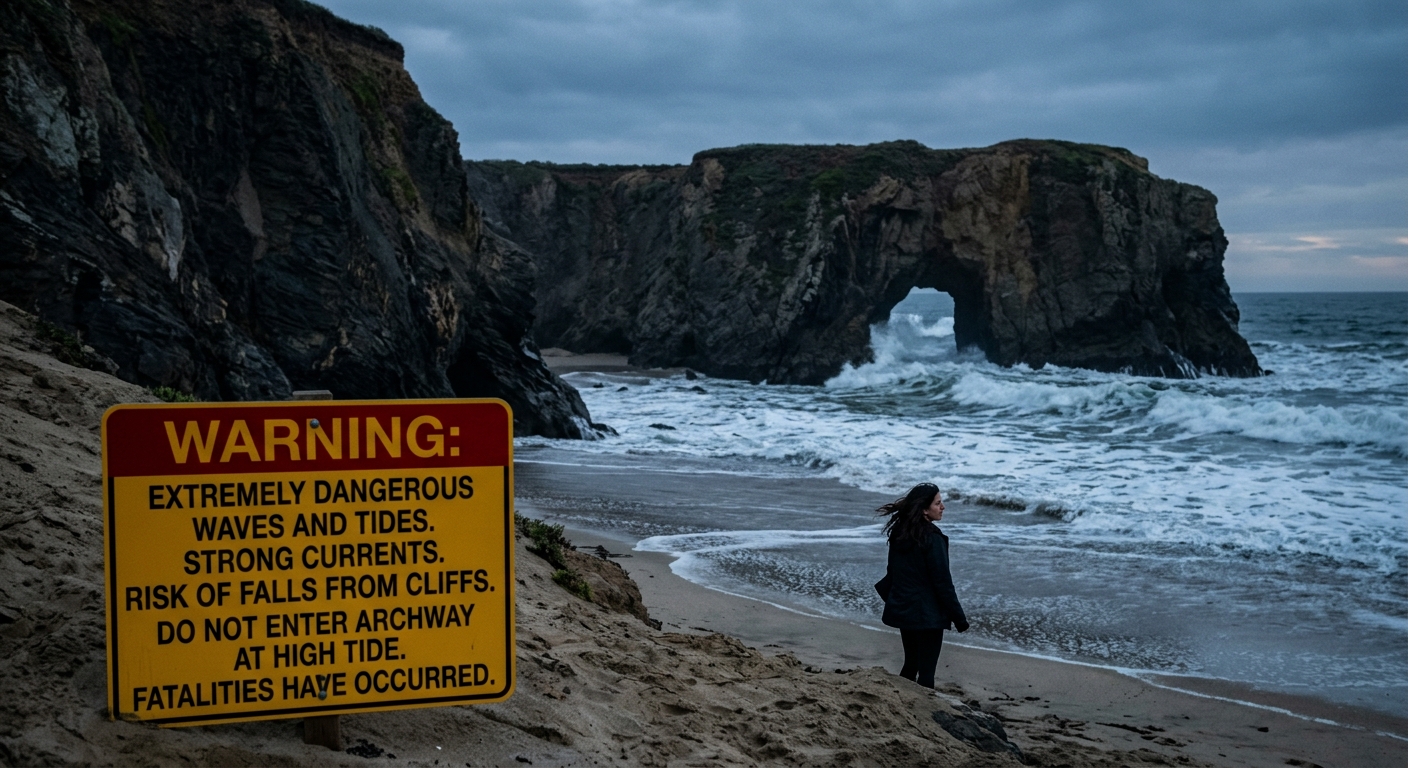
Panther State Beach, a stunning California coastline popular with young people, has become a site of recurring tragedy, with four recent deaths and one person missing in the last six months. Its picturesque beauty hides extreme dangers amplified by powerful waves, high tides, and a lack of awareness, prompting calls for increased safety measures amidst a surge in social media-driven tourism.
Panther State Beach, located between Santa Cruz and Half Moon Bay, captivates visitors with its dramatic shale cliffs, pocket beaches, and unique 'keyhole' archway. Despite its idyllic appearance, the beach has turned deadly, with four young people dying and a fifth missing in the past six months due to falls, being swept off rocks, or being carried out to sea by powerful waves. One tragic incident involved 24-year-old Se Nah Park, who was swept away while attempting to cross the beach through an archway at night, her body still missing. The surge in fatalities has highlighted broader beach safety concerns, especially as social media draws more visitors to wild, unlifeguarded areas. Factors contributing to the danger include stronger storms and higher tides exacerbated by El Niño, though experts note that inherent dangers like rip currents and cold water have always existed. CalFire's Michael Horn emphasizes that people often 'don’t understand the dangers that the beauty hides.' Warnings are posted, but often disregarded, leading some to suggest more visible death counts. University of California, Santa Cruz professor Gary Griggs points to improved infrastructure (paved parking, bathrooms, bike path) and its proximity to Silicon Valley as reasons for increased popularity. The beach's unique geology, with numerous cracks and arches, becomes particularly hazardous during high tides, which can erase sandy escape routes. While El Niño amplifies conditions, experts like Horn argue that such incidents are a constant feature of the beach, with at least 14 deaths recorded in the region since 2021. The article contrasts Panther Beach's situation with a successful program in Curry County, Oregon, where a small lifeguard team actively warns beachgoers about high surf and 'sneaker waves.' Since implementing in-person warnings in 2020, Curry County has had no fatalities, despite continuing to perform a dozen rescues annually. This proactive approach, including working with tourism organizations to integrate hazard information, demonstrates that preventive measures can save lives. Ultimately, authorities stress the importance of personal vigilance and situational awareness. CalFire's Horn advises that if the sand is wet, the ocean will return. While California State Parks increases staffing during high-risk events, the onus remains on visitors to 'read the water and know the conditions before you go' on wild, unlifeguarded beaches.