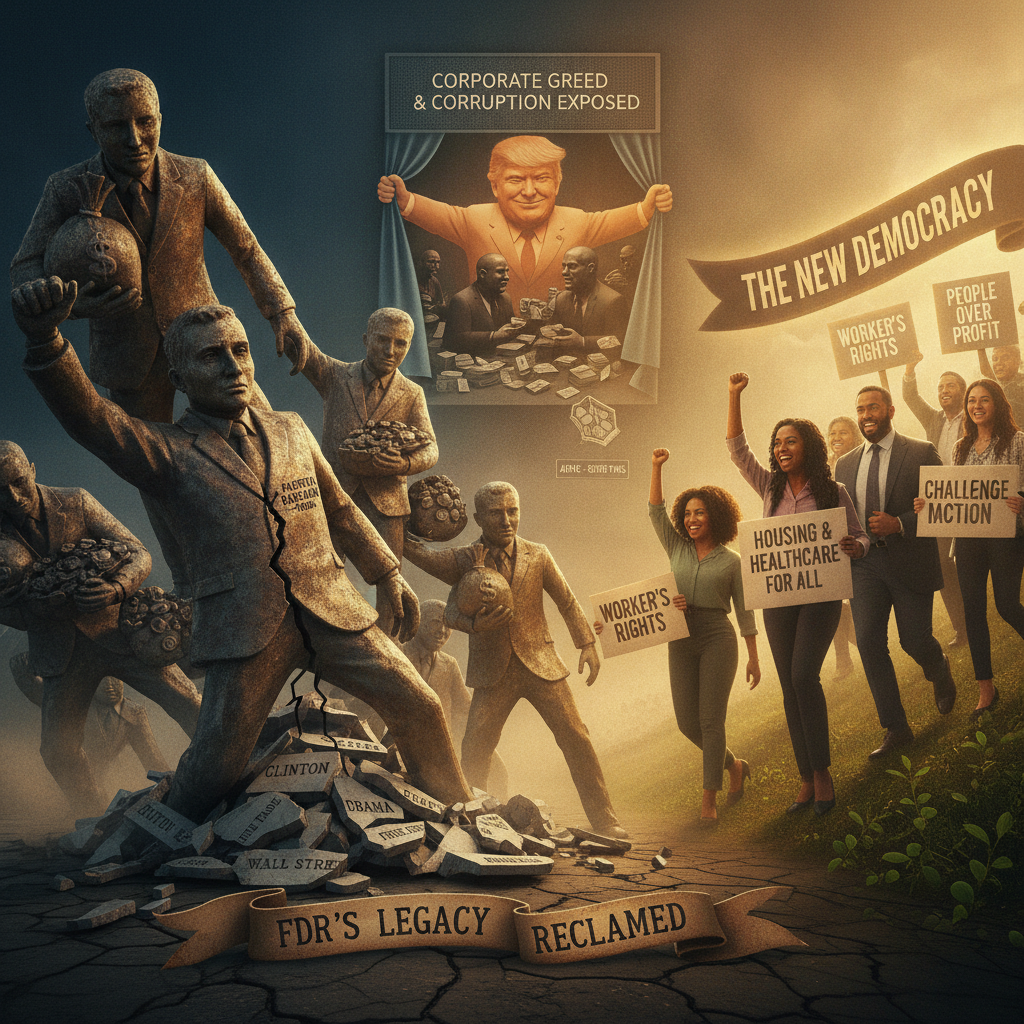
The Democratic party is undergoing a profound transformation, marked by the ascendancy of progressive candidates and the significant decline of corporate Democrats. This shift is largely attributed to the Trump administration's inadvertent exposure of corporate greed, which has galvanized voters to support progressives committed to fighting for working families against powerful corporate interests. The article traces the historical influence of corporate money in the party and highlights the current opportunity for Democrats to reclaim their identity as the party of working Americans.
The article details a significant shift within the Democratic party, observing the remarkable rise of progressive Democrats, exemplified by figures like Florida's Angie Nixon and Michigan's Dr. Abdul El-Sayed, alongside the equally notable decline of corporate Democrats. While some strategists, like James Carville, worry about progressive victories fracturing the party, the author argues that the current political landscape is radically different from 2016. The 'silver lining' of the Trump presidency, it suggests, has been its unintentional exposure of the corporate elite's 'greed, venality, cupidity and corruption.' Trump's policies, which favored giant corporations with tax loopholes, no-bid contracts, and permission to become monopolies, have unveiled the truth that corporate America is willing to exploit average working Americans for billions more. This blatant avarice has made most Americans aware, leading them to vote for progressive Democrats who promise to make housing, food, healthcare, and childcare affordable, and to challenge the powerful billionaire backers and Wall Street titans rigging the economy. The article highlights Dr. El-Sayed's primary victory as a key example, noting he won despite being dramatically outspent by Super PACs, including a record investment from AIPAC, which focused on corporate interests rather than Israel. This race was seen as a proxy fight for the future of the Democratic party, with progressives like Bernie Sanders and Alexandria Ocasio-Cortez backing El-Sayed against corporate-aligned politicians. The author traces the roots of corporate Democrats to the early 1980s, when the party began accepting significant campaign funding from big corporations and Wall Street. This 'Faustian bargain' led to increasing corporate influence, preventing the party from fully pursuing an agenda beneficial to the working class. Past Democratic administrations under Bill Clinton and Barack Obama are criticized for pushing free-trade agreements without supporting displaced workers, failing to protect unions, bailing out Wall Street while neglecting homeowners, allowing corporate monopolies to grow, and abandoning campaign finance reform. These policies contributed to widening economic inequalities, declining real wages, and a shift in the Democratic voter base. The article concludes that Trump's exposure of corporate venality, coupled with the struggles of the working middle class, presents a critical opportunity for the Democratic party to shed its corporate ties and once again become the party of working Americans, a role reminiscent of Franklin D. Roosevelt's era.