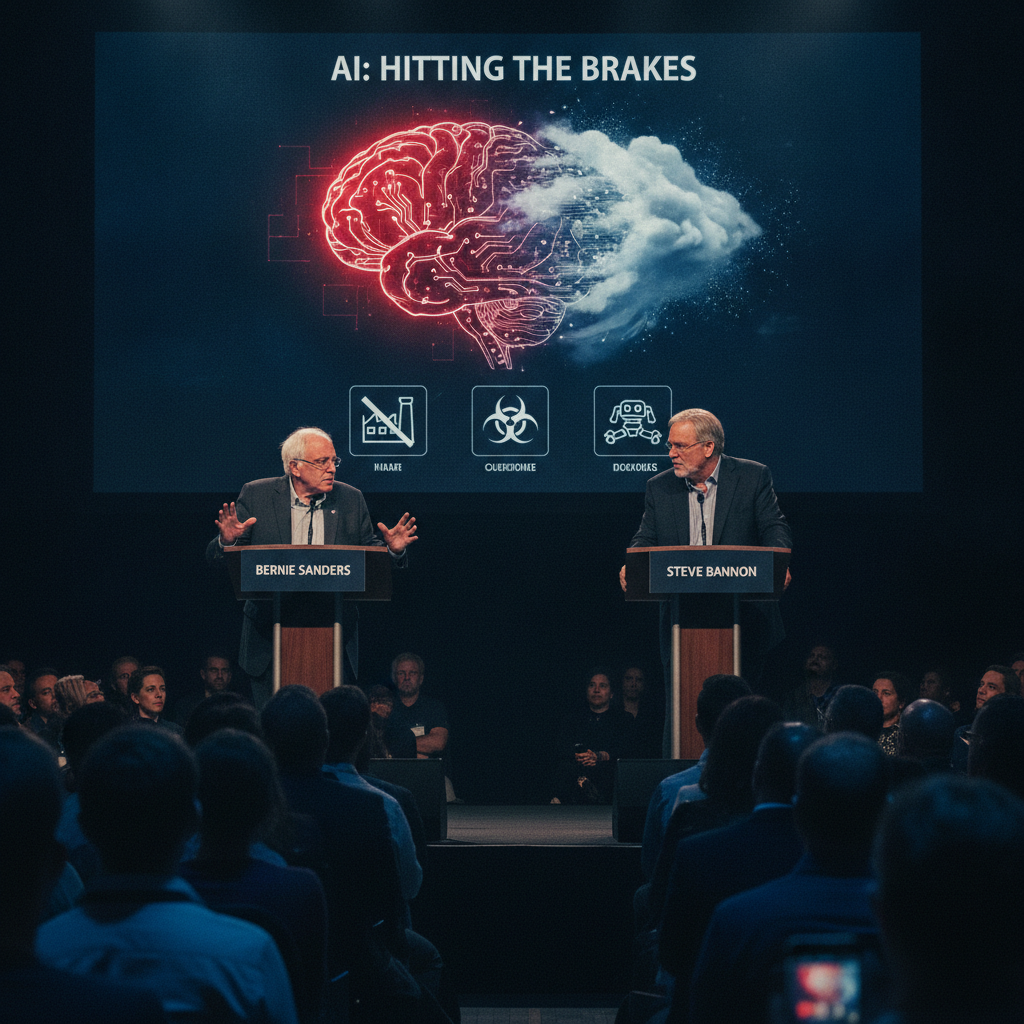
Progressive Senator Bernie Sanders and conservative strategist Steve Bannon formed an unexpected alliance, appearing together to demand new restrictions on artificial intelligence, citing shared fears of catastrophic risks to human safety and jobs. Their joint call highlights growing, bipartisan concerns over AI's unchecked development.
In a rare display of bipartisan consensus, progressive U.S. Senator Bernie Sanders and conservative political strategist Steve Bannon publicly advocated for new restrictions on artificial intelligence systems. Appearing at the same event in Washington, both figures warned of AI's potential to eliminate tens of millions of jobs, create new bioweapons, and escape human control, leading to potentially catastrophic consequences for humanity. Sanders, a democratic socialist, called for mandatory safety regulations, binding international rules, and urged President Trump to negotiate a temporary pause on AI advancement with Chinese President Xi Jinping. He criticized tech executives like Elon Musk for concentrating AI control and stressed the need to 'hit the brakes' on development. Bannon, a former White House strategist, echoed the need to slow down AI development, praised Sanders' assessment, and suggested executive action, while also advocating for cutting off China from American-made computer chips. This unusual alliance underscores how anxieties over AI risks are transcending traditional political divides. However, their calls for regulation face opposition from President Trump and House Speaker Mike Johnson, who argue against government intervention, citing industry self-regulation and the need to maintain U.S. competitiveness against China. Despite this, public opinion polls indicate widespread concern about AI's impact on jobs and costs, and lawmakers are privately discussing potential legislation, though challenges like technical expertise and the rapid pace of AI development remain significant. Concerns have also emerged from within the tech sector itself, with researchers resigning over fears of AI's existential threat.