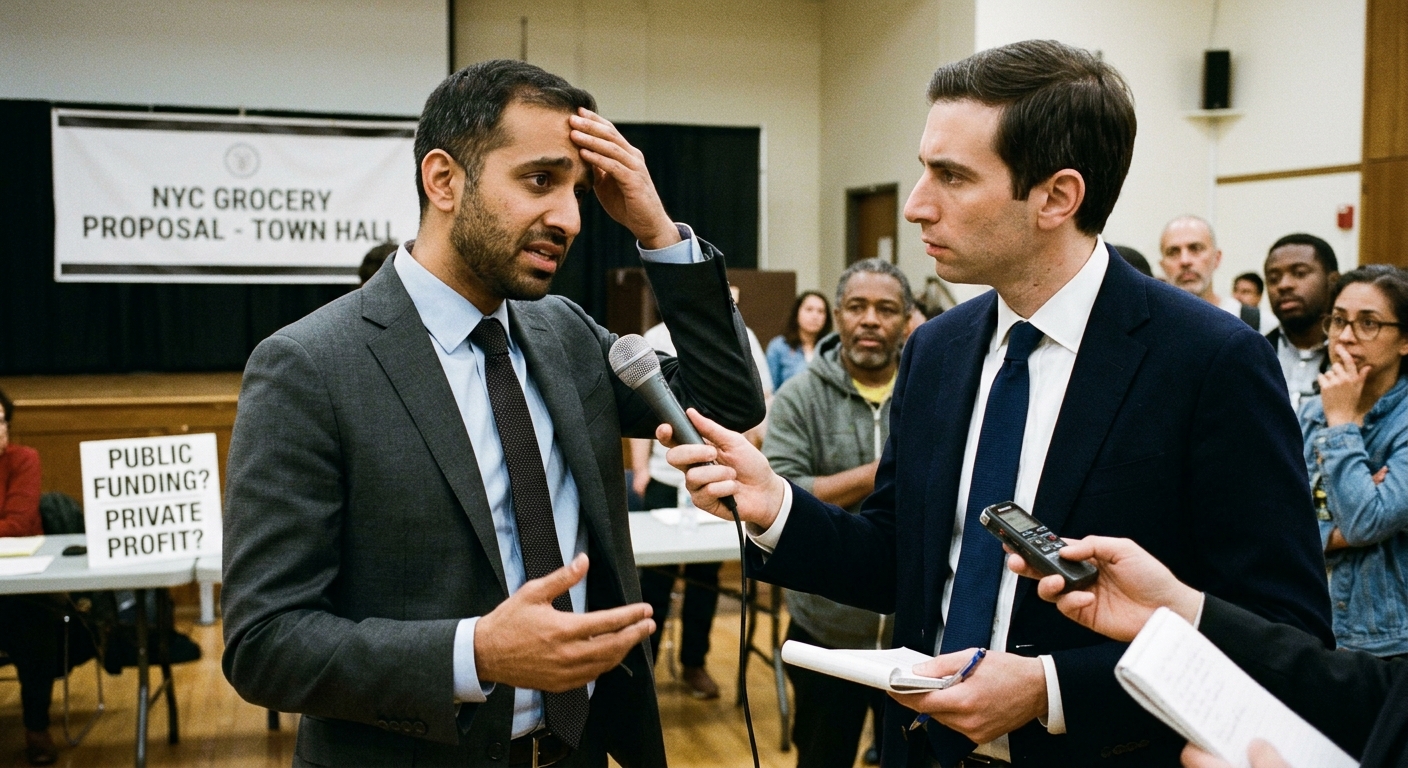
Mayor Zohran Mamdani failed to explain the financial viability of his plan for NYC-run grocery stores offering 30% discounts, despite acknowledging they would be taxpayer-subsidized.
Mayor Zohran Mamdani struggled to articulate the financial mechanics behind his proposal for five taxpayer-funded, privately operated grocery stores in NYC, which promise an average 30% discount on food staples. During an interview, New York Times columnist Andrew Ross Sorkin pressed Mamdani on the math, noting supermarkets typically operate on slim 1% to 4% margins. Mamdani vaguely responded that the stores would be 'subsidized' by taxpayers but avoided detailing how the subsidy would work long-term or its impact on existing supermarkets. He deflected by relating the question to New Yorkers' daily struggles with food prices and made political jabs. Experts, like food economist David Ortega, have characterized the initiative as a 'subsidy, delivered through a storefront,' where tax dollars pay part of the food bill rather than genuinely making food cheaper. The city's request for proposals (RFP) indicates taxpayers would fund construction, rent, property taxes, and cover operators' losses from discounts, without guaranteed returns if the stores turn a profit. The RFP even gives bidders extra credit for sharing profits with workers instead of taxpayers. Mamdani expressed a desire for both low-income and wealthy New Yorkers to shop at these stores, with the RFP explicitly barring income-based discount limitations. The city has committed $70 million to build the five stores but has not disclosed the annual operating subsidy amount. The National Supermarket Association has sued the city, alleging predatory pricing. Critics highlight the 'lopsided deal' for taxpayers, who bear the risk of losses but aren't guaranteed to share in potential profits.