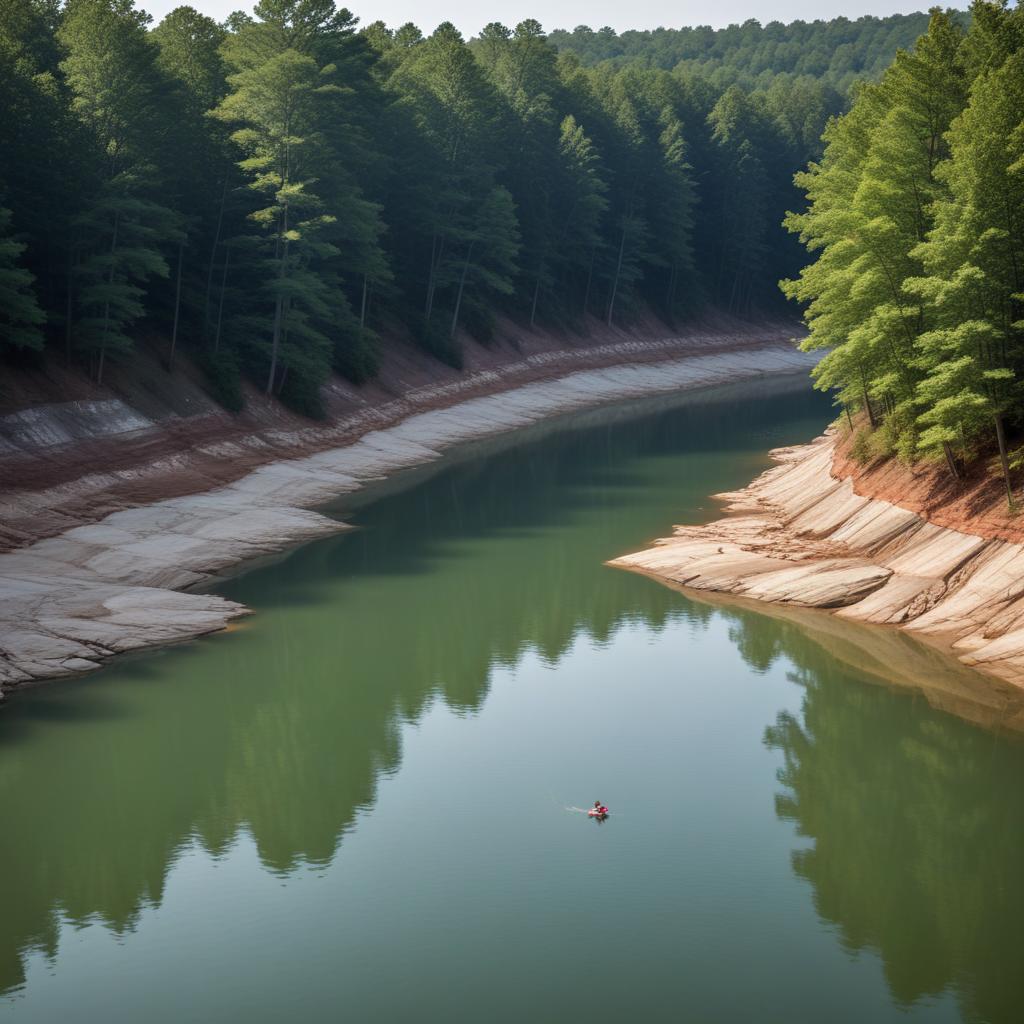
Lake Lanier, a popular man-made lake in Georgia, is notorious for its high fatality rate and is steeped in local legends of a 'curse.' This article explores the lake's dangerous reputation, from the tragic death of Usher's stepson, Kile Glover, to its murky depths hiding submerged towns and unmarked graves, and the historical injustices against Native Americans and Black communities that many believe fuel its dark energy.
The article delves into the perilous history and ongoing dangers of Lake Lanier, a man-made reservoir in Georgia with an estimated 700 fatalities over 70 years. It highlights the tragic death of Kile Glover, Usher's stepson, in 2012, which brought the lake's hazards into national focus and spurred his mother, Tameka Foster, to advocate for draining it. The lake's notoriety is amplified by tales of paranormal encounters and a prevailing belief among many, particularly Black Georgians, that it is 'cursed.' This 'curse' is attributed to a 'triangle of dark energy' stemming from historical injustices: the forced removal of Cherokee and Creek tribes (Trail of Tears), submerged Civil War graves, and the violent destruction of Oscarville, a thriving Black community whose land was seized and later flooded to create the lake. The article details how white mobs drove out Oscarville's Black residents in 1912 following false accusations, seizing their property, and how this land was later acquired by the government for the lake's construction, displacing white residents too. Beyond the lore, the lake presents significant physical hazards: submerged structures like old bridges, cars, and entire forests, combined with strong currents and murky waters, make it treacherous for swimmers and complicate recovery missions. Human factors, such as reckless boating, alcohol consumption, and inexperienced operators, contribute significantly to accidents. Despite its outsized reputation compared to other dangerous lakes, Lake Lanier draws 14 million visitors annually. Efforts like the Kile Glover Boat Education Law aim to improve safety, but many argue that the lake's deep-seated history of violence and displacement creates a 'bad juju' that continues to manifest in its deadly incidents.