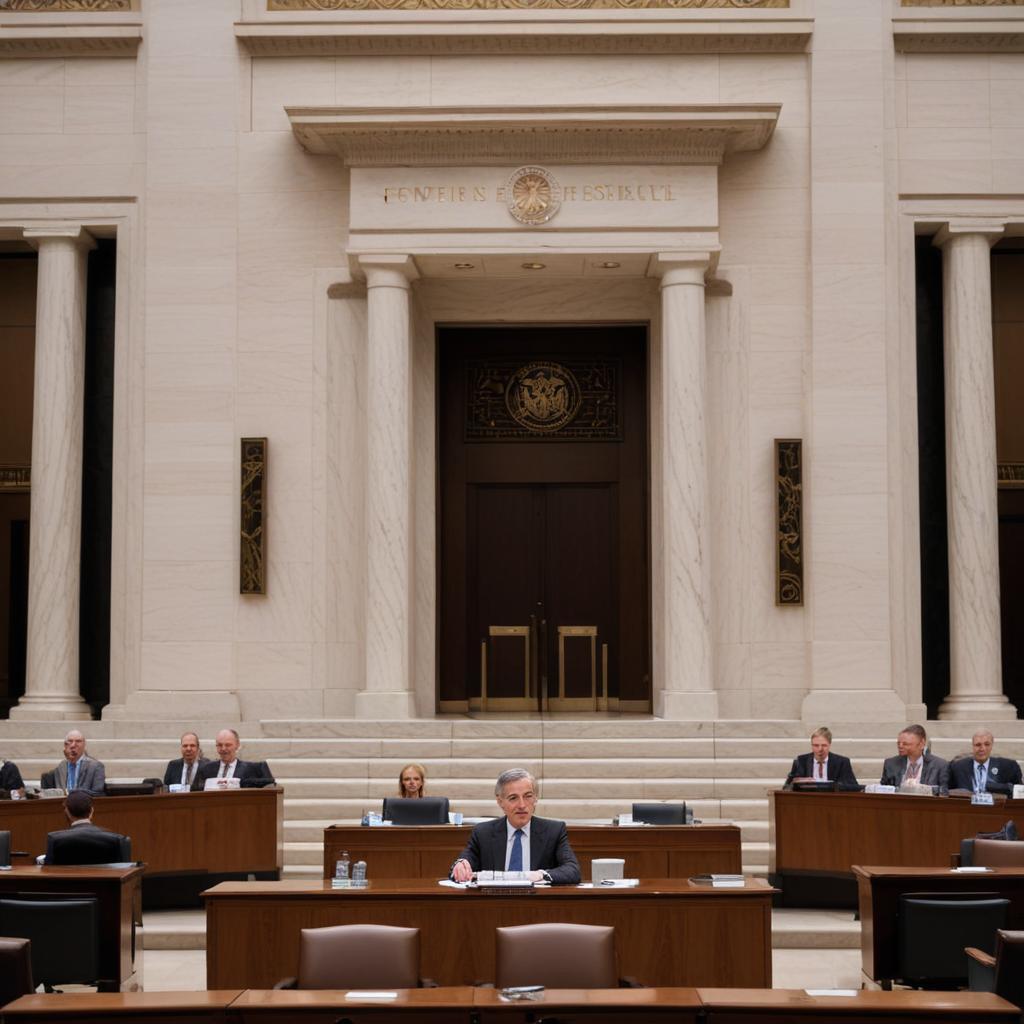
The Federal Reserve faces a deeply divided meeting this week, testing Chair Jerome Powell's ability to secure support for a third interest rate cut amidst conflicting economic signals of high inflation and weak hiring.
The Federal Reserve's rate-setting committee is heading into an unusually contentious meeting, sharply divided over whether to implement a third consecutive interest rate cut. Chair Jerome Powell is expected to support a quarter-point reduction, but faces significant dissent, potentially from up to three officials, marking the most dissenting votes in six years. The economic landscape is convoluted: inflation remains elevated, typically arguing against cuts, while a weakening job market with rising unemployment and job losses strongly suggests the need for lower borrowing costs. Economists anticipate a "hawkish cut," meaning a rate reduction accompanied by a signal for a potential pause afterward to evaluate the economy's health. Key dissenters expected include Jeffrey Schmid and Alberto Musalem, who favor keeping rates unchanged, and Stephen Miran, who advocates for a larger half-point cut. The lack of recent official federal data due to the government shutdown has exacerbated the debate. This contentious period also highlights the upcoming end of Powell's term in May, with speculation that his successor, likely Kevin Hassett, might push for faster cuts. While consensus is usually preferred at the Fed, sharp divisions could undermine financial market confidence. However, recent statements from influential figures like New York Fed President John Williams, who is close to Powell, have significantly raised the odds of a December cut to 89%, underscoring the Chair's influence despite external pressures from figures like President Trump. The primary driver for the likely cut is concern over the deteriorating job market, although future cuts beyond December remain uncertain pending the availability of delayed economic data in late January.