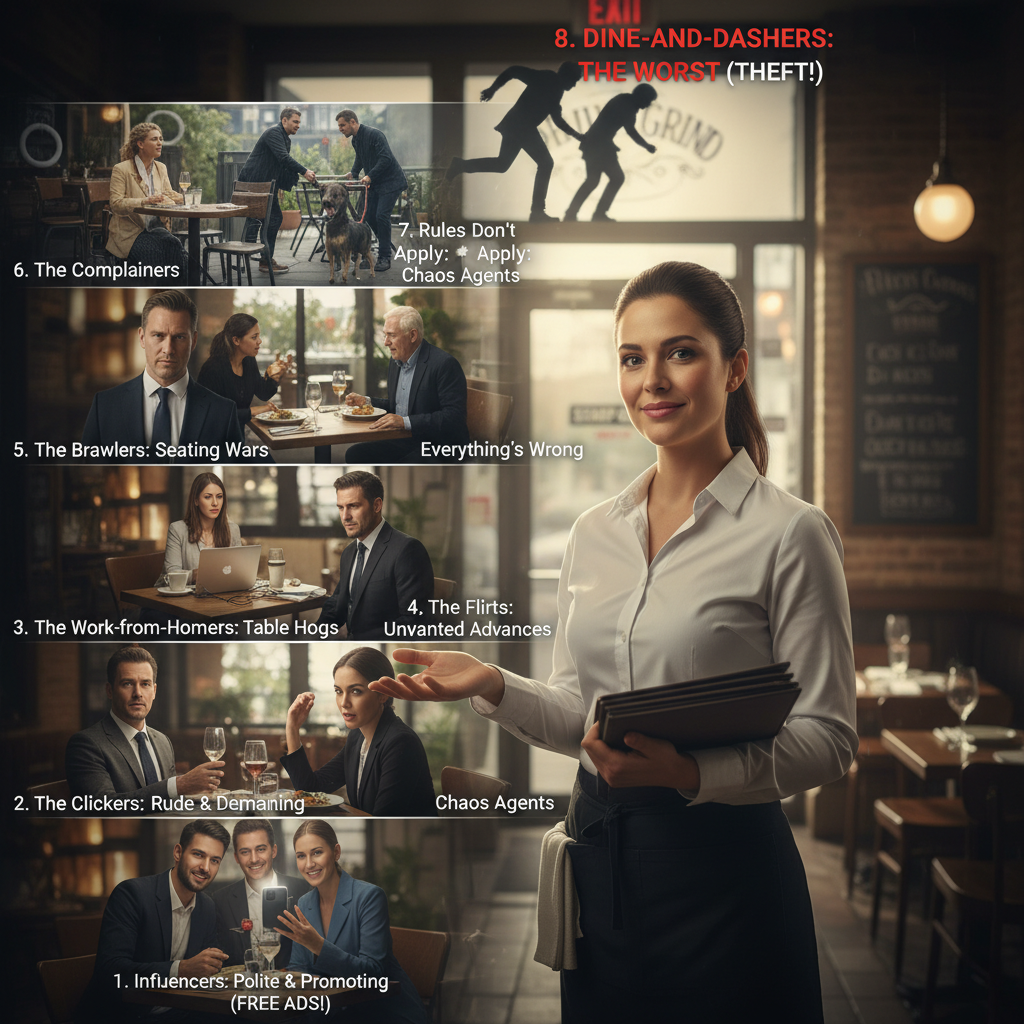
A waitress with five years of experience argues against the popular notion that influencers are the worst restaurant patrons. She presents her definitive list of 8 customer types who are far ruder, from the arrogant and ill-mannered to those who dine and dash, highlighting that influencers often provide mutual benefits.
In response to recent criticism targeting influencers in restaurants, a waitress with over five years of experience challenges the idea that they are the rudest customers. She contends that while some restaurateurs view influencers as disruptive, her daily interactions reveal a different truth. She ranks influencers at the very bottom of her list of difficult patrons, noting that when approached politely, their content creation can actually benefit the restaurant through free advertising and ensure staff receive service charges. The article then details eight types of customers she considers significantly more problematic: 1. The Arrogant and Ill-Mannered: Demanding, rude, and often demeaning, expecting service far beyond a waiter's role (e.g., demanding grocery shopping or cleaning dog waste). 2. The Work-from-Homers: Occupy tables for extended periods with minimal orders, treating the restaurant as a free office space and disrupting the atmosphere. 3. The Clickers: Those who snap fingers, clap, or whistle for attention, refusing to use polite verbal cues. 4. The Flirts: Customers who make inappropriate and unsolicited romantic advances toward staff. 5. The Brawlers: Individuals who physically fight over coveted seating, especially outdoor tables on busy days. 6. The Complainers: Those who grumble about elements outside staff control (weather, noise, prices), complain about staff to others, or demand staff discipline other patrons' children. 7. The Rules Don't Apply: Customers who ignore restaurant policies, bring outside items, enter restricted areas, or refuse to leave after closing. 8. The Dine-and-Dashers: The most extreme, who consume food and drinks and then leave without paying, causing significant distress and financial loss. The author concludes that true rudeness stems from these behaviors, not from the act of being an influencer itself, and that any influencer exhibiting such traits is simply a rude person, not rude *because* they are an influencer.