The US lags dramatically behind global cities in public transportation, with its car-centric infrastructure costing trillions and contributing to environmental and social woes, as highlighted by the dismal state of transit in major cities like Houston.
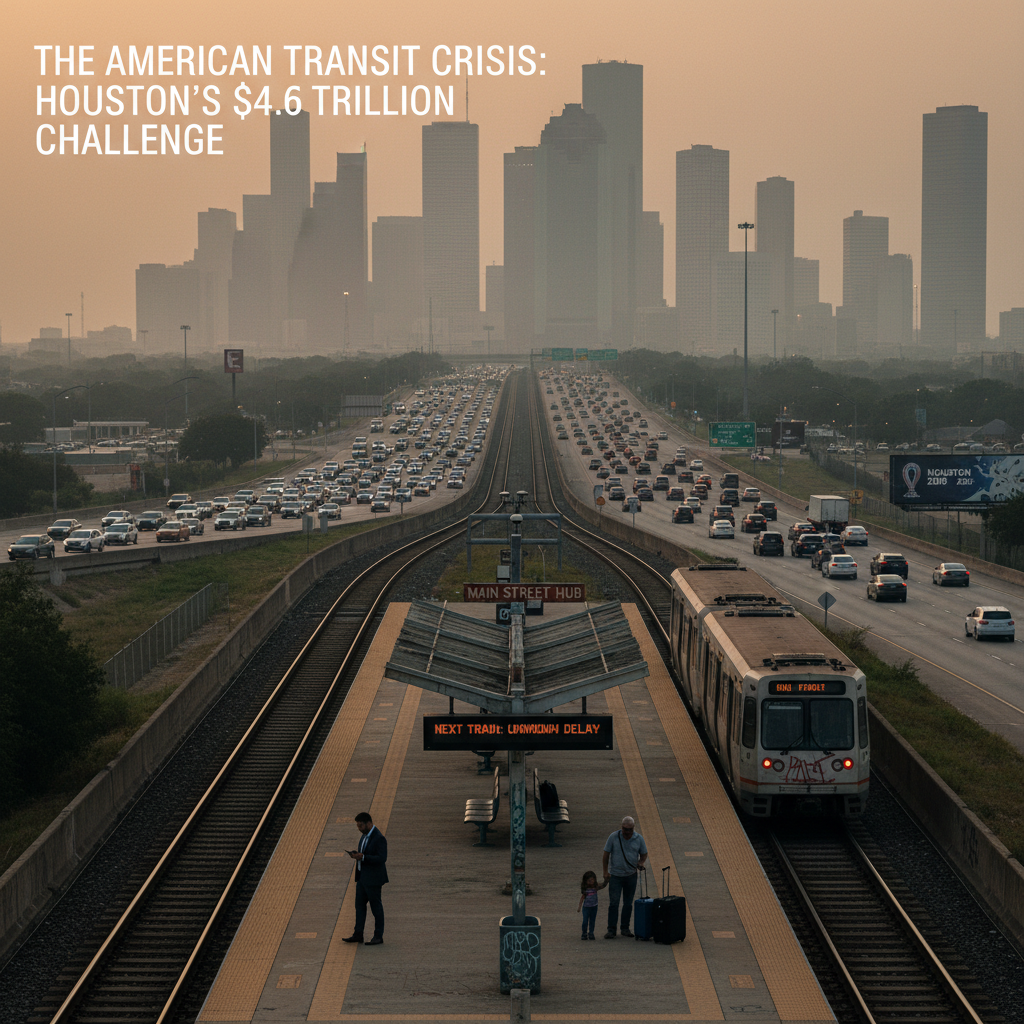
The article exposes the stark reality of public transportation in the US, exemplified by Houston's inadequate train station serving a metropolitan area of 7 million. US cities fall significantly behind global leaders like Paris, Sydney, and Hong Kong in transit provision, with a report estimating an astronomical $4.6 trillion investment over 20 years and 7,500 miles of new infrastructure needed to achieve 'world-class' status. This car-dependent culture, a result of decades of prioritizing highway expansion over public transit (with $6.3 trillion earmarked for highways in the same period), zoning laws, and a lack of political will, leads to increased planet-heating emissions, air pollution, high accident rates, and disadvantages those without cars. Even New York City, with its extensive subway, lags behind cities like Tehran in proportional transit vehicles. Experts argue the problem isn't a lack of money, but misaligned priorities, suggesting that redirecting a portion of highway funding could be transformative. Despite some local efforts, such as Houston voters approving transit upgrades, federal policy has often undermined public transport, with the Trump administration attempting to slash funding. The upcoming World Cup in Houston may offer a glimpse into a more transit-friendly future, but overcoming entrenched car dependency remains a monumental challenge for American cities.