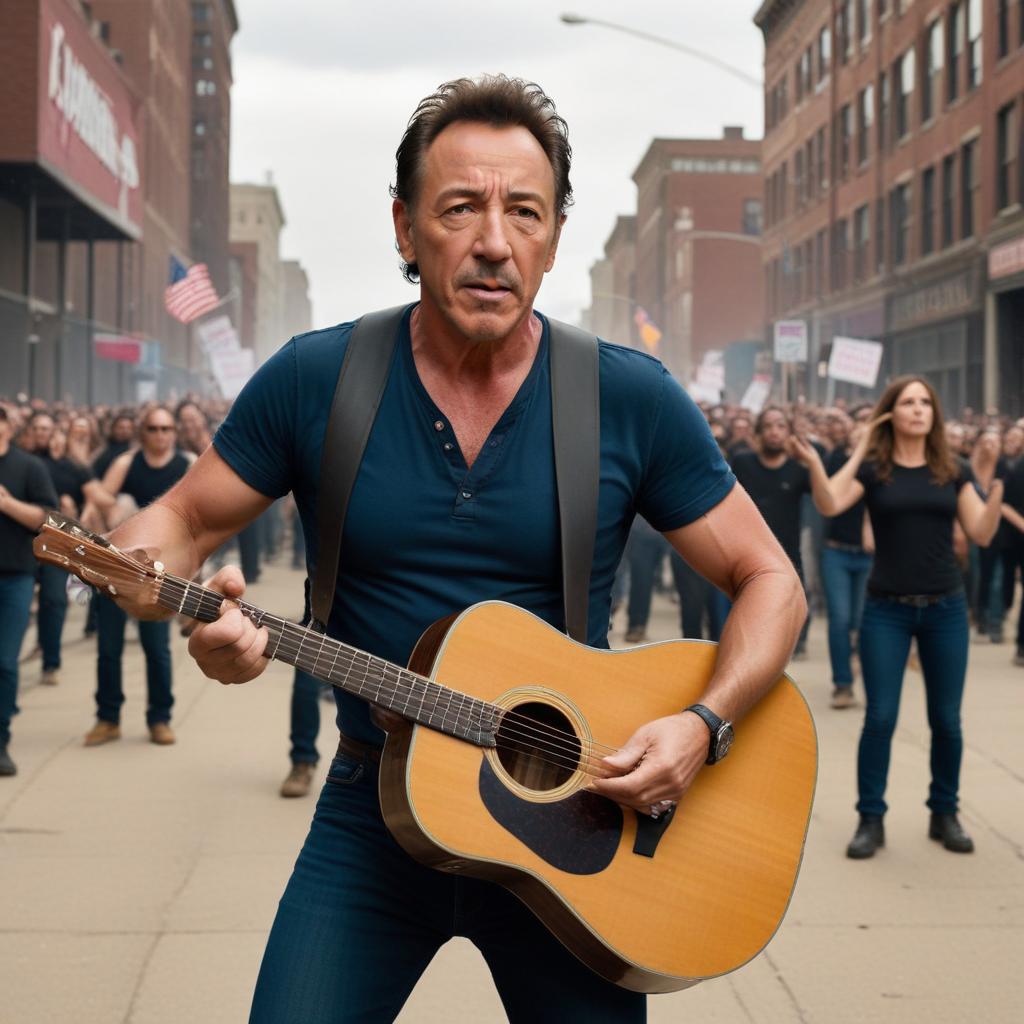
Bruce Springsteen's latest protest song, 'Streets of Minneapolis,' offers an unambiguous condemnation of the Trump administration's actions, explicitly targeting DHS and ICE. Unlike traditional protest songs, it sacrifices metaphor for raw urgency, naming victims and directly confronting perceived injustices, signaling a potential renaissance in explicit political music.
Bruce Springsteen's new protest song, 'Streets of Minneapolis,' is a stark departure from metaphorical protest anthems, offering an unequivocal condemnation of the Trump administration. The Boss directly targets 'King Trump’s private army from the DHS,' naming victims Renee Good and Alex Pretti, and denouncing figures like Miller and Noem who represent the administration's stance on immigrants. Written and recorded rapidly, the song's familiar structure and simple chords echo 1960s protest music, yet its lack of ambiguity prioritizes urgent, genuine fury over timelessness. While it may not be sung around campfires in 50 years, its message is unmistakable. Despite its directness, the song features rich lyricism, staging a battle with images of 'fire and ice' and referencing folk traditions, the US national anthem, and biblical themes. It's highly singable, incorporating a 'ICE out!' chant and a harmonica solo. Unexpectedly hopeful, it celebrates the resilience and unity of Minneapolis protesters, framing the crisis as a historical event. The article acknowledges its earnest, 'on-the-nose' approach but argues its authenticity makes it effective. It positions 'Streets of Minneapolis' within a broader resurgence of explicit political music, noting other artists like Billy Bragg and Springsteen's own history of outspoken criticism against Trump, suggesting a fertile ground for a new era of protest songs.