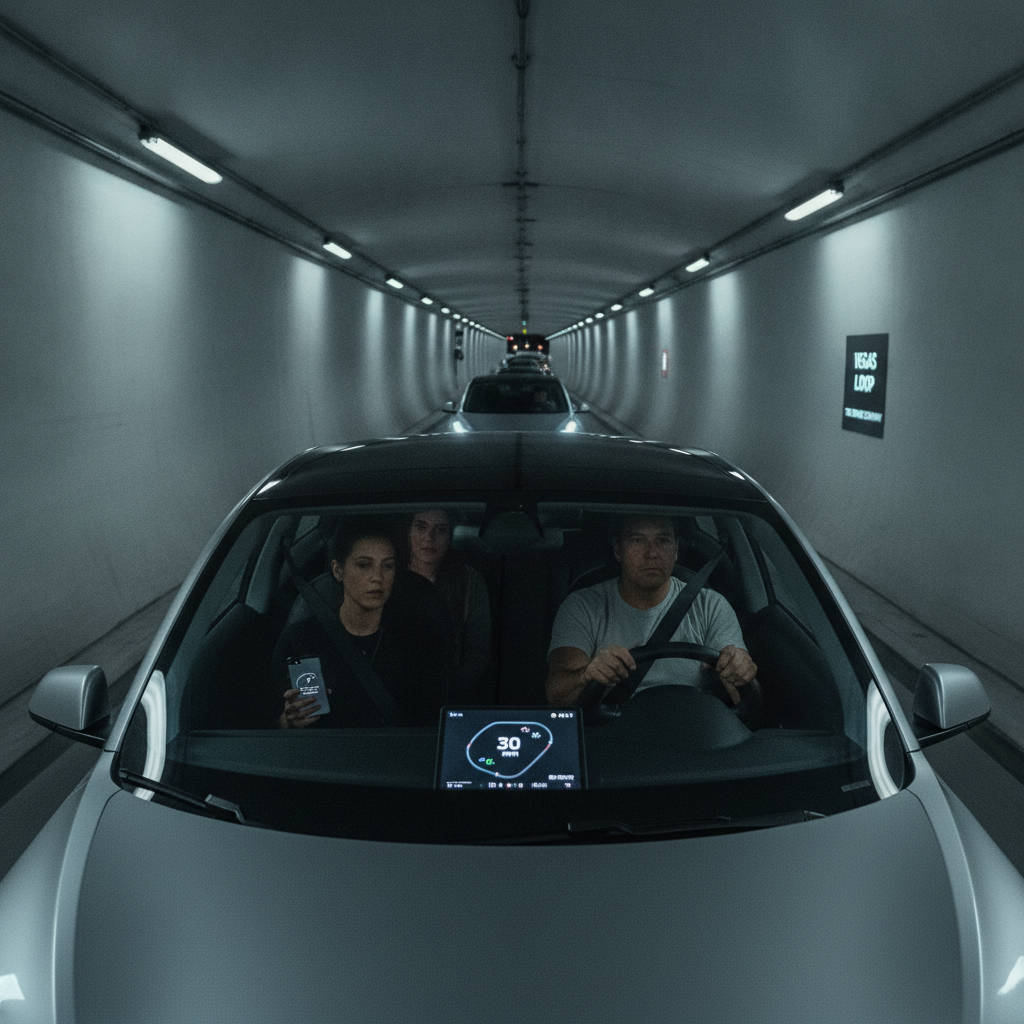
Elon Musk's Boring Company promised a futuristic, high-speed underground transport system, but the reality of the Vegas Loop is a slow, underwhelming ride in a standard Tesla, plagued by low ridership, inefficiency, and accusations of being a 'transit scam' that avoids regulation.
The article details the author's underwhelming experience with Elon Musk's Vegas Loop, a system of underground tunnels where standard Teslas transport passengers at a mere 30mph, a far cry from Musk's original 2017 promise of 124mph electric skates and a congestion-solving futuristic network. This reality exemplifies 'Muskism,' characterized by overpromising and underdelivering, with grand initiatives like self-driving cars and Mars missions failing to meet promised timelines. The Boring Company, valued at $5.7 billion, saw most of its proposed projects in other major cities fizzle out, leaving Las Vegas as its primary operational site, soon to be joined by Nashville. The Vegas Loop, which connects parts of the Las Vegas Convention Center and nearby resorts, operates at low capacity, especially outside of conventions, and relies on human drivers, making it highly inefficient compared to traditional public transit systems like London's Elizabeth line. Experts like former traffic engineer Ray Delahanty and public policy professor Ben Leffel criticize it as having little utility, not solving congestion, and being 'the biggest, most absurd transit scam,' physically incapable of transporting more people more quickly than rail. Las Vegas adopted the Loop largely due to its private funding, which appeals to legislators by not using tax dollars but also allows developers to dictate station locations, bypassing city planning needs. This private funding also enables the Boring Company to avoid rigorous official oversight and environmental regulations, leading to hundreds of alleged violations. The article suggests that political and commercial alignments also play a significant role, with Nevada hosting Tesla's Gigafactory and Tennessee hosting Musk's Colossus datacentre, and local officials seemingly swayed by the 'cool idea' rather than practical transit solutions. This pattern aligns with 'Muskism,' where businesses achieve symbiosis with the state, benefit from public funds, and thrive in low-regulation environments. While Musk's other ventures like SpaceX continue to make grandiose claims about future revenues and space colonization, the Boring Company's current state in Vegas highlights a potentially 'too good to be true' vision that, for now, is headed nowhere fast.