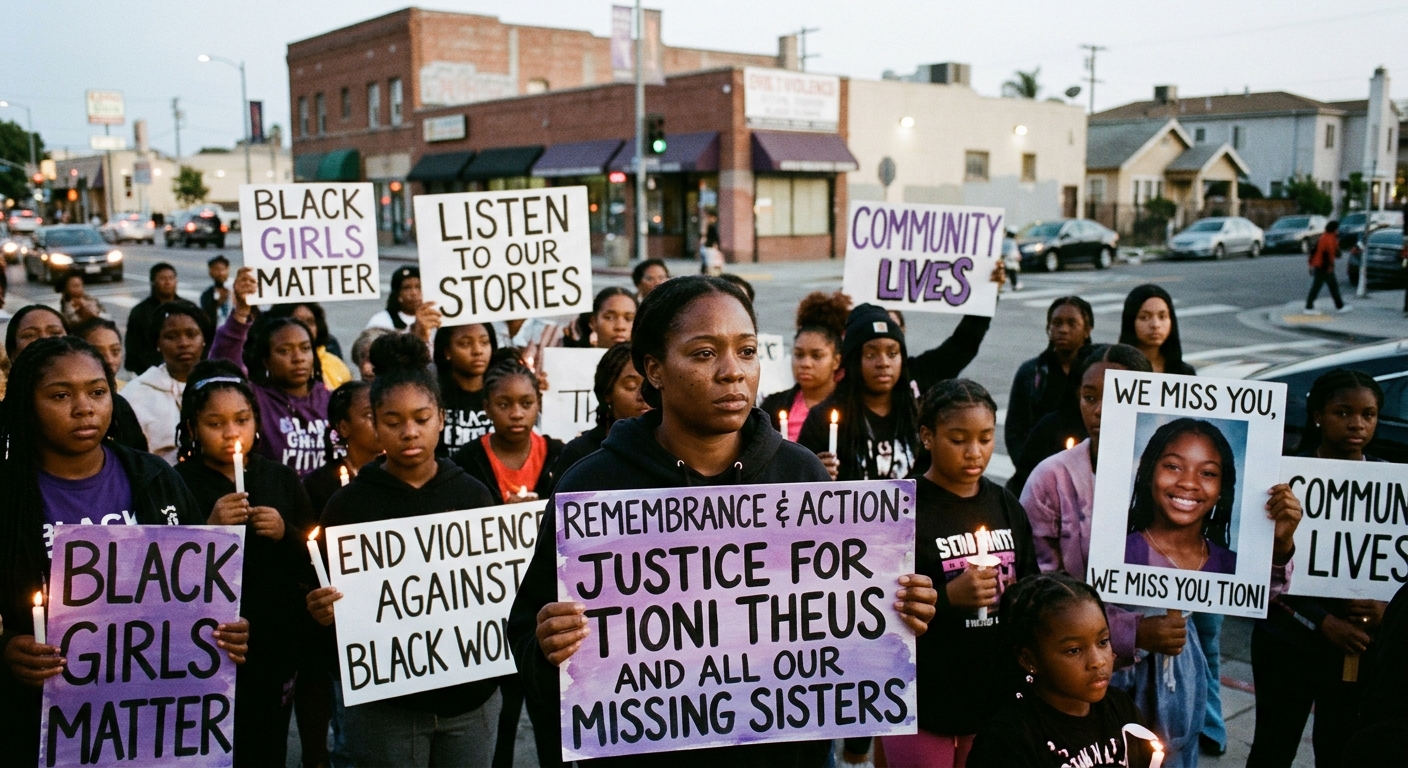
Black girls and women in Los Angeles face a disproportionate and often unaddressed crisis of violence and murder. Frustrated by a perceived lack of official action and compassion, families and community organizers are stepping up to demand justice, support victims, and drive systemic change, as highlighted by the unsolved killing of 16-year-old Tioni Theus.
The article highlights the tragic reality for Black girls and women in Los Angeles, who experience alarmingly high rates of violence and murder, often with little official response or public attention. The story of Tioni Theus, a 16-year-old Black girl found shot to death in 2021, serves as a poignant example, with her family's struggle to protect her and the ongoing lack of arrests for her killing. Black women and girls, while making up only about four percent of the LA region's population, represent an outsized share of female homicide victims, a trend consistent nationally. Families and community organizers express deep frustration over the perceived lack of urgency from local governments and police, noting that cases involving Black female victims are less likely to be solved. They advocate for deeper studies into the dynamics of this violence, increased funding for programs addressing the intersection of domestic and community violence, and the integration of gender-based violence into general prevention strategies. Root causes like misogyny, harmful stereotypes about Black women, and systemic disinvestment in Black communities are identified as contributing factors. In response to this crisis, Black women and girls in LA are taking action themselves. Organizations like the Women’s Leadership Project (WLP) offer mentorship, educate high-schoolers on gender-based violence, and push for safe youth spaces in underserved areas. Teen girls in these programs share experiences of feeling unsafe, followed, and judged, highlighting the emotional toll of living in environments scarred by violence and neglect. Families, like Shalissa Collier, whose daughter's murder case was initially closed by LAPD, have successfully pursued justice through relentless advocacy, community organizing, and media engagement, including podcasts like 'Misogynoir Murders' which centers the stories of Black female victims. While some official efforts exist, such as California’s Ebony Alert system for missing Black women and girls and the city's GRYD program, community members argue they are insufficient or not directly tailored to the unique challenges faced by Black women. They point to models like Minnesota's task force, which specifically investigates killings and disappearances of Black women and girls. Ultimately, the community calls for collective accountability, urging residents to report suspicious activities, challenge predators, and share information, emphasizing that preventing violence against Black women and girls is a shared responsibility, not solely that of politicians, lawmakers, or police.