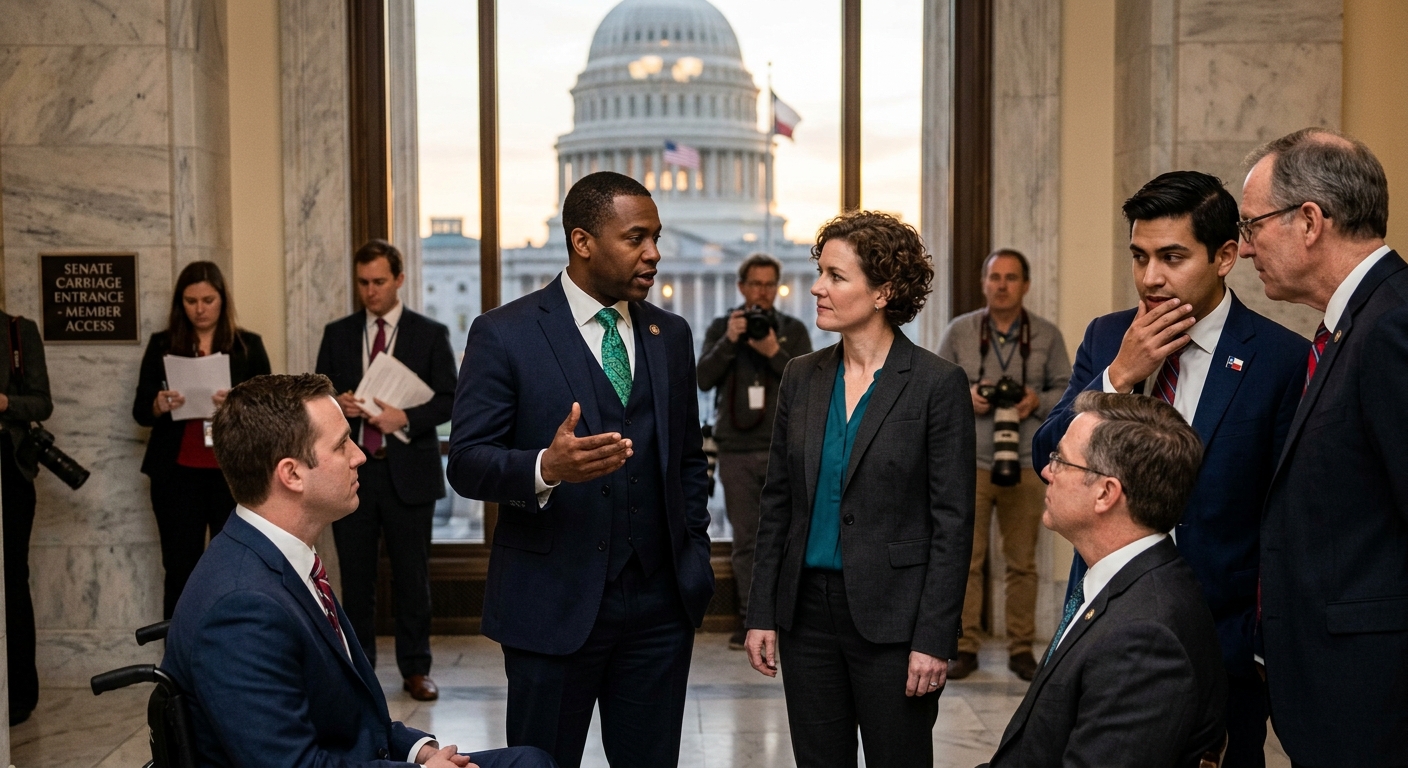
Incoming Democratic senators face their first major test, choosing between re-electing veteran leader Chuck Schumer or backing challenger Chris Van Hollen. Their decision will determine the party's future direction and test their campaign promises of change.
The Democratic Party's newest class of senators, the largest in decades, is immediately confronted with a significant test of their campaign pledges: selecting their new majority leader. Many of these 13 lawmakers secured victories in conservative areas by promising change, and they are now central to a power struggle between incumbent Senate leader Chuck Schumer and challenger Chris Van Hollen. Van Hollen advocates for a bolder legislative strategy, earning support from progressives like Abdul El-Sayed and Peggy Flanagan. In contrast, Schumer benefits from decades of experience, established relationships, and his role in recent midterm successes, garnering loyalty from figures like Sen.-elect Sherrod Brown and Sen. Ruben Gallego. However, many incoming senators, particularly those from traditionally red states like Texas, Mississippi, Iowa, and South Carolina—whose wins were crucial for the Democratic majority—are hesitant to declare their allegiance. They emphasize a desire for "generational change" and "new blood" in leadership, often while declining to explicitly endorse either candidate. Examples include Annie Andrews of South Carolina, Scott Colom of Mississippi, Adam Hamilton of Kansas, James Talarico of Texas, and Josh Turek of Iowa, all of whom are in "listening mode" or seeking answers aligned with their platforms. Even some progressives like Troy Jackson are not backing Schumer but haven't formally endorsed Van Hollen. The secret-ballot election, set for December 1, highlights the substantial influence of this freshman class. While Schumer's supporters praise his management of internal rivalries and fundraising, progressive groups like MoveOn and Indivisible are pressuring for his removal, demanding bolder action against Republican President Donald Trump and ambitious legislative goals. Van Hollen's platform includes progressive measures like "Medicare for All" and a more combative approach to Trump. The leadership debate also involves veteran senators like Jon Ossoff and moderates like Elissa Slotkin, who, despite policy differences with Van Hollen, supports his challenge to Schumer, indicating the battle transcends typical ideological lines. The decision will significantly shape the Democratic Party's trajectory and its ability to deliver on campaign promises.