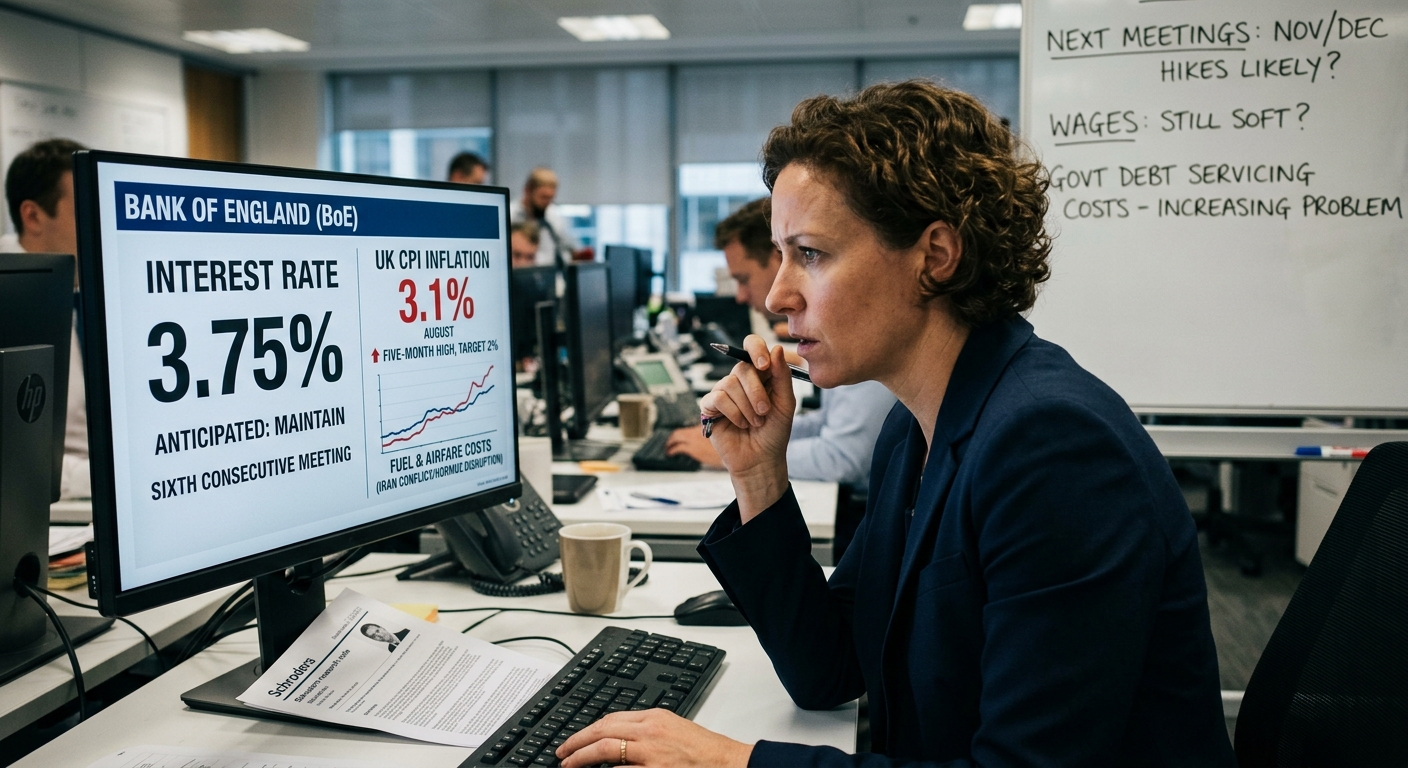
Despite UK inflation hitting a five-month high of 3.1% largely due to rising fuel prices from the Iran war, the Bank of England is expected to keep interest rates at 3.75%, awaiting clearer signs of embedded wage and price increases.
The Bank of England's Monetary Policy Committee is widely anticipated to maintain its main interest rate at 3.75% for the sixth consecutive meeting on Thursday, even as the UK's consumer prices index surged to 3.1% in August, a five-month high. This inflationary pressure, moving further above the BoE's 2% target, is primarily attributed to escalating fuel and airfare costs, a direct fallout from the ongoing Iran war which has disrupted oil and gas supplies via the Strait of Hormuz. Economists, including David Rees from Schroders, believe the committee will seek more conclusive evidence that higher inflation is translating into underlying prices and wages, citing a relatively soft economic backdrop, particularly in wages and the labor market, which should limit the embedding of imported price pressures. However, with households bracing for another increase in domestic energy bills in October, financial markets widely forecast interest rate hikes at one of the next two meetings, likely in November or December. The article notes that the uptick in interest rate expectations, following a period of downward trending rates since a 15-year high of 5.25% before the Iran war, is also creating a growing problem for the British government, as debt servicing consumes a larger proportion of its spending.