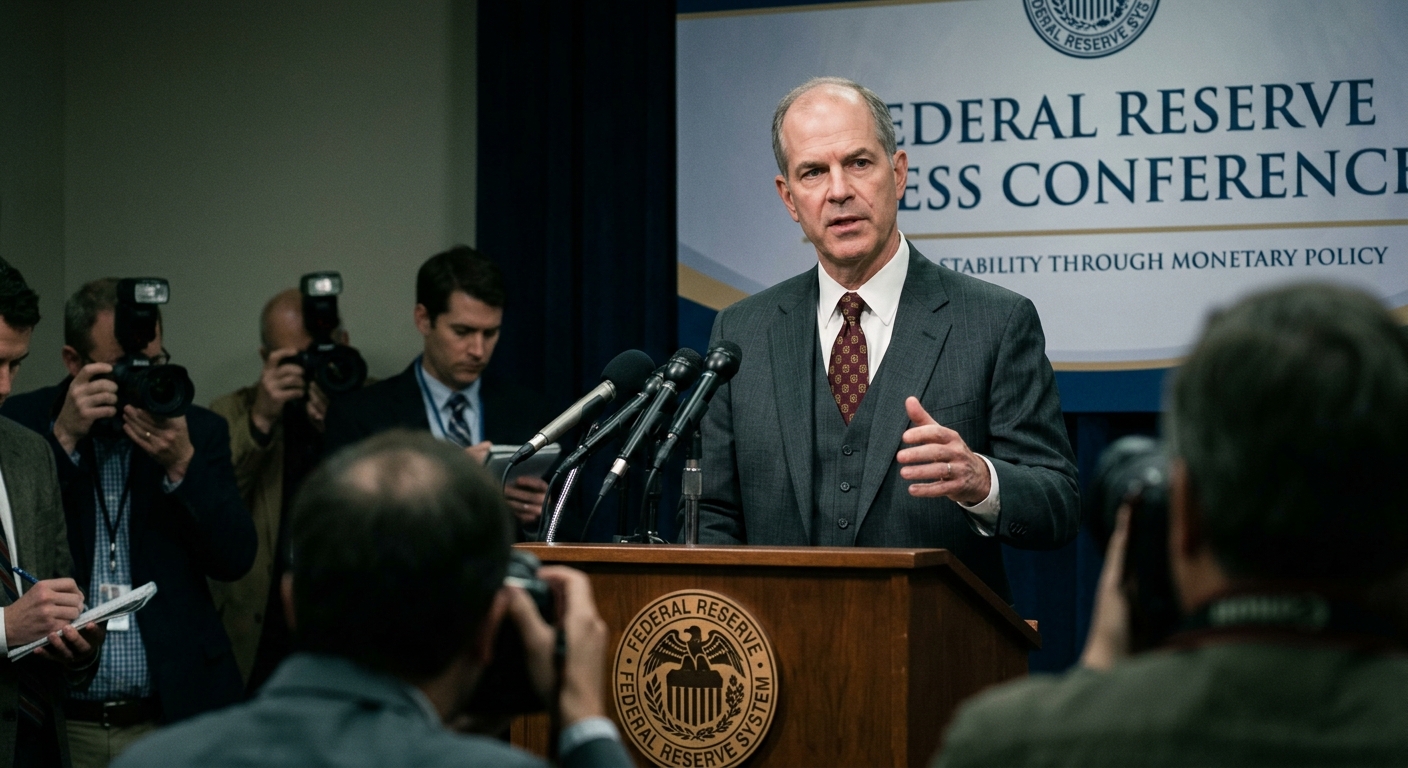
Federal Reserve Chair Kevin Warsh defied White House pressure by raising interest rates to combat stubborn inflation, contrasting sharply with President Trump's erratic economic demands and the administration's chaotic policies. While markets found temporary calm, the long-term stability of the US economy remains uncertain amidst ongoing political interference and conflicting strategies.
Federal Reserve Chair Kevin Warsh demonstrated resolve by unanimously raising interest rates for the first time in three years, signaling a serious commitment to taming inflation that has exceeded the Fed's 2% target for over five years. This move, made despite an upcoming election and veiled threats from White House economic adviser Kevin Hassett, starkly contrasted with the Trump administration's chaotic economic rhetoric. President Trump reacted furiously, demanding interest rates of 1% or less, criticizing the Fed, and threatening trade wars, despite rising inflation and a growing budget deficit. The article highlights a significant tension between the Fed's orthodox monetary policy and the administration's other initiatives, including tariffs, the war in Iran, and Treasury Secretary Scott Bessent's attempts to lower interest rates even as the Fed raises them. Financial markets reacted with relative calm, seemingly trusting the Fed's monetary policy sanity amidst the administration's 'deranged policies.' Warsh's hawkishness is posited as a move that could ultimately calm market jitters and reduce long-term inflation expectations, potentially leading to lower bond yields. However, the article concludes with a pessimistic outlook, anticipating continued economic volatility due to the administration's inconsistent policymaking and Bessent's increasingly desperate measures, questioning whether a single, solid Fed chair can truly stabilize the discombobulated American economy.