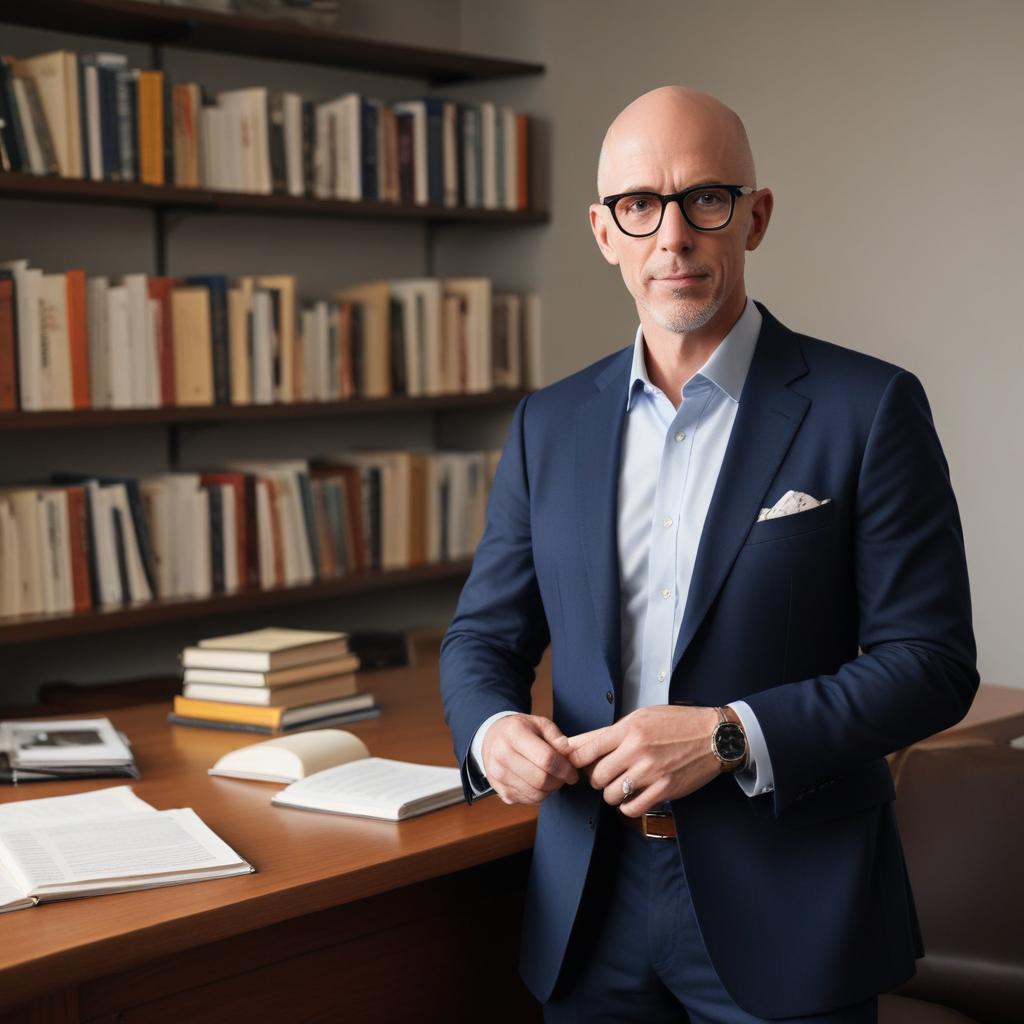
Scott Galloway, a successful investor and liberal podcaster, challenges traditional notions of masculinity in his bestselling book 'Notes on Being a Man.' He advocates for men to 'level up' to combat a crisis of loneliness and underachievement, while surprisingly embracing emotional vulnerability, positioning himself as a 'progressive Jordan Peterson' who critiques both the right's 'manosphere' and the left's denial of male struggles.
This article delves into Scott Galloway, a wealthy and influential investor, marketing professor, and podcaster, whose new book, 'Notes on Being a Man,' has become a bestseller. Despite his successful 'alpha-bro' image, Galloway is described as a liberal, sensitive 'progressive Jordan Peterson,' offering advice on mental strength and raising sons. He moved to the UK partly for his children's upbringing, and hosts popular podcasts like 'Pivot' and 'Prof G Pod.' Galloway presents a data-backed argument for a crisis among young men, citing rising rates of unemployment, addiction, loneliness, and college dropouts. He controversially suggests the political left's failure to address these issues contributed to Donald Trump's electoral success. His proposed solutions, encapsulated in maxims like 'men protect, provide, and procreate,' include sometimes old-fashioned advice, such as men always paying for dates, which he defends with data on societal expectations regarding male economic viability. He argues that a lack of economic success can lead men down destructive paths, including excessive online activity and isolation, fearing the rise of an 'asexual, asocial male' exacerbated by the tech industry. While acknowledging his analysis can be reductive and less inclusive of diverse experiences, Galloway distinguishes himself from Jordan Peterson, respecting Peterson for initiating the conversation but disagreeing with his conservative views on women's roles. Galloway emphasizes that men, not women, need to 'level up,' and society should invest in programs for all young people. He views the 'masculinity crisis' as intertwined with broader societal issues like wealth inequality and the commercialization of institutions, framing it as a battle between 'liberal and illiberal' forces. His personal history, including growing up without a present father, informs his belief in the critical role of male role models. Galloway openly embraces vulnerability, notably crying on his podcast after his father's death, advocating for men to express emotions freely, a practice he believes fosters connection and sets him apart from many of his peers. He plans to return to the US to help build a Democrat-friendly podcast network, criticizing figures like Trump and Elon Musk for misrepresenting masculinity as coarseness.