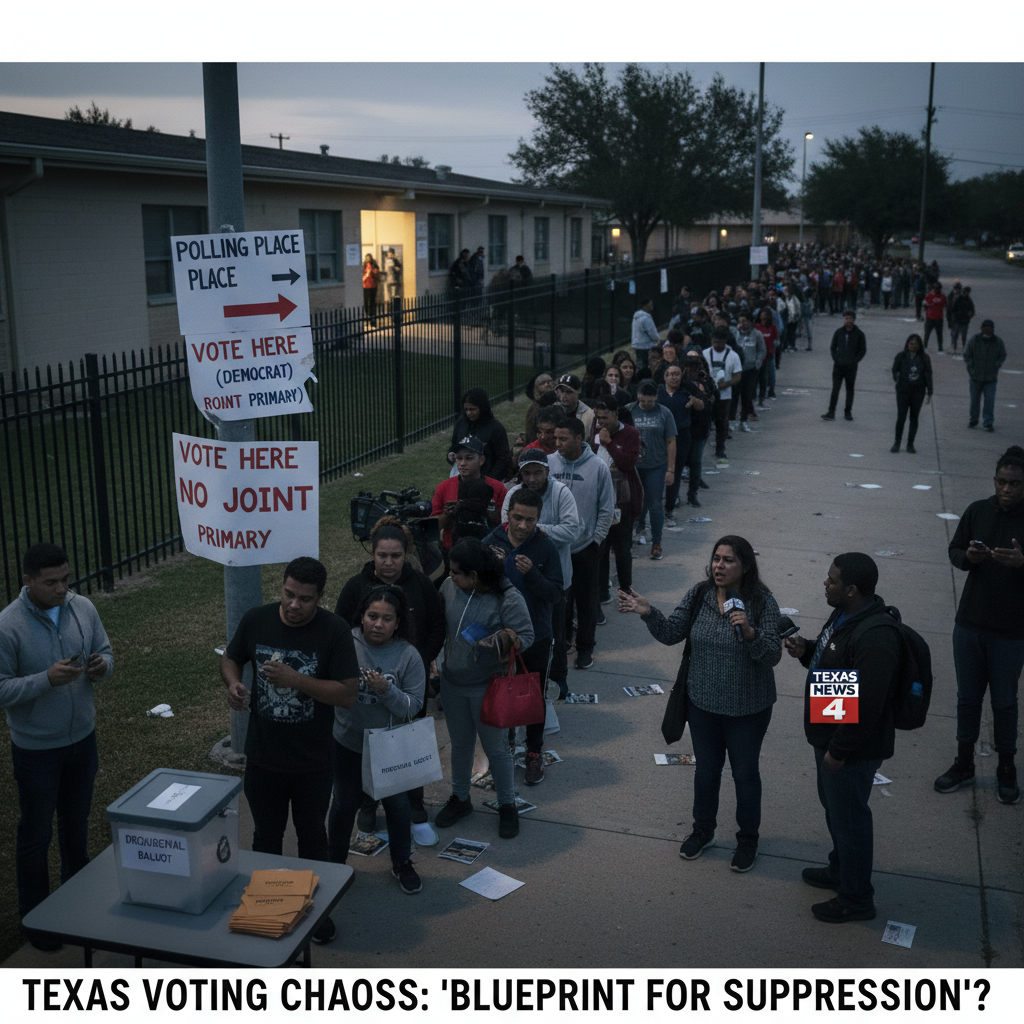
Texas's recent Democratic and Republican primaries were marred by widespread voting issues, including long lines, confusion over polling locations, and a lack of machines, particularly in Dallas and Williamson counties. These problems, stemming from a change where Republican parties refused joint primaries, led to claims of voter suppression and raise serious concerns for the upcoming November midterms. Democratic candidate Jasmine Crockett, who initially cited voting issues for not conceding, eventually endorsed James Talarico after losing her primary.
During the Texas Democratic and Republican primaries, significant voting challenges emerged, drawing national attention and sparking accusations of voter suppression. In the Democratic primary, Jasmine Crockett, initially hesitant to concede due to alleged voting issues in Dallas, ultimately endorsed James Talarico after receiving 45.6% of the vote to Talarico's 53.1%. Voters in Dallas and Williamson counties experienced substantial difficulties, including confusion over polling locations, inadequate signage, and insufficient voting machines, leading to hours-long waits and voters leaving without casting ballots. These issues were attributed to a new rule where Dallas and Williamson county Republican parties refused to agree to joint primary elections, ending the long-standing practice of centralized voting sites. Voting rights advocates, including Denisse Molina of the Texas Civil Rights Project, described these incidents as classic suppression tactics, disproportionately affecting people of color, young, and working-class voters. The Texas Supreme Court's intervention, ordering Dallas county to separate votes cast after 7 pm by those not in line, further complicated matters. Leaders like NAACP President Derrick Johnson and Texas Democratic Party Chair Kendall Scudder warned that these events are a 'blueprint for voter suppression' with national implications for the November midterms, arguing that such policies aim to make elections unfunctional and discourage participation.